You Don't Have to Paint Everything You See
You’re looking at a scene in front of you. There are trees, a river, some grass, maybe a barn and a few sheep.
And the more you look, the more you see.
The more you see, the more it can feel like you now have a job. One where you take everything in front of you and copy/paste it onto the painting below you.
Watercolorist Brienne M Brown (Ep.46) felt this for years.
She treated the reference photo or plein air scene almost like some Artistic Law. If something was in front of her, she felt like she had to put it down.
If there were five sheep, there needed to be five sheep.
If there were seven trees, there needed to be seven trees.
But if you saw her paintings today, you might be surprised that this was ever a struggle.
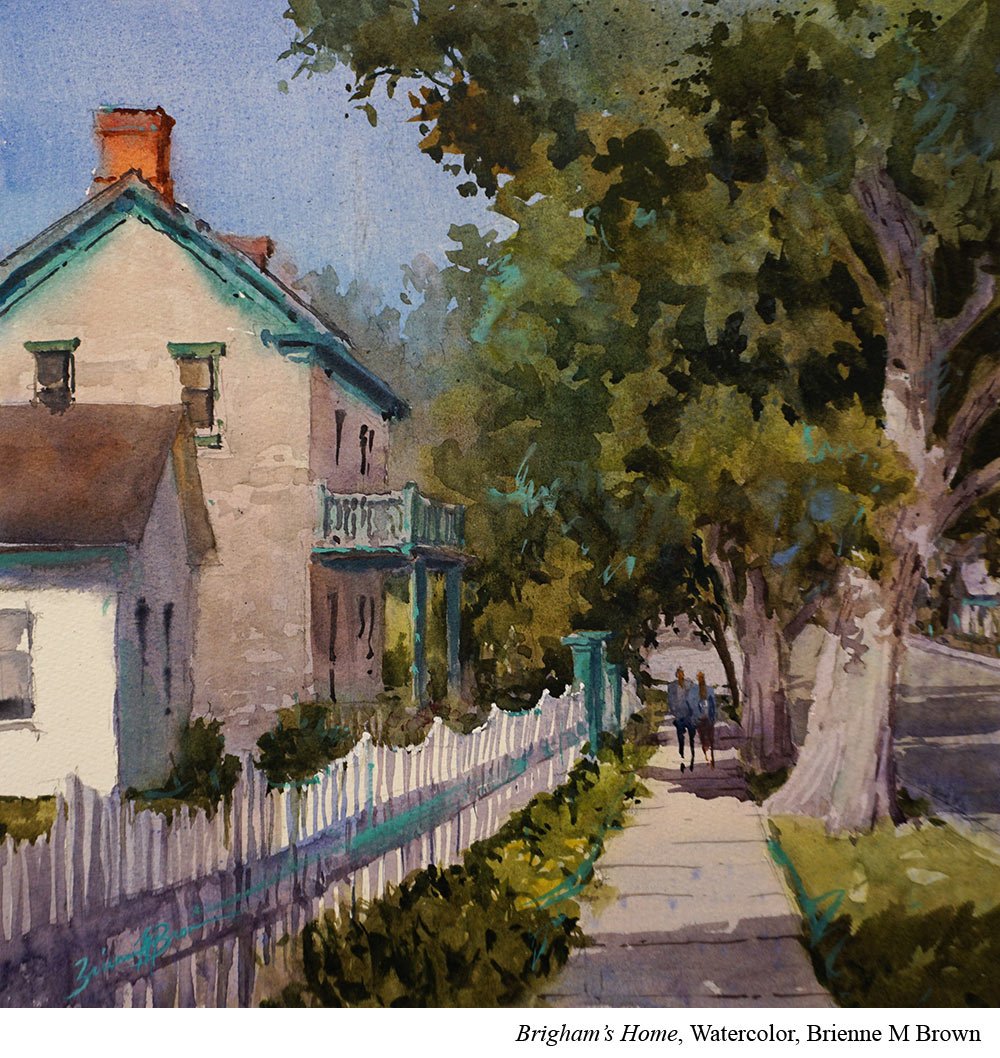
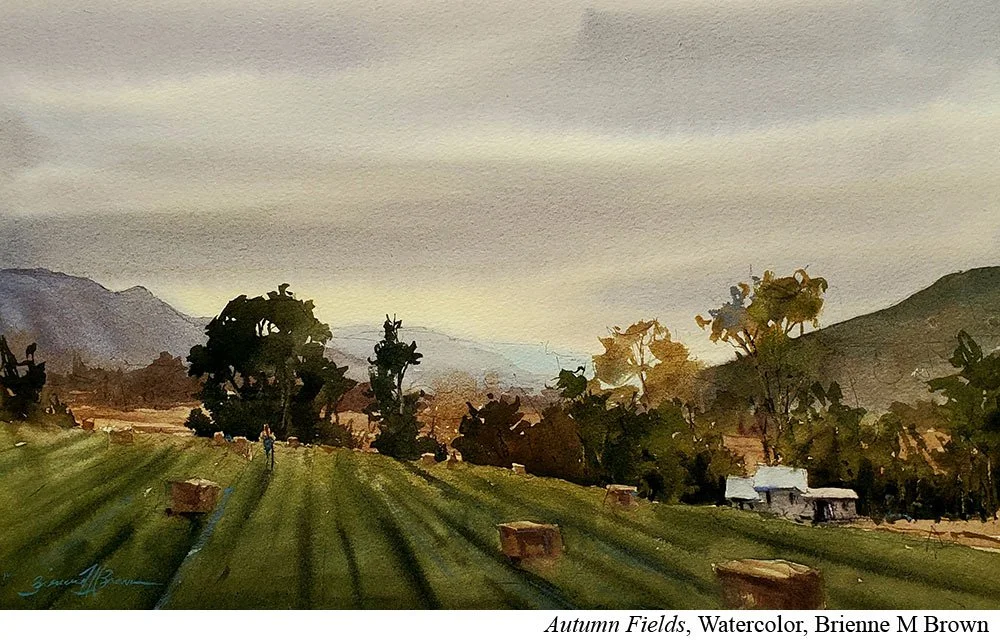
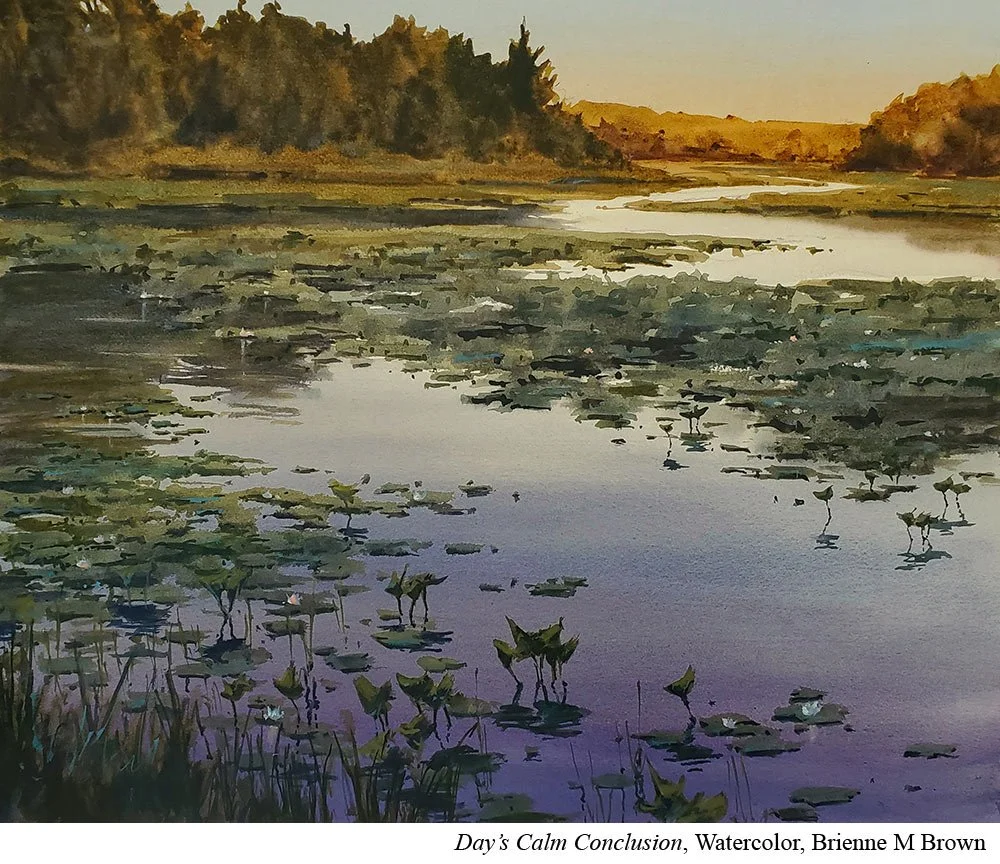
Her paintings are loose and fluid, with just the right amount of detail.
That’s because she has had a full 180 on how she treats her references.
Her goal is no longer simply to reproduce what’s in front of her. Her goal is to take the information that actually matters.
This results in a great deal of simplification.
Brown knows now that she can leave out quite a lot and still have a painting read as a barn with trees, a field and some sheep.
And she can end up with a stronger painting because of it.
Your Reference Is a Starting Point
Your reference contains information. It’s not part of some rulebook you have to follow.
And that’s a good thing. Because the thing you’re looking at has hundreds, if not thousands, of pieces of visual information. Your painting doesn’t need them all.
You get to decide which parts come into the painting and which parts get simplified down or out.
To simplify you might combine things, remove things, move things, change things and eliminate things entirely.
You get to constantly be asking:
Does putting this in my painting help me make a better painting?
Let’s look at a few big ways artists like Brown learn to simplify.
Remove Something Entirely
One of the easiest ways to simplify something is simply not to include it.
The simplest way for Brown to paint a telephone pole is to not paint it in the first place.
Maybe there’s a tree that cuts awkwardly through your composition. Maybe there are six sheep but that sixth one creates an awkward shape. Maybe there’s a building in the distance that pulls too much attention away from your focal point.
Just because it exists in the scene doesn’t mean it needs to exist in your painting.
Combine Shapes
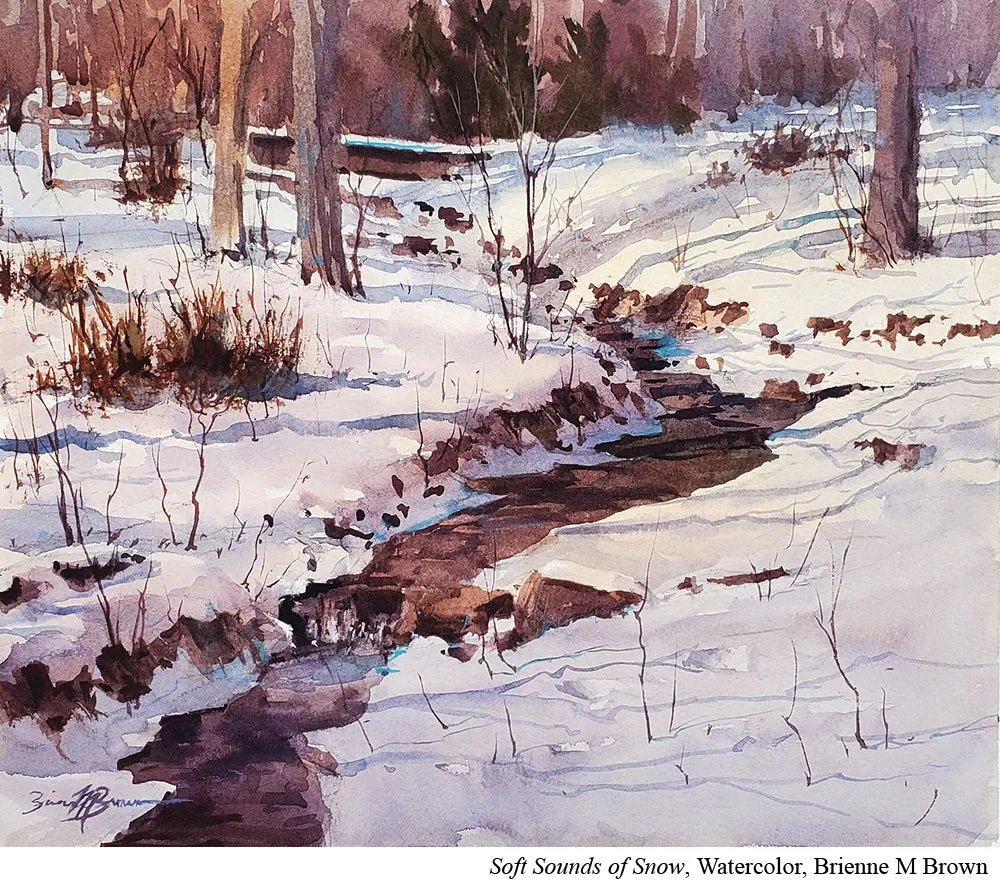
Artists can also simplify by merging several smaller shapes into one larger shape.
If you have 12 individual trees, you don’t necessarily need to paint 12 individual trees.
Instead, you might create one larger shape that communicates a group of trees through its silhouette, value, color, and brushwork.
Simplify the Values
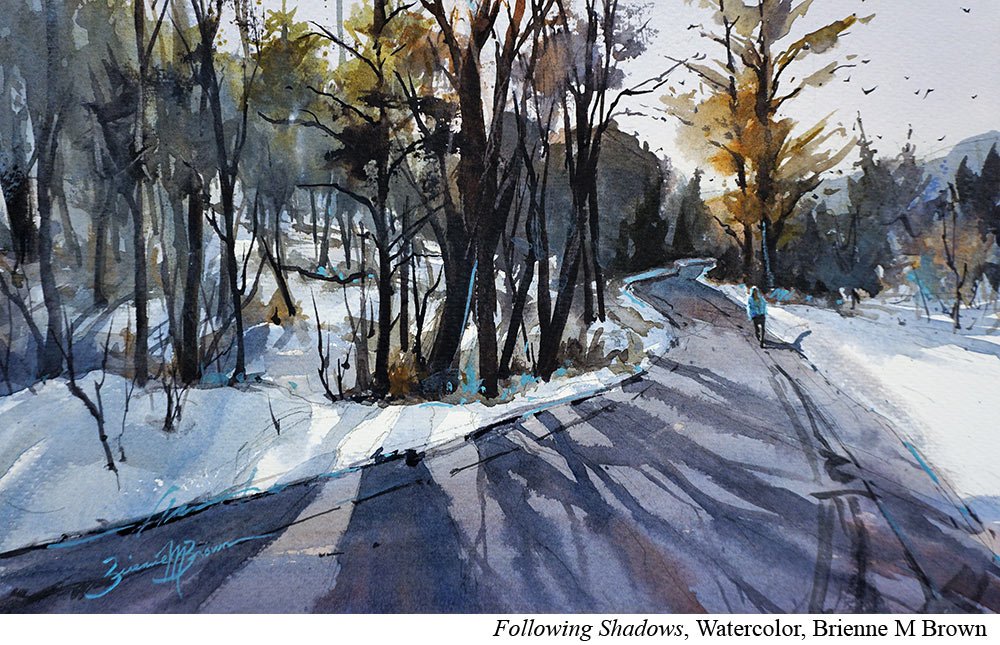
There are hundreds of subtle value shifts in any given scene, but most artists aren’t trying to paint every single one.
Instead, they simplify those hundreds of values into a much smaller number. Maybe five. Maybe even three.
That means some of the values you see in your reference will need to shift lighter or darker in your painting so they can become part of a larger value group.
You’re using the value you see as a jumping off point. And then you’re organizing it in a simpler way.
Simplify the Color
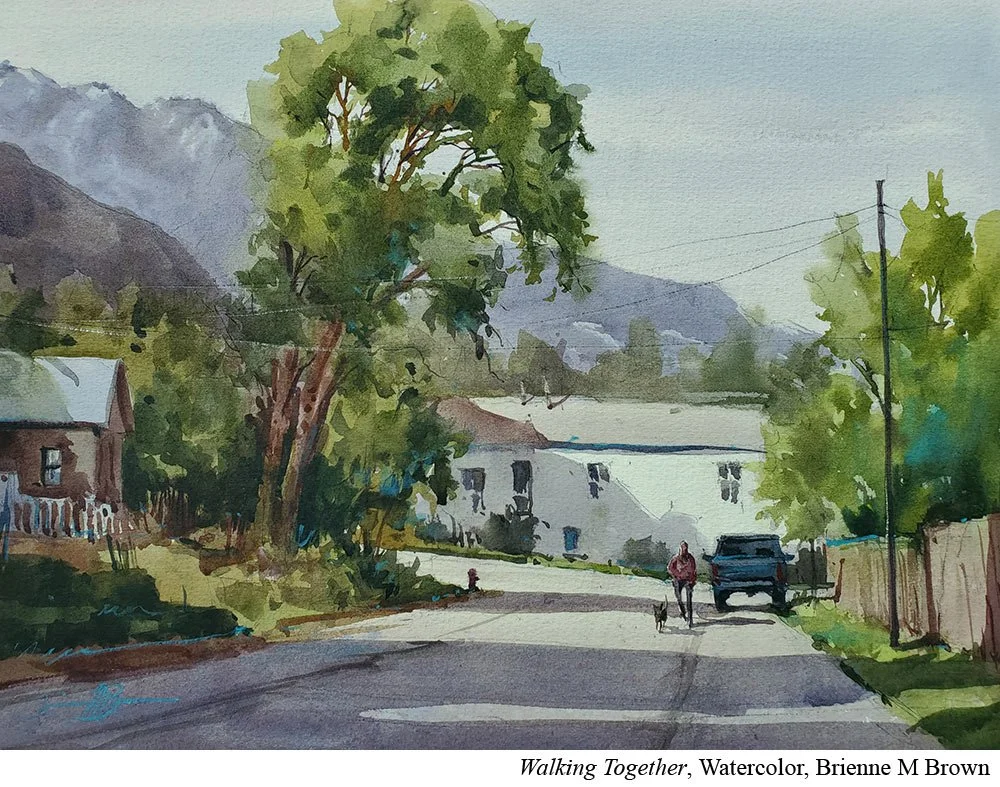
There are an almost infinite number of colors in the world.
You don’t necessarily need to reproduce each one exactly.
If Brown is looking at a green tree and she knows she can’t mix that exact green with the colors she has, she doesn’t abandon the painting or go buy another tube of paint.
She mixes a green that gets as close as she can with the colors she has.
That’s a version of simplification, and it’s highly effective.
You might do the same thing by combining several slightly different greens into one mixture or shifting a color warmer or cooler.
Simplify the Details
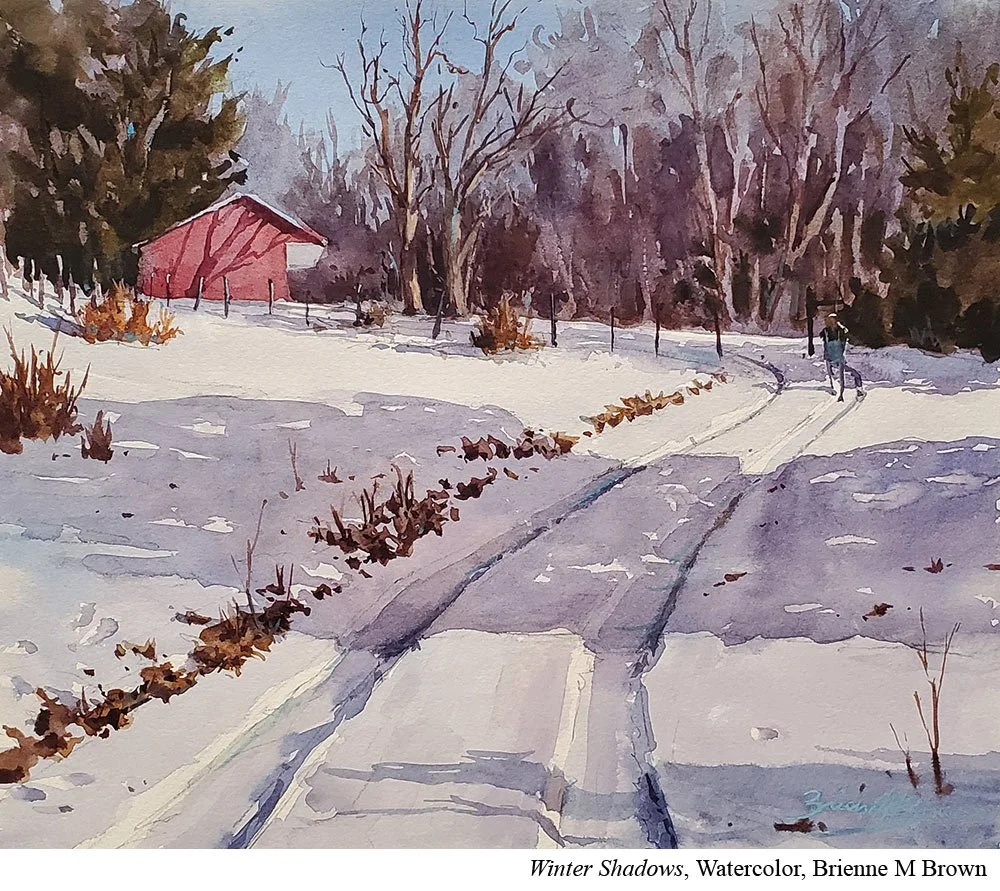
Detail can be especially difficult to leave out.
Brown used to feel like she needed to include every detail or people wouldn’t be able to tell what she was painting.
But your viewer can understand a lot from relatively little information.
You can recognize a human face from a few carefully placed lines.
You can recognize a tree from a shape, a few marks, and a specific silhouette.
You can recognize a flower from its color and shape.
You don’t need every petal, every leaf and every stamen for your viewer to know it’s a flower.
You can simplify much of it out and still have your painting read the way you intended.
Put It to Practice
One of the best ways to practice simplification is through iteration. And I am excited every time I see an iteration project in the 20for20.
Here’s how you could design a project to focus on simplification.
Choose one reference and make several studies from it.
Study 1: Draw or paint the scene with as much of the information as you normally would.
Study 2: Remove three things. The number can be arbitrary. The point is to force yourself to decide on items you’re going to take out. If you haven’t done this before, it will probably feel very, very strange.
Study 3: Reduce the scene to its three to five largest shapes.
And you don’t have to stop at three studies.
You could simplify the scene into three values. Combine several similar colors into larger color families. Remove even more objects.
Each version gives you a chance to see how far you can push simplification while still having the painting communicate what you want it to communicate. See just how many things you can eliminate, move, and combine. You might be surprised at how little a painting actually needs to work.