
Why Great Paintings Need Quiet Places
If you ever find yourself in Portland, OR on the last Thursday of a summer month, head to the Alberta Arts District. You'll find a party.
When you first enter the fray, it feels like getting hit by a wall of sound. From street bands playing on every corner to food vendors yelling out pickup orders to parents calling back wandering children, every square inch demands your attention.
Looking at a busy painting can feel the same way.
The problem isn't that there aren't good things to look at. It's that there are too many things to look at. The result is overwhelm.
As artists, we aim for dynamic work. But all too often we slip into chaotic. Finding that balance between interesting and overwhelming is a narrow line to walk.
Carolyn Lord (Ep. 21) says the secret to nailing it every time isn't to add more, more, more. It's to create areas of less. To build intentional areas of quiet and rest.

Dynamic paintings happen when your viewer trusts you to point them where to look.
This means having a primary focal area. Notice the emphasis on one.
This is especially true when you're first starting out. You don't want to accidentally paint the street fair, where every inch of the surface is calling out for attention.
You want one main area to beckon.
Like a single beautiful violin note ringing out in the middle of a quiet symphony.
You know exactly where to focus your attention. This draws viewers to the heart of the painting: the story, the focal point.
"OK," you might be thinking, "so that's 5% of the surface covered. What about everything else?"
Everything else supports that focal area… by being restful.
In Lord's work, she creates rest in three primary ways:
Color
Shape
Value
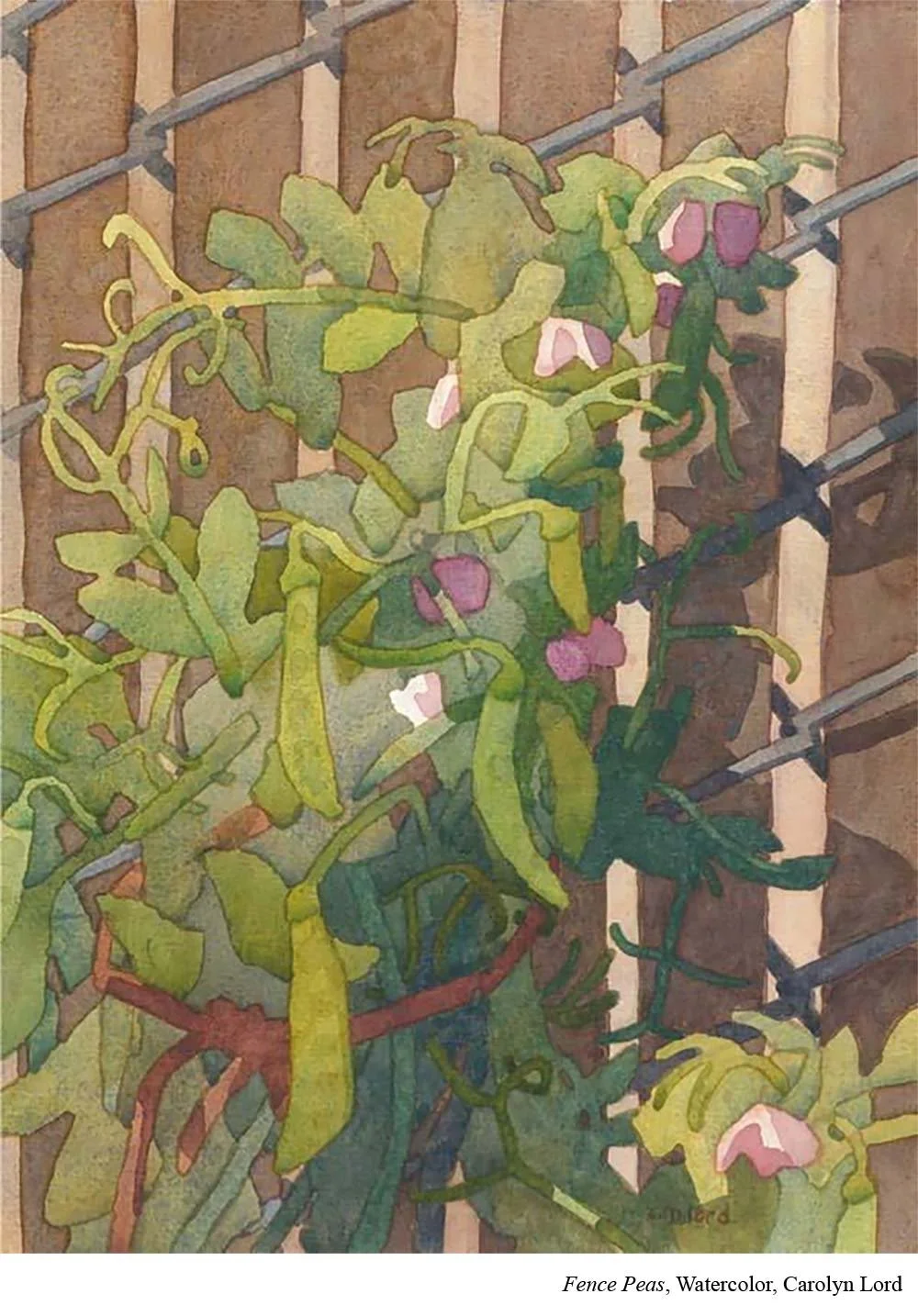
Neutralized Color
Your focal area will probably have louder color. That means pigments that are more highly saturated. Possibly even some that come straight out of the tube.
For quieter areas, Lord reaches for neutralized colors.
Neutralized color is color that has been grayed down. You can neutralize color by adding white, gray, or the color's opposite (called its complement).
In watercolor, you can also lessen a color's intensity by adding more water.
For example, if you have a bright red, you can add its complement, green, to reduce its intensity.
The more green you add, the grayer the red becomes.
Now use that neutralized color to paint quieter areas.
In Lord's work, she may use a highly saturated green next to a highly saturated red in an area of interest. But then she gently neutralizes those same colors in supporting areas, creating a calmer color relationship where the viewer can visually rest.
[Below: The poppies in the foreground are a highly saturated red-orange next to a highly saturated blue-green. The oranges and greens both become less saturated in the calmer section below the tree.]

Shape: Repetition of Shapes
Your focal area might have high shape contrast. For example, a very square architectural barn next to a highly organic tree.
To create areas of lower shape contrast, Lord uses repetition.
Think of a single circle in the middle of a page. It draws your eye because it is the only circle.
Similarly, if you have a single circle in a sea of squares, that circle draws your eye because of the shape contrast.
But if you have a page full of circles, think wrapping paper, your eyes say, "Another circle. I've seen one, I've seen them all."
The repetition is noted and your eye moves on.
The poppies above all share a similar shape, so the eye moves across them more easily than if they were surrounded by additional flower shapes.
Lord uses this to her advantage. She creates enough shape contrast to keep an area interesting, but enough repetition that the eye moves through it toward areas with greater contrast.
The result is a passage that feels engaging without competing for attention.
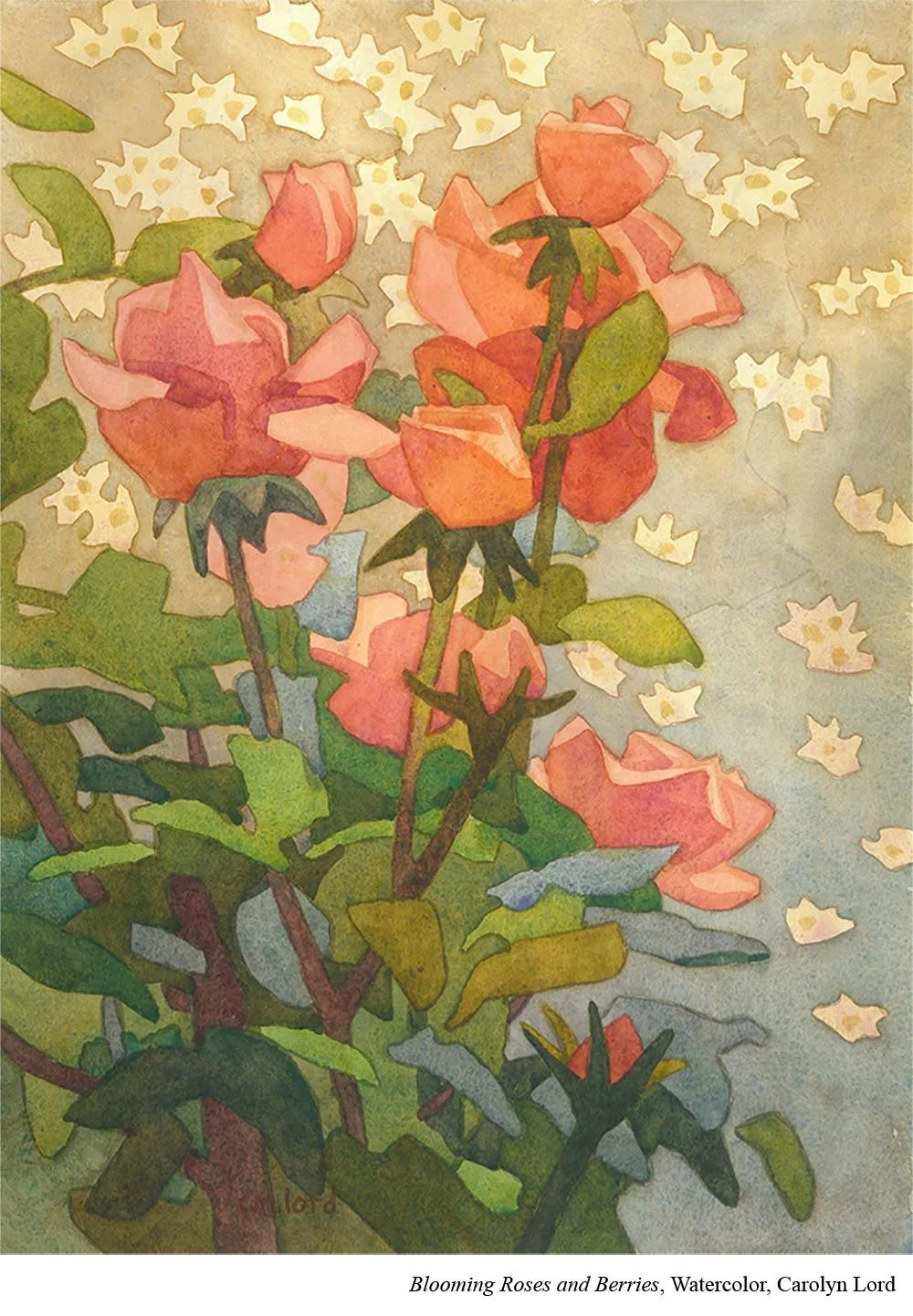
Value: Low Value Contrast
Your focal area will most likely contain your lightest light next to your darkest dark.
Which means that to create quieter areas, you'll want passages where the values are more similar.
Low value contrast is probably the primary way Lord creates resting areas for her viewers.
She might create a passage of flowers using several colors while keeping those colors very similar in value.
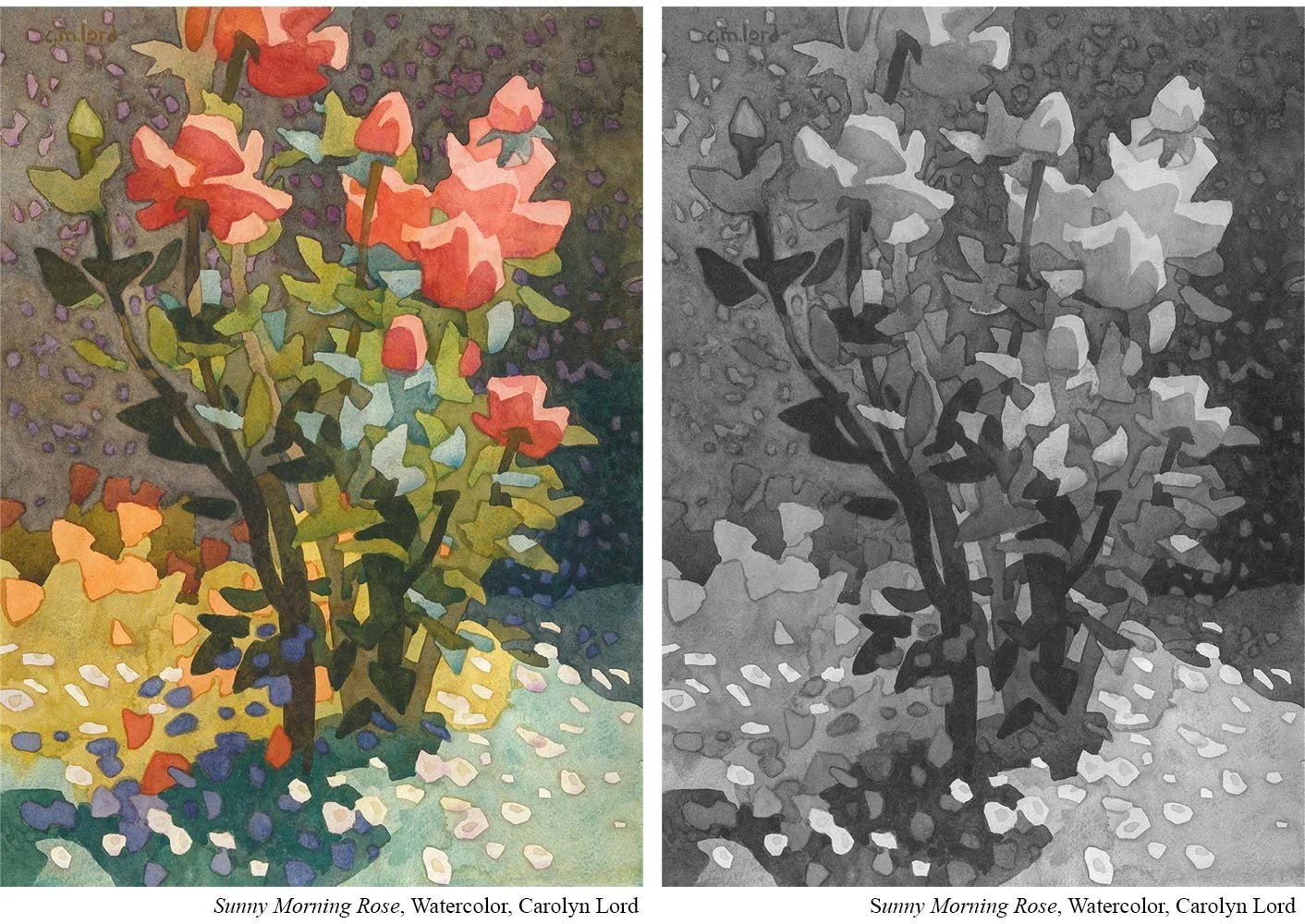
While our eyes love color, our brains register value contrast much more strongly. Because of this, she can create interest through color while keeping value contrast low, resulting in an area that doesn't compete for attention.
PUT IT TO PRACTICE
To create areas of rest, first decide on your focal area. Where do you want viewers to look first?
Once you know that, design the supporting areas around it.
For example, if you're a landscape painter and your focal area includes a red barn with a black-and-white cow next to it, you might use strong black-and-white spots on the focal cow but paint the other cows with gray spots instead. This reduces value contrast and keeps attention where you want it.

[The greens of the leaves and stems are so similar in value that the eye can rest easily for moment.]
Or, if there are trees nearby but not in the focal area, you could use more highly saturated greens closer to the focal area and neutralize those same greens as you move away from it.
If you're an abstract painter, these same principles apply.
You can also build your skills outside the studio.
When you're out in the world, look at a scene, decide on a focal area, and mentally audition strategies for the supporting areas.
It's a simple thought exercise, but it helps train your decision-making muscles.
And bonus: it keeps you from doomscrolling.
Dynamic paintings have a few major things in common. One of the biggest is a focal point supported by areas of rest.
Viewers know where to look and have a reason to stay looking. When you build intentional areas of rest into your paintings, they'll feel less overwhelming and more engaging to look at.
Get articles like this and new podcast episodes sent straight to your inbox by signing up for the newsletter below.