How to Learn a New Medium (Jumpstart with Black and White)
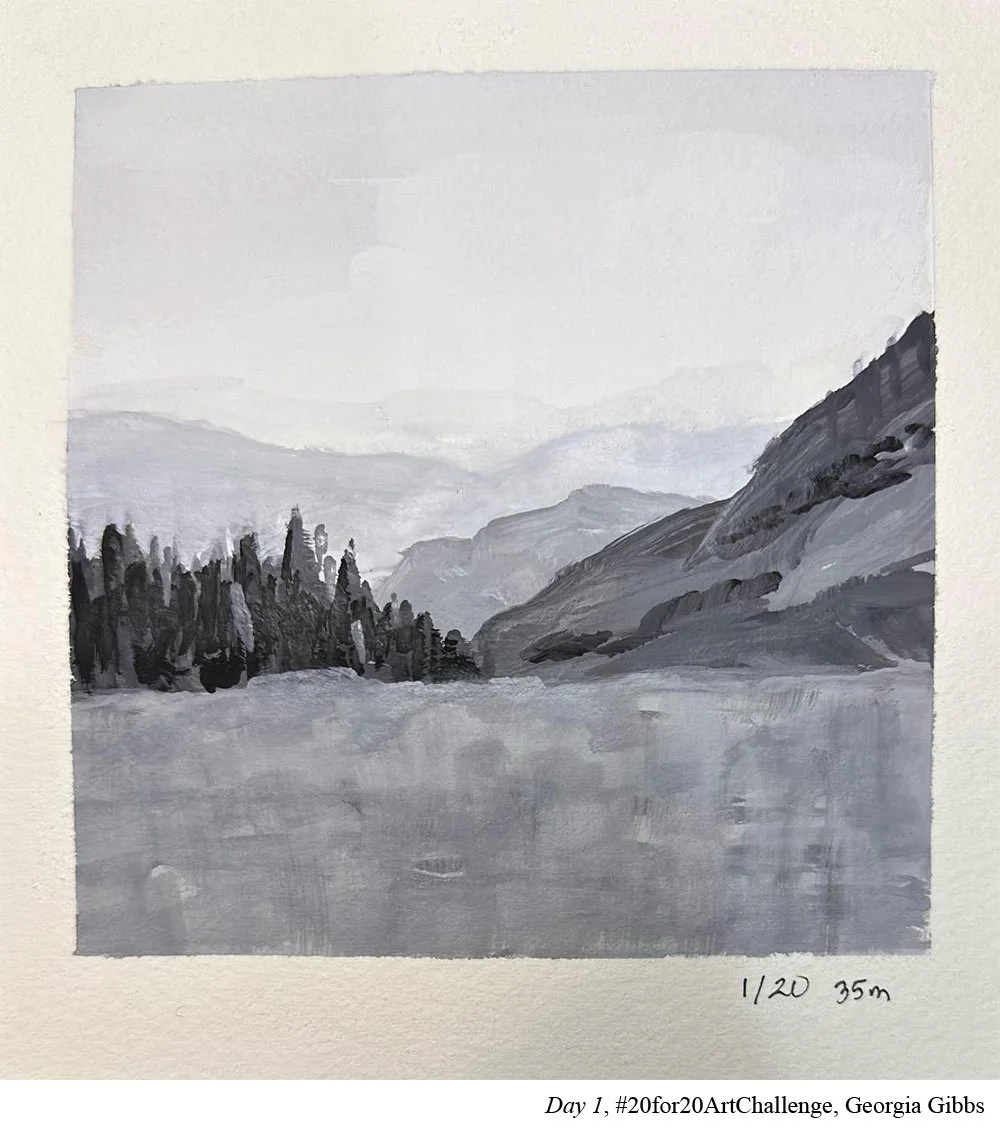
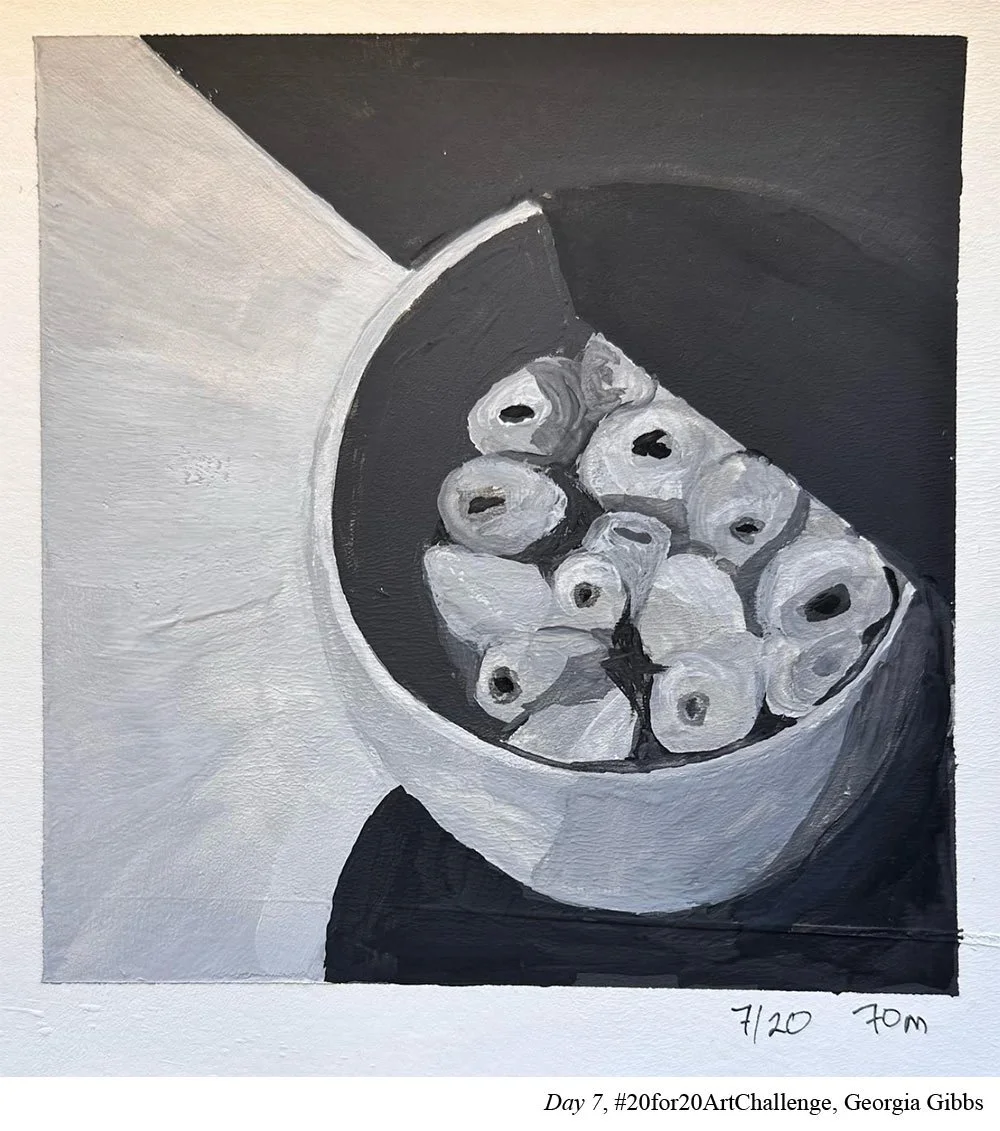
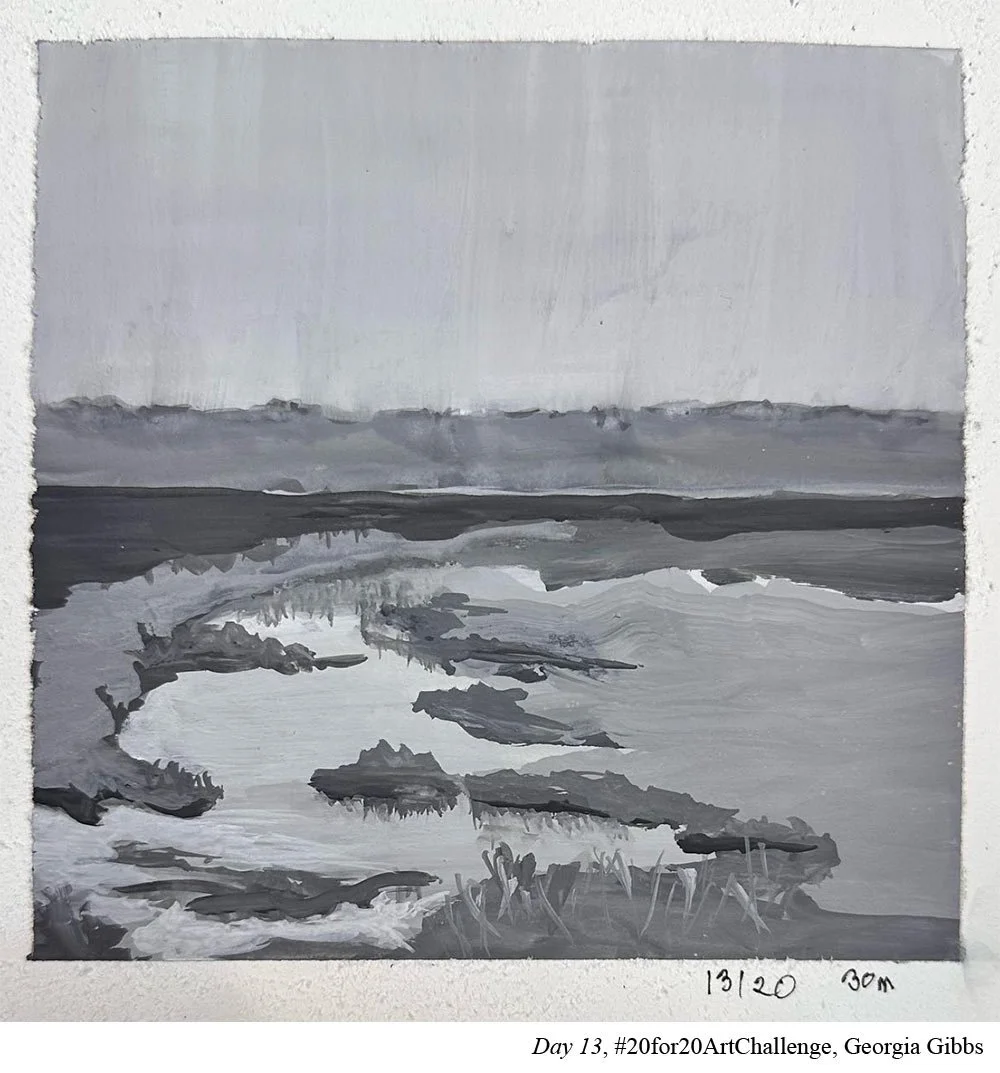
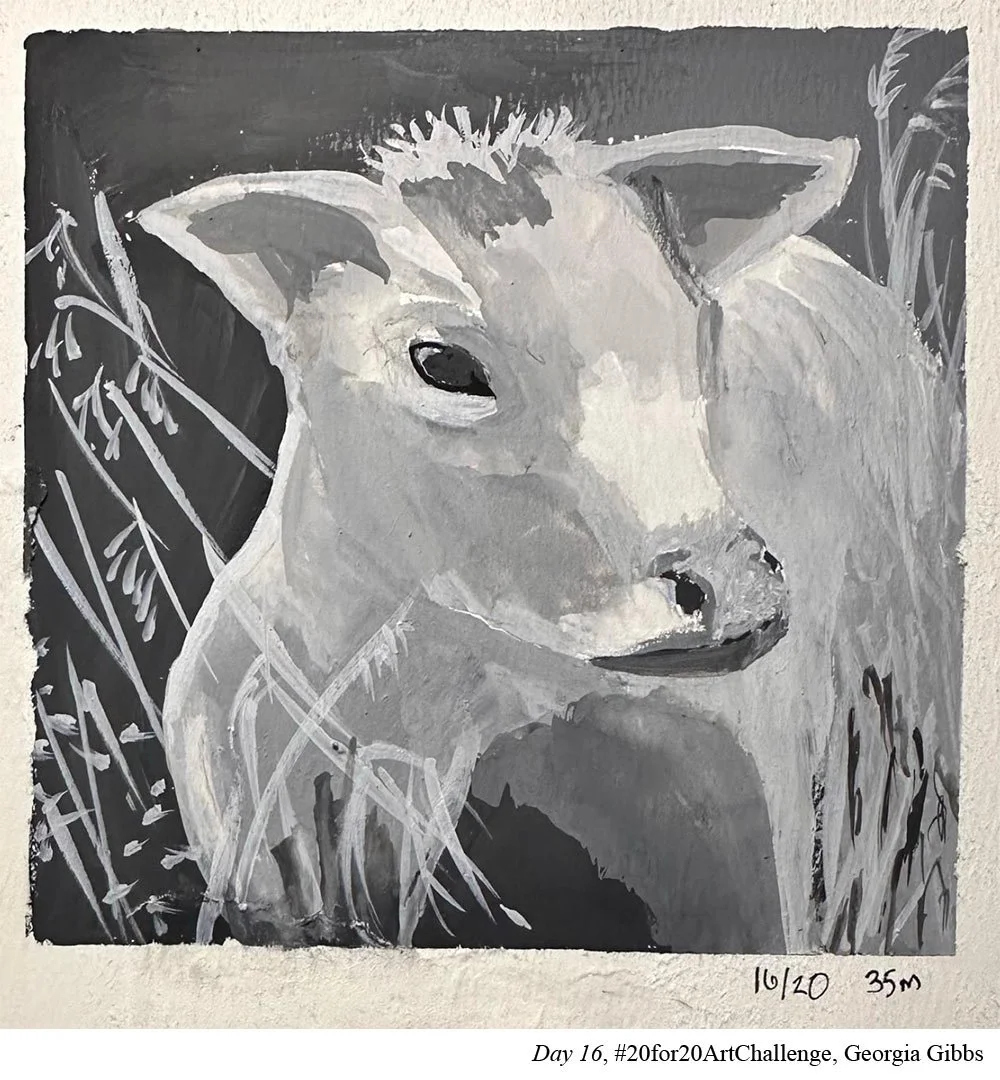
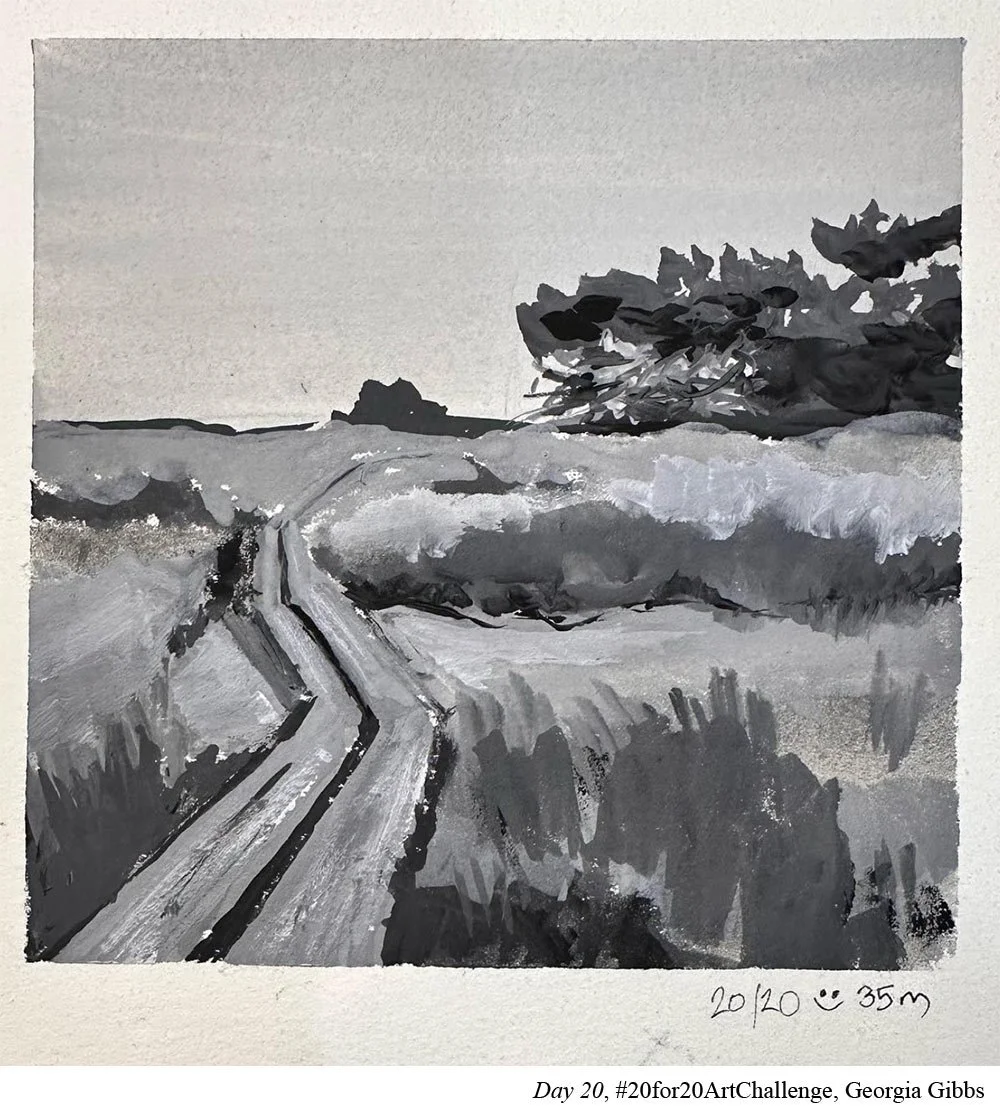
When you think about painting, you probably imagine an artist with lots of colorful tubes of paint. But for the 20for20, artist Georgia Gibbs pulled out just 2 tubes: a black and a white.
But it went further than that. She didn’t just limit her tubes, she limited her medium and her approach to be super focused. She chose one medium for the 20 days. Each day she worked the same way: she painted the optional reference in grayscale using just black and white.
The reason?
She had limited time but she still wanted to build skills fast.
Let’s dig into why she organized her project this way and explore what skills it can help you build. (Spoiler: so many skills.)
What’s This Project Good For?
The 20for20 (and the projects the Challenge helps you design) is all about building skills.
Gibb’s grayscale painting project helps you build 4 important skills.
Learning a New Medium
This was Gibbs’ primary reason for her project. She knew she wanted to try a new medium, gouache. But she also knew that jumping straight into color would be too overwhelming. She wanted to learn how the medium worked in a simpler way.
Enter black and white.
By taking color out of the equation, you can focus on the medium itself. How does it mix? How do you manage the moisture? How much paint do you need on your brush to lay down an effective stroke?
This approach gives you freedom to explore one part of the medium without having to juggle color as well.
If you’re trying to learn a new medium, starting in black and white as a way to jumpstart your skill development. Other skills will develop faster because you have these fundamentals locked in.
Building Value Skills
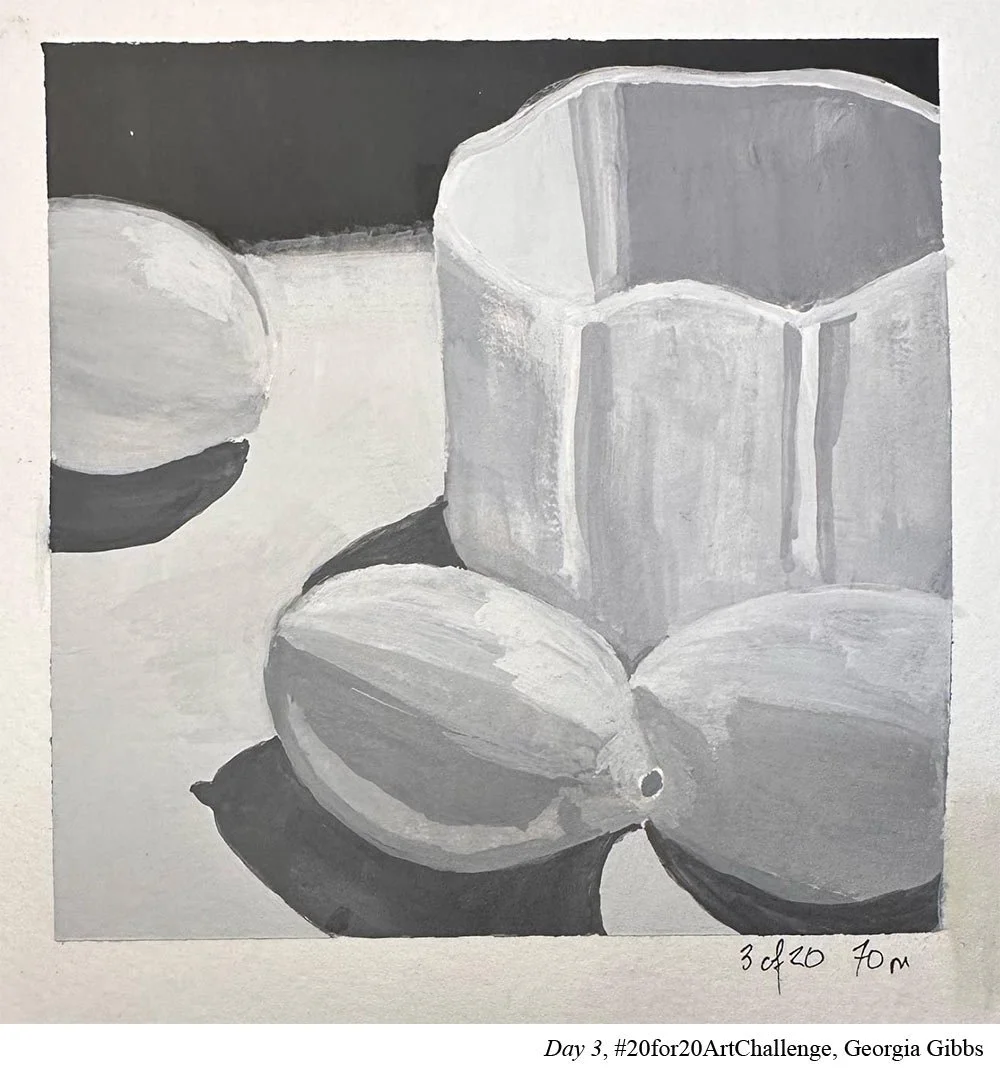
While Gibb’s main focus was learning a new medium, she loved the idea of building value skills simultaneously.
Working in just black and white is a powerful way to focus your mind on value. This helps build skills on two fronts.
First, it helps train your eye to see value.
Second, you practice translating what you’re seeing into paint.
These are two separate skills, and this project blends them together beautifully.
You might walk into the project thinking that it sounds too easy.
“It’s just black and white,” you think.
But you’ll realize quickly that value work is a brain workout. Most of us aren’t used to thinking in terms of black and white, so there’s a lot of translation happening.
Surprisingly, you might find that you’re more tired working this way than you would be working with color. But you’ll walk out of the Challenge with a deeper understanding of the critical role value plays in strong paintings.
Building a Series
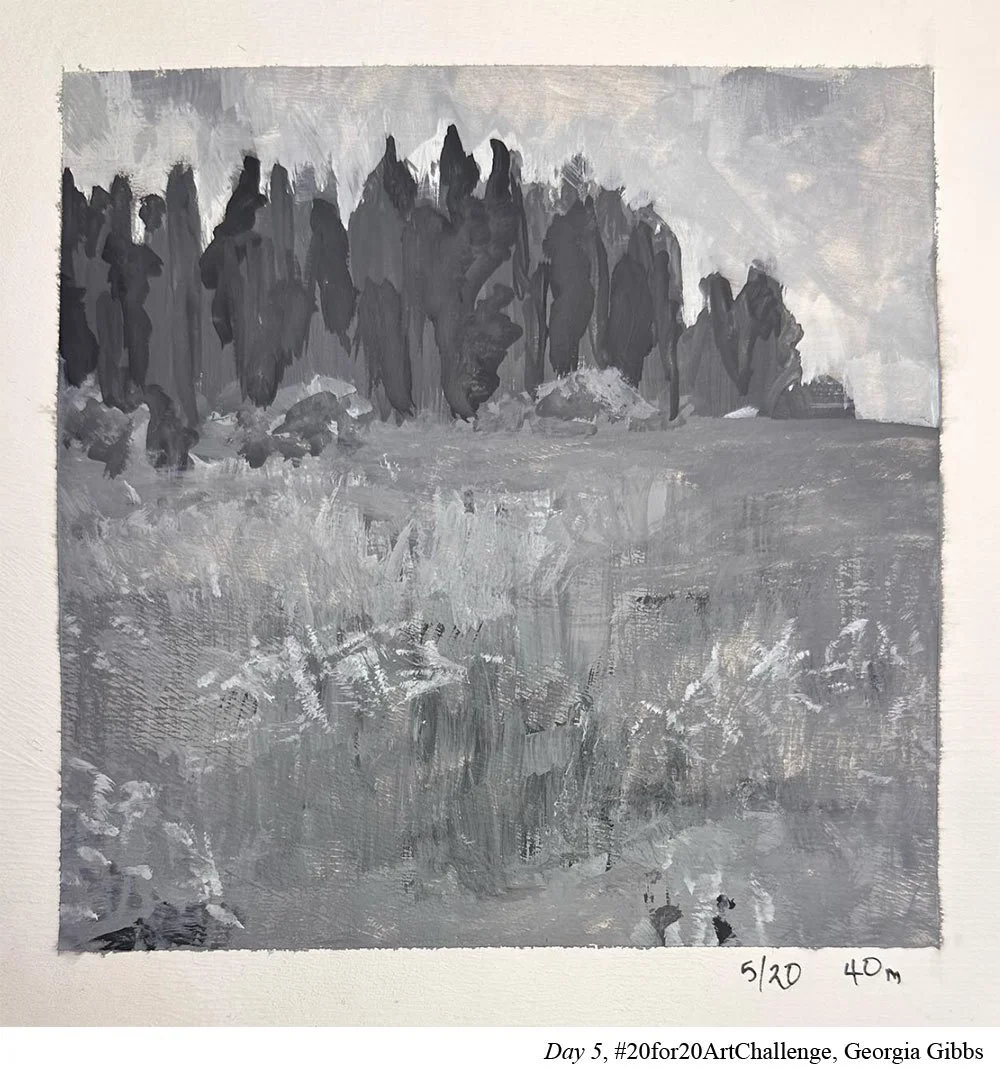
This wasn’t Gibbs’ goal, but it’s a great use of this way of working. If you’re interested in building a body of work and getting familiar with your subjects, spend 20 days with them in black and white.
By focusing purely on value, you’re giving yourself the chance to study your subject and understand the visual structures that help make a painting work.
You’re also lowering the pressure. When you explore something in black and white, you know these aren’t finished paintings. That opens up room to be curious about the subject itself. You’re going to notice things you might have missed if you rushed into full-color paintings.
This way of working gives you a chance to fall in love with your subjects. There’s something magical that happens when we spend time with our subjects without pressure to produce anything in full color.
You’ll walk into the color paintings feeling more confident and more connected to your reference material.
Strengthening Habit
The 20for20 is habit work. That’s baked into the Challenge, but it’s worth mentioning because we often overlook that part.
Gibbs wanted to practice showing up every day. She wanted to see what systems she needed to build in order to do that.
Yes, through this project you’ll be building medium skills and value skills, but you’ll also be building habit skills. You’ll practice holding time each day, or five days a week, for your painting.
You’ll run into days where things feel incredibly easy. You’ll also run into days that feel incredibly hard. Both matter when you’re building habit skills.
How to Know if This Is the Right Project for You
You might think, “But I want to learn color!” And if the idea of spending part of a month in black and white feels too boring, then skip it. That just means this project isn’t the right fit right now. That’s great information to have.
But if the idea of not having to deal with color creates a sense of relief, and you’d like the chance to simply get familiar with how a new medium handles, then maybe this is the right project for you.
A Word About Your Inner Critic
You might notice your inner critic has some opinions about this project. Part of deciding whether the project is right for you is learning to separate your opinion from your inner critic’s opinion.
Your inner critic might say:
“Those aren’t real paintings.”
“Value is a waste of time. You should be learning color.”
“You don’t have time to focus this much. Real artists don’t work this way.”
Your inner critic is trying to keep you safe. She wants what’s best for you. But she doesn’t understand how learning works.
She doesn’t understand that you don’t always have to be finishing paintings. She doesn’t understand that value skills are fundamental to building color skills. And she doesn’t understand that artists work this way all the time.
So part of your job is to get quiet and separate inner critic from preference.
Because it’s also possible that you simply aren’t interested in working this way. That’s OK too. But make sure it’s you who thinks that and not your inner critic defaulting to born-artist-inspired myths around what it means to be a painter.
Put it to Practice
Use this project for the 20for20 or on your own. If you’re planning to do this on your own, you can still use these steps. You just might need to adjust them a bit.
How to Use Prep Week to Set It Up
Prep Week begins June 22, which means you’ll have over a week to prepare your project.
Most people skip this the first time they do the 20for20 and then realize how useful it is. By the second Challenge, they make sure to use Prep Week. That’s what learning looks like, and it’s great.
Prep Your Images
You’ll want to work with black-and-white images for this project. Use Prep Week to get them organized and easy to access.
Look through the 20for20 reference list. (Available June 22 when Prep week goes live.) All of the images are copyright free. Download them and get them ready to use. Maybe that means keeping them on your device, or perhaps converting them to black and white on your phone.
Prep Your Materials
Decide what medium you’re going to work in. I encourage you to choose just one. You’ll actually learn a lot more if you focus on just one medium.
Then make sure all your materials are ready to go. If you’re able to leave them out for the duration of the Challenge, even better.
Do a Test Run
Part of Prep Week is doing a test run.
Set your timer and audition your process by trying a black and white painting.
You’ll realize quickly that some of your expectations were too grand and some were right on the mark.
Both realizations are wins. That’s valuable information you can use.
This is a great opportunity to make an adjustment or two before we officially kick off on the 1st.
Ready to join?
Registration opens next week, with everything going live when Prep Week begins June 22nd. Add your name to the waitlist to get notified when registration opens.