When Life Changes, Your Art Practice Can Change Too
I'd love to tell you that once you get started, you'll never run into problems with your art practice again.
You'll figure out how to show up consistently. You'll build a routine that works. And from that point forward, you'll just keep painting, no problem.
But that's not how it works.
Life changes.
And sometimes the art practice that worked so well for you before doesn't work anymore.
That's what I found so inspiring about Judy Macdonald's project during a recent 20for20.
Macdonald wasn't trying to build an art habit for the first time.
She'd been painting consistently for almost eight years. She worked primarily in acrylics and, for years, picked up her brushes almost every day without really having to think about it.
She had a practice.
And then life changed.
For several months, she wasn't painting at all. Her supplies were packed away. She didn't have a dedicated art space in her new house. She had less time and bandwidth available to her.
The practice that had once felt almost automatic suddenly wasn't working.
When What Worked Before Doesn't Work Now
There's something especially difficult about trying to return to something, especially something you used to do consistently.
You know what you're capable of.
You remember what your practice used to look like. You remember HOW GOOD it felt.
Maybe you used to paint for two hours and now you have twenty minutes.
Maybe you used to have a dedicated studio and now you're working at the kitchen table.
Maybe you used to make large paintings and now getting out all those materials feels overwhelming.
It's easy to compare what you can do now with what you were able to do then.
And because what's possible today feels like less, you feel defeated. Instead of doing the smaller thing, you end up doing nothing at all.
It's easy to get stuck here, waiting for things to go back to how they were. Waiting for the circumstances that supported your old practice to come back.
But what if they don't?
Macdonald's version of this was packed-away paints and no dedicated art space.
Yours might be completely different.
Maybe your work schedule changed. Maybe you're caring for someone. Maybe you have less energy than you used to. Maybe you downsized to a smaller space. Maybe you simply don't want to spend three hours on a painting anymore.
Whatever the reason, something has changed.
So instead of asking: How do I get my old art practice back?
It might be time to ask a more useful question: What kind of art practice fits my life now?
What Can I Do Now?
That's the question Macdonald answered when she joined the 20for20.
Instead of trying to recreate the art practice that had worked in her old circumstances, she looked at what was possible in her life now.
And then she adapted.
She Changed Her Materials.
Macdonald had been an acrylic painter for years. But now her paints were packed away in boxes and she didn't have a dedicated art space.
She could've looked at that situation and thought, I can't paint right now.
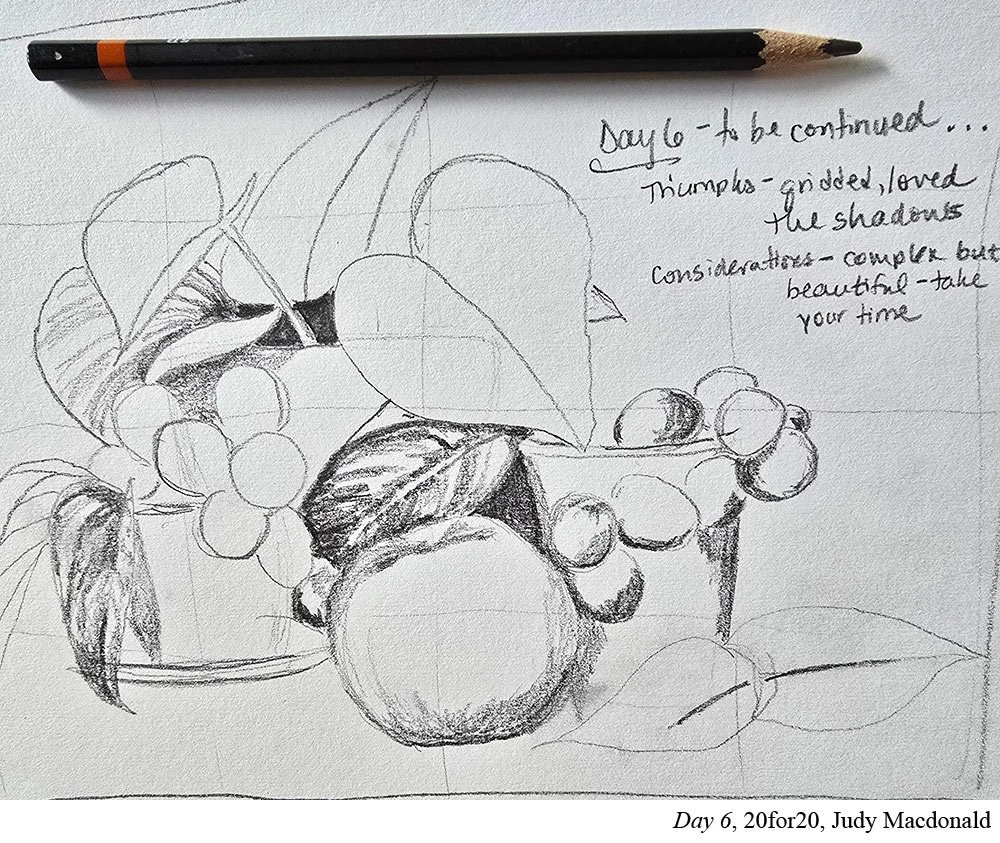
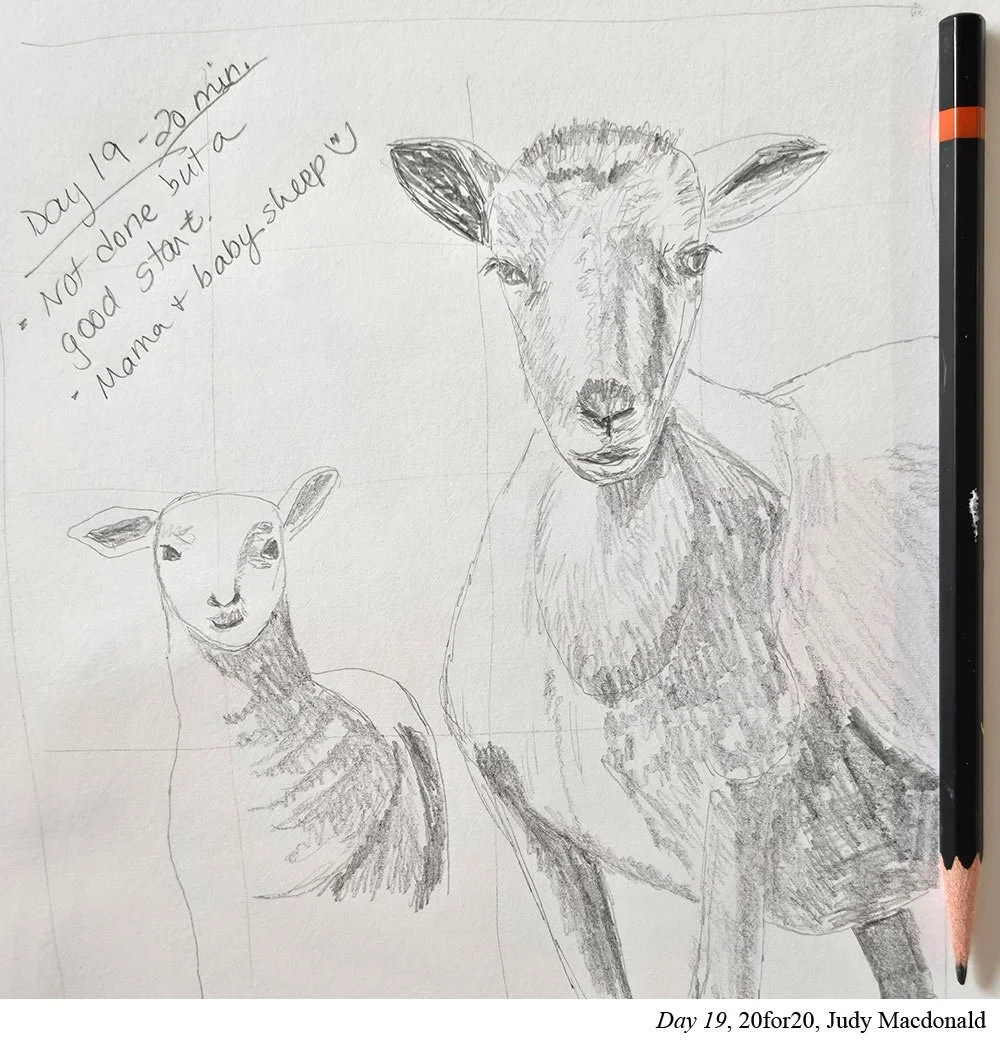
Instead, she chose pencils and paper.
It wasn't the art practice she'd had before. But it was an art practice she could actually do.
You may have your own version of packed-away paints.
Maybe you no longer have a dedicated studio. Maybe getting out your usual materials requires more setup and cleanup than you currently have time for. Maybe the supplies that once lived on a table now have to be pulled out of a closet every time you want to work.
The question isn't whether you can force your old setup to work.
It's: What materials make sense for the circumstances you have now?
She adjusted to the bandwidth she actually had.
Macdonald also knew she didn't have the bandwidth for an ambitious painting project.
So she didn't choose one.
She chose a simple drawing project and committed to twenty minutes a day.
This can be surprisingly hard to do.
When your energy is low, your instinct may be to keep asking yourself to complete the same kinds of projects you took on when your energy was high.
And when you can't, your inner critic might call that failure.
It isn't. It's flexibility.
And flexibility is critical if you want to build an art practice that lasts for years.
Your available time and energy are going to shrink and expand throughout your life.
Maybe you used to paint during a two-hour nap and now that nap lasts twenty minutes.
Maybe school suddenly gets out an hour earlier.
Maybe your afternoons are now filled with appointments.
Maybe work gets particularly demanding for a few months.
We tend to think expansion is always the goal. More time. Bigger projects. More ambitious work.
But sometimes maintaining an art practice requires contraction.
You work smaller.
You choose a simpler project.
You give yourself twenty minutes instead of waiting for two hours.
This isn’t backwards movement.
You're making the practice doable enough that you can keep moving at all.
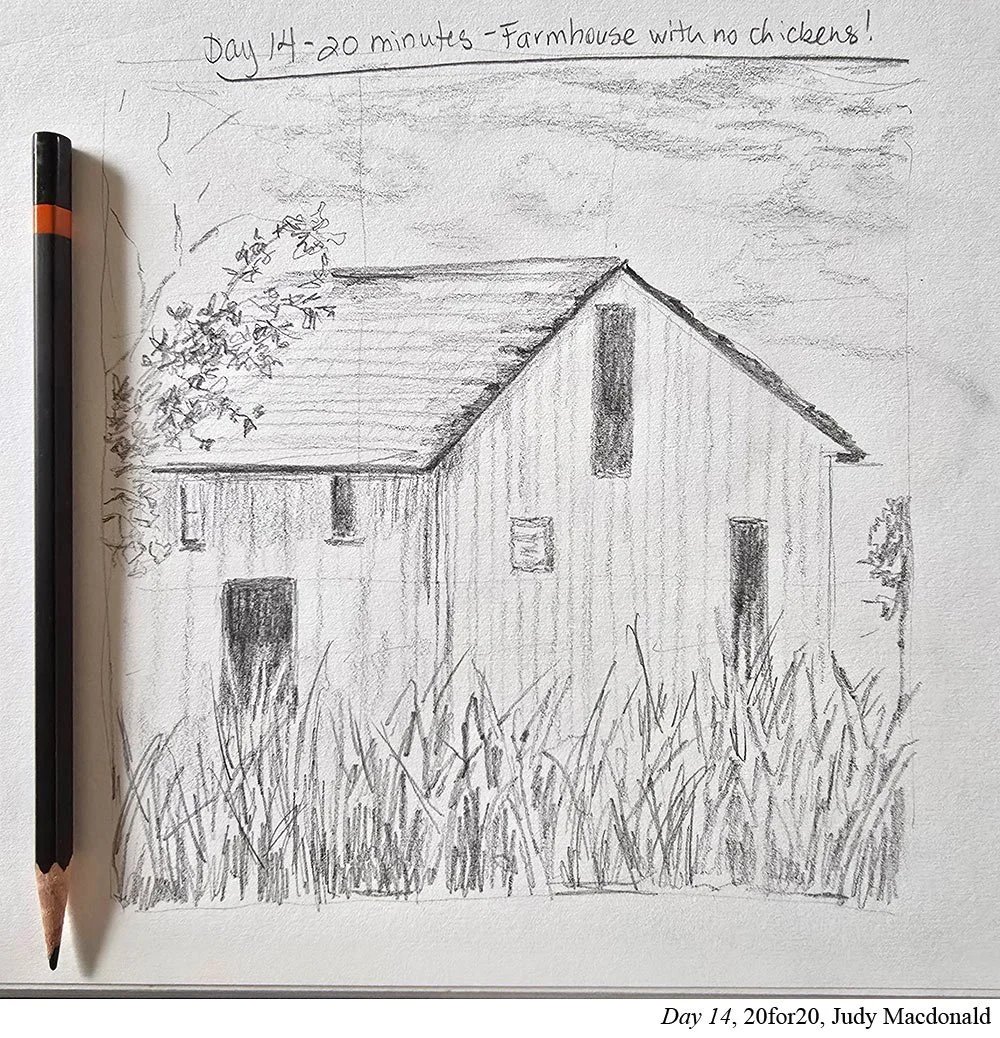
She Changed What She Expected from Herself.
Macdonald also knew something important about herself as an artist.
She could put a lot of pressure on herself to produce careful, accurate work and keep going until she'd made something she liked.
That expectation might've worked under different circumstances.
It didn't fit this project.
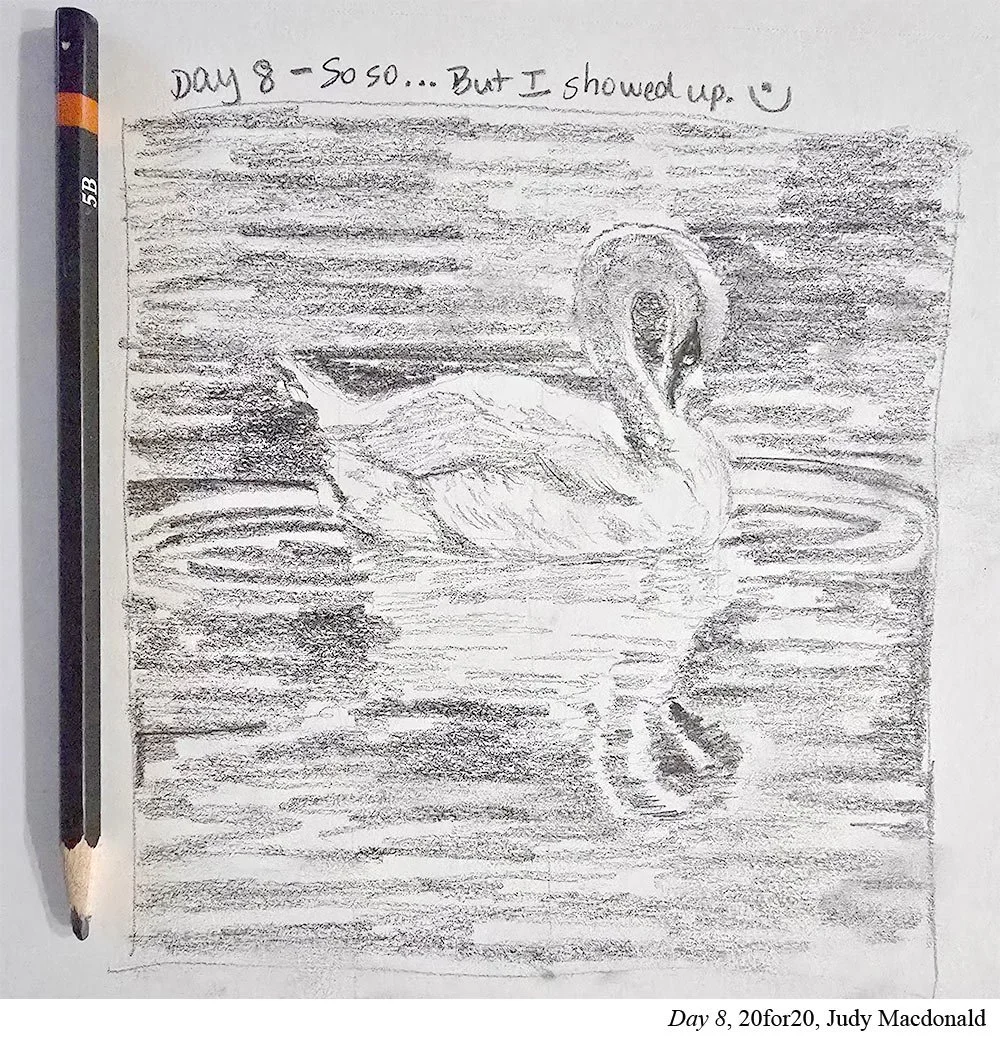
So Macdonald chose twenty minutes as her maximum, not her minimum.
When the timer went off, she put down the pencil… Finished or not.
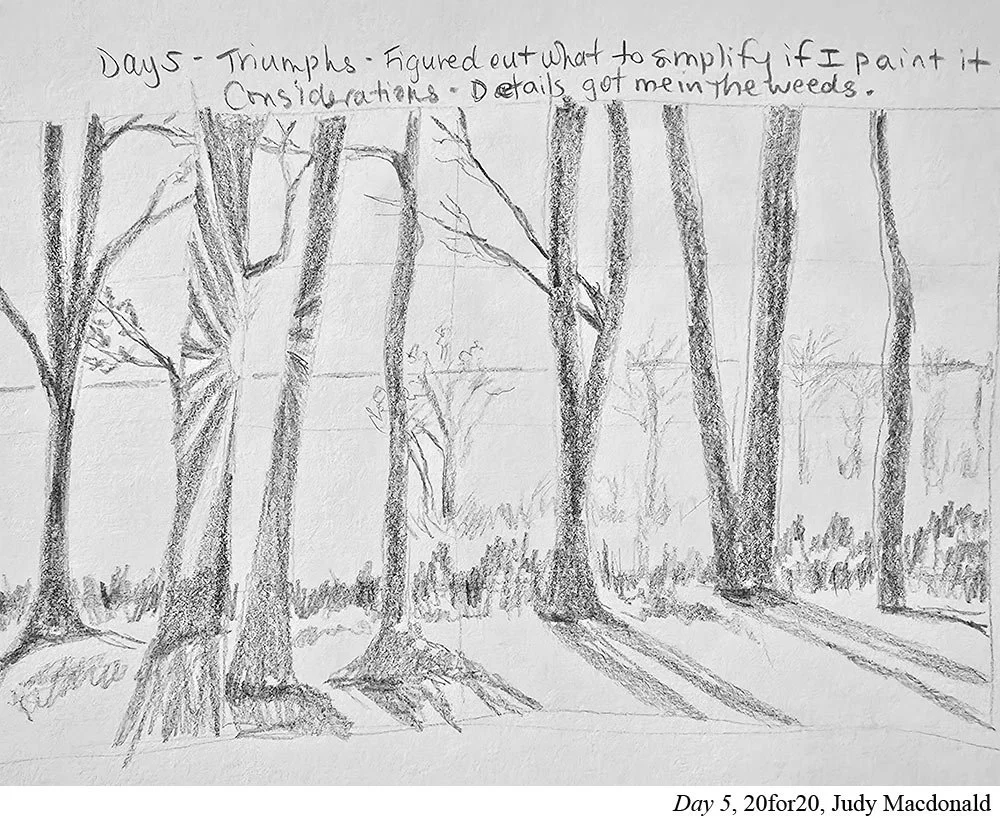
She also started simplifying and cropping her references rather than expecting herself to capture every detail.
In other words, she didn't just change her materials and her time.
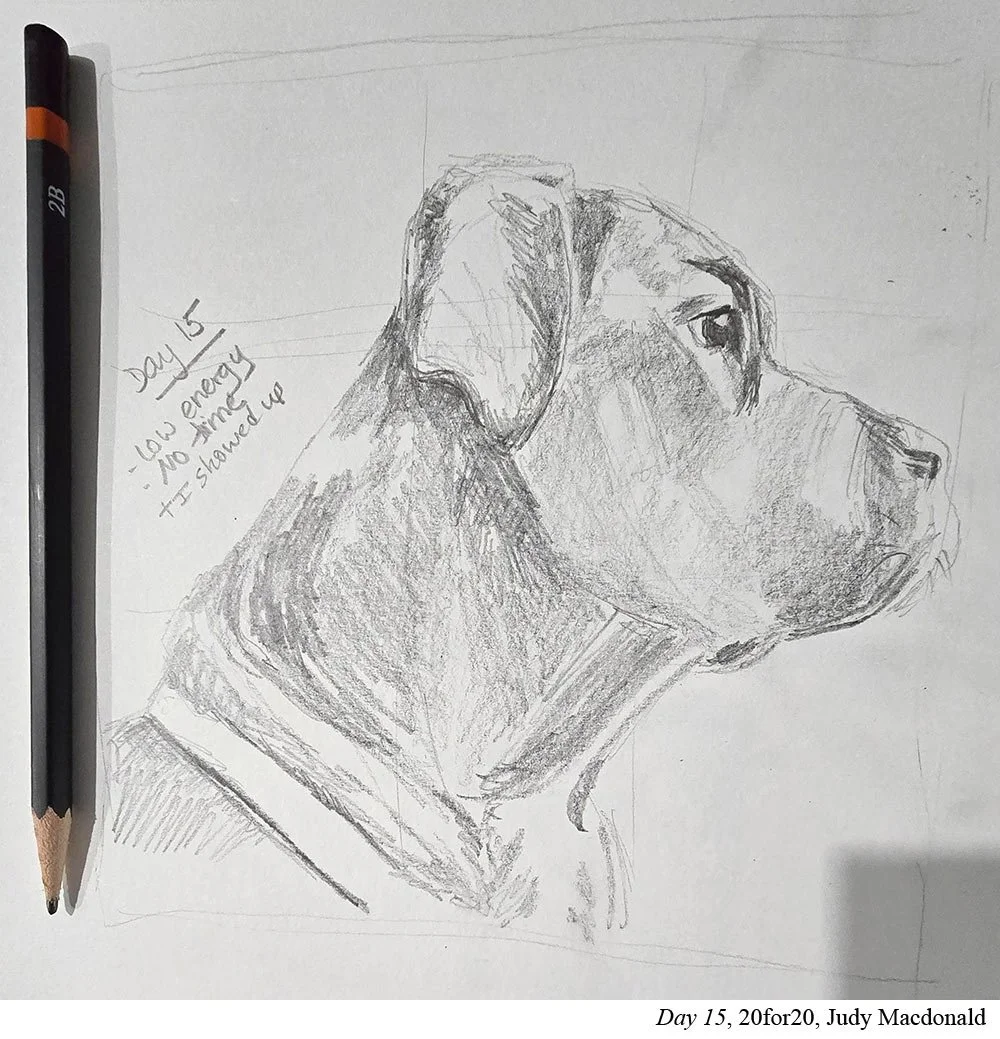
She Changed Her Definition of Success.
That's an adjustment we sometimes resist.
When you have plenty of time, energy, and momentum, you may have the capacity for high expectations. You might work longer, take on complicated projects, or demand a high level of attention to detail.
And this FEELS GOOD. It feels like, “I’m working hard! I’m finally doing it!”
And you should feel good.
But if your circumstances change and you continue demanding exactly the same thing from yourself, that's not necessarily the best, long term move.
Because it can be the road to serious burnout.
Learning to paint requires hundreds of individual skills. Every time you draw, mix color, look for shapes, compare values, make compositional decisions, or simply pay close attention to what you're seeing, you're practicing some of those skills.
So a smaller practice doesn't mean you're no longer learning.
But it may feel different. And you may translate that sense of differentness to it feeling like LESS.
Your expectations may even try to convince you that you're failing.
But you're still heading in the right direction, just in a way that's realistic enough to sustain.
And that's exactly what Macdonald discovered.
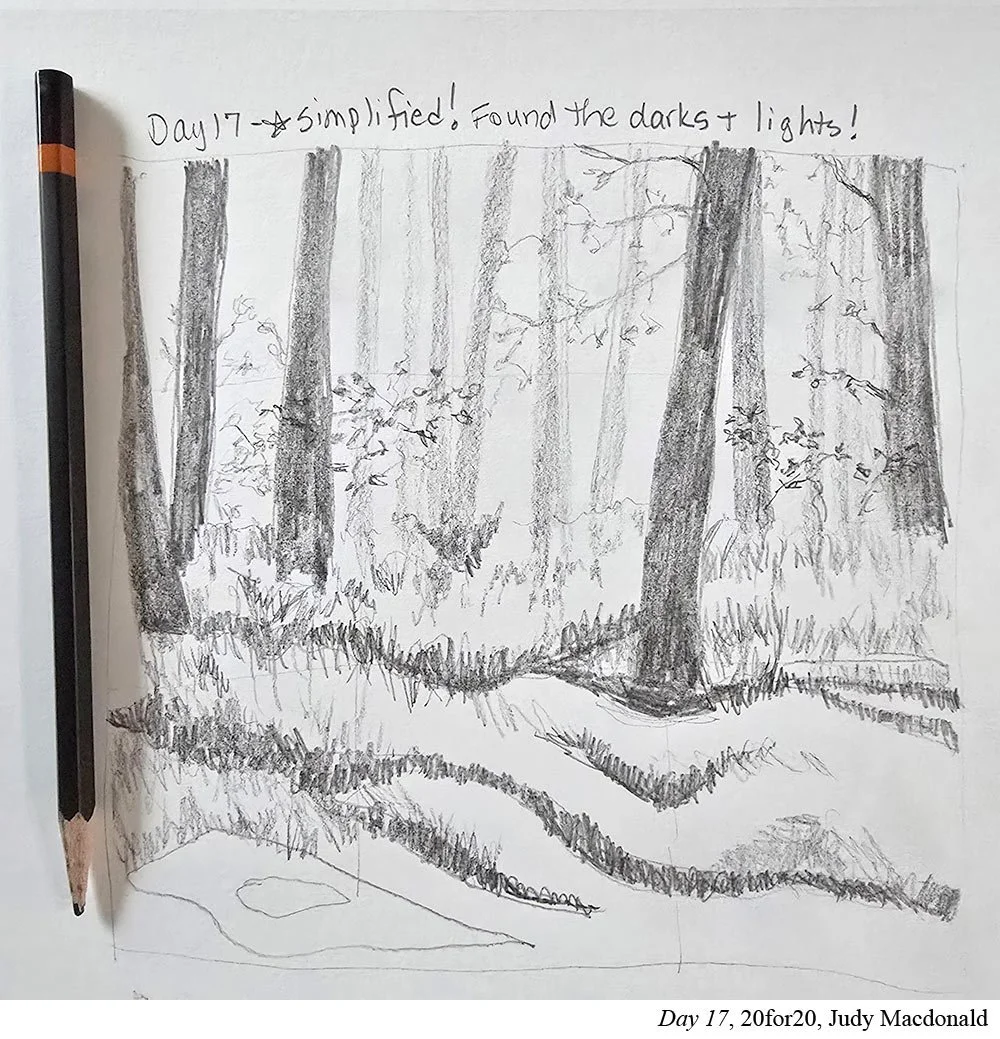
A Smaller Practice Isn't a Lesser Practice
Macdonald's new practice looked like less on paper.
She'd gone from being an almost-daily acrylic painter to sitting down with pencils and paper for twenty minutes.
But look at what that smaller practice actually accomplished.
She hadn’t been showing up at all. Then within the first week, sitting down to make art was beginning to feel automatic again.
She was making art.
She was learning.
Most importantly, she was showing up again.
That's what she needed from her practice at that moment.
And I think that's an important distinction.
The question isn't whether your current practice is as big, ambitious, or productive as the practice you had before.
The question is whether it's helping you maintain a relationship with your art now.
Because twenty minutes spent drawing builds more skill than two hours of painting you keep waiting to have time for.
A small project you actually begin gives you more than an ambitious project that exhausts you before you get started.
And building a practice that bends when your life changes, means you’re building the habit for when your circumstances change again.
Sometimes the way you keep an art practice growing is by allowing it to get smaller for a while.
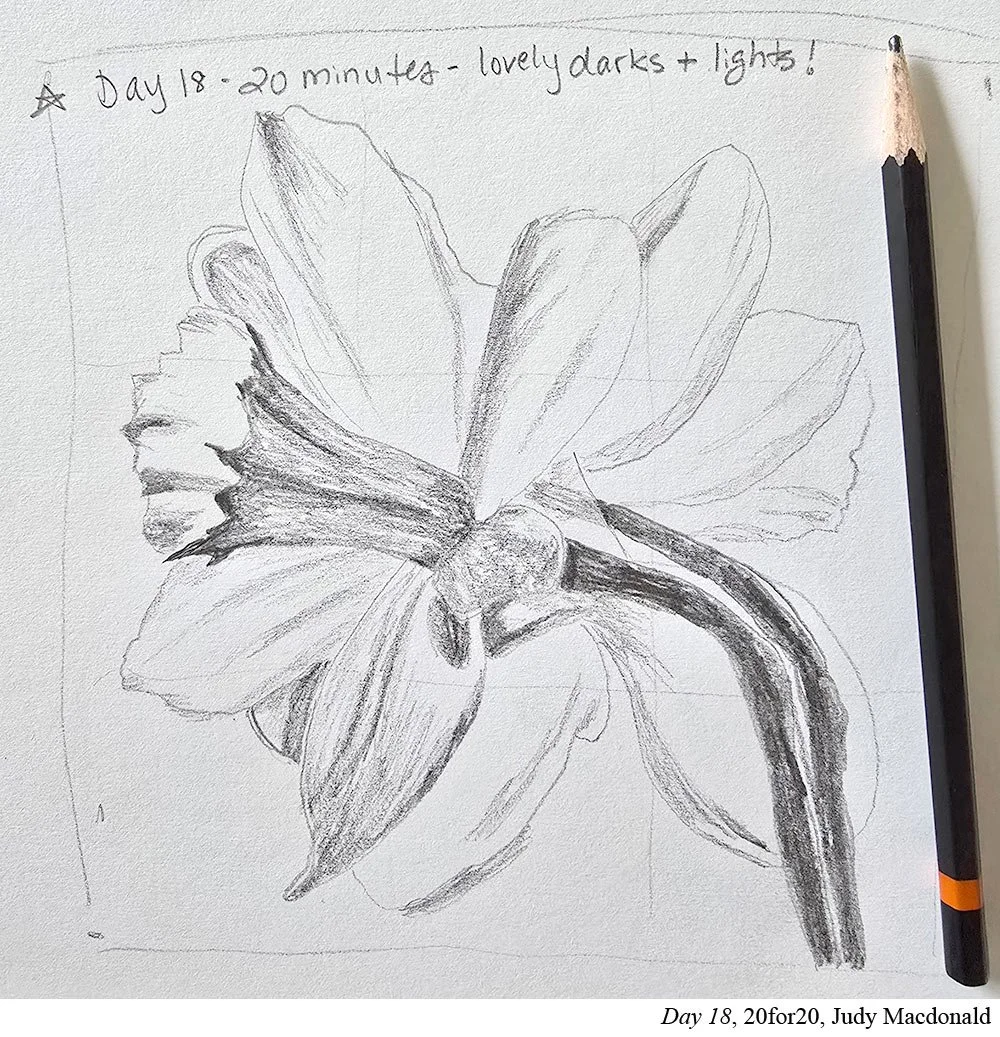
A Sustainable Art Practice Is Allowed to Change
I think sometimes we imagine that the goal is to finally discover our perfect art routine.
The right time. The right space. The right materials. The right process.
And… then keep doing that forever.
But maybe a sustainable art practice isn't one that never changes.
Maybe it's one you're willing to change when your life does.
There'll be seasons when you can paint for hours.
There'll also be seasons when twenty minutes with a pencil is what you have.
And there may be seasons when simply maintaining a small connection to your art matters more than how much you produce.
The important thing isn't to make today's practice live up to yesterday's circumstances.
It's to build a practice you can actually show up to today, tomorrow, and the next day.
Put It to Practice
If you've been struggling to show up lately, instead of immediately asking yourself how to become more disciplined, take a look at the practice you're asking yourself to maintain.
Start with what used to work.
What did your art practice look like when showing up felt relatively easy?
Think about how much time you had, where you worked, what materials you used, what kinds of projects you took on, and what you expected yourself to accomplish.
Then ask:
What's different about my life now?
The answers might feel painful. This isn't about judging what changed or telling yourself, If only I'd kept it up.
You're just diagnosing, neutrally and with curiosity, what's different now.
Next, look for the friction.
Which part of my old practice is hardest to maintain in my current life?
Is it the time?
The setup and cleanup?
Your space?
The materials?
The size or complexity of your projects?
Or are you expecting yourself to produce work at a level that simply doesn't fit the time and energy you have right now?
Finally, ask:
What could I change to make showing up realistic now?
Maybe that means changing your materials.
Maybe it means working smaller.
Or drawing instead of painting.
Or means giving yourself twenty minutes instead of waiting for two hours.
Maybe it means changing the goal from finish something to explore something.
You don't have to rebuild your entire art practice today.
Change one thing and see what happens.
Because the goal isn't necessarily to get your old art practice back.
It's to build an art practice that works for the life you're living right now.
Learn more about the 20for20 Art Challenge here.