20for20 Artist Stories: Judy Macdonald
Judy Macdonald had been painting consistently for almost eight years when life changes brought her practice to a stop. In this interview, she shares how she used the 20for20 to rethink what her art practice could look like right now, and how twenty minutes a day with pencils and paper helped her begin again.
What were your goals heading into the Challenge?
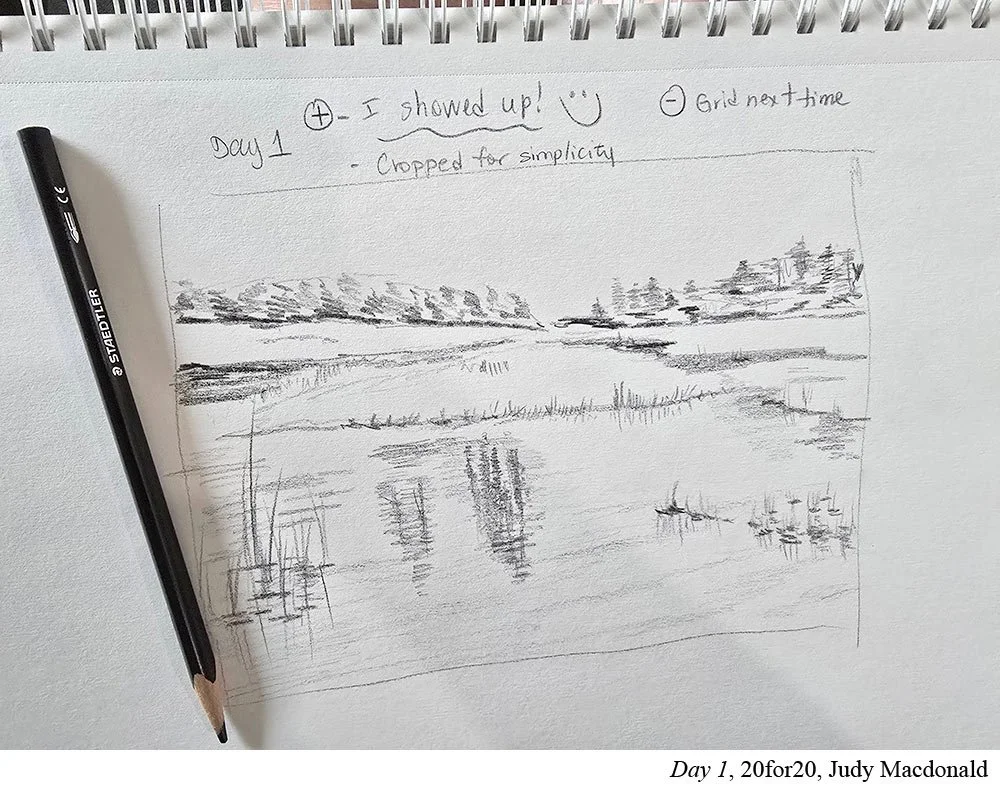
My only goal for this challenge was to get back in the habit of creating on a regular basis. Even though I have been a daily acrylic painter for years, I chose to focus only on pencil sketches for 20 days because my time was limited and my paints were packed away in boxes.
Why those goals? How is this different from how you'd worked previously?
Since I began my art practice about eight years ago, I typically would pick up my brushes on almost a daily basis without even thinking about it. I usually had a goal to finish a painting in a certain time period, for example to enter in a show.
Due to some life events over this past year, I have not been able to paint or create at all for months. My supplies were packed away, I didn’t have a dedicated art space set up in my new house, and it was feeling impossible to get started again.
So the difference for this challenge was that I could only dedicate short periods of time each day for art and I wanted to avoid the urge to push myself to complete a beautiful painting.
I chose to do pencil sketches because set up and clean up would be minimal, so it felt like a low-pressure and realistic way to ease back in to an art practice and start feeling creative again. I knew if I were too ambitious, I wouldn’t stick with it.
You did a test run before the Challenge began, how important was that test run and what adjustments did you make heading into the main challenge?
To be honest, when I first read about the test run, I thought it was unnecessary for me because I was just planning on doing quick pencil sketches. There wouldn’t be any complicated set up or prepping canvases, and I planned to use the references Kelly provided so I wouldn’t need to search for photos.
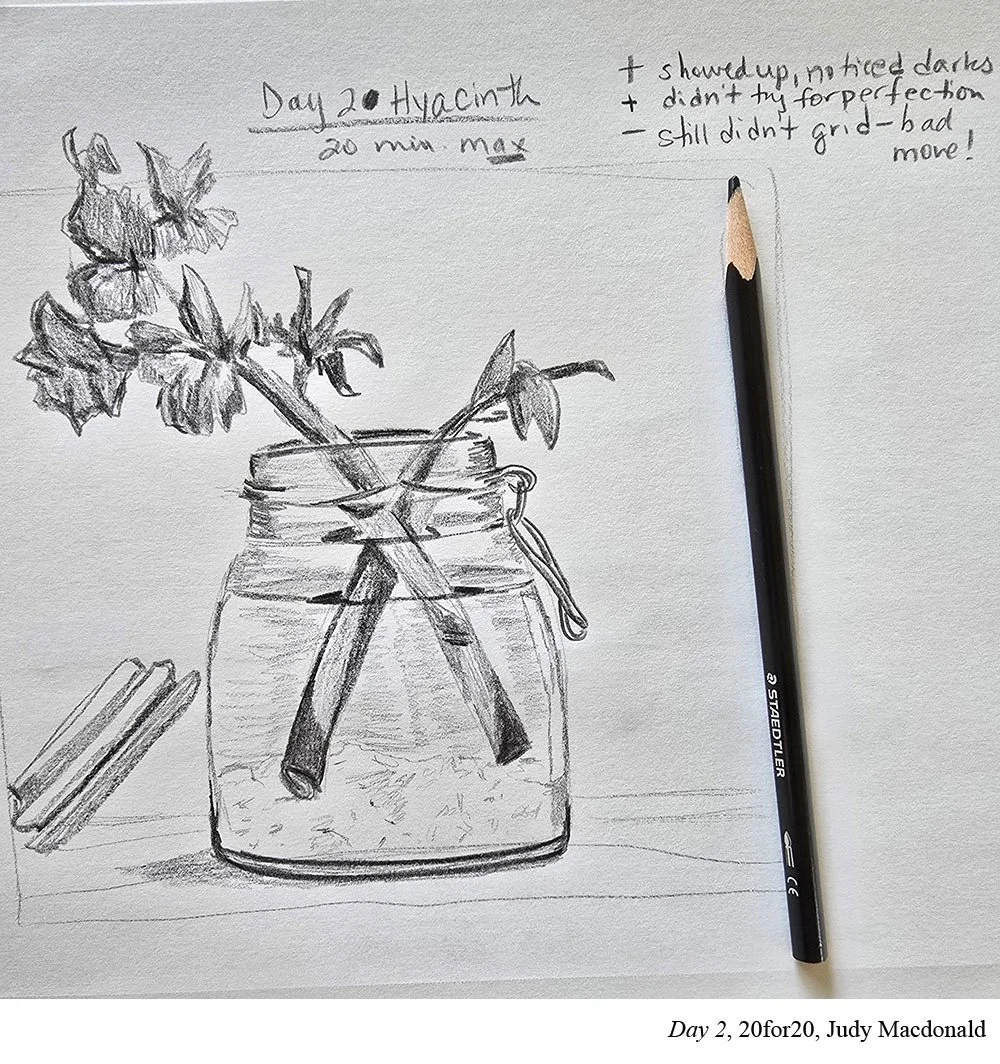
However, because I wanted to start off on the right foot, I did the test run and discovered right away that I was not prepared. My paper was the wrong kind, my pencils needed sharpening, and I needed to download, crop, and grid the reference images ahead of time so I could make the most out of my 20 minutes each day.
Because of the test run, I got those things ready and set myself up for success on day one. It was really about removing obstacles that might get in my way of enjoying the challenge and completing it.
How long did you work each day? What did that way of working give you?
Before the challenge, I hadn’t considered choosing between 20 minutes minimum or 20 minutes maximum. Reading about these options made me evaluate what would work best for me at this time in my life.
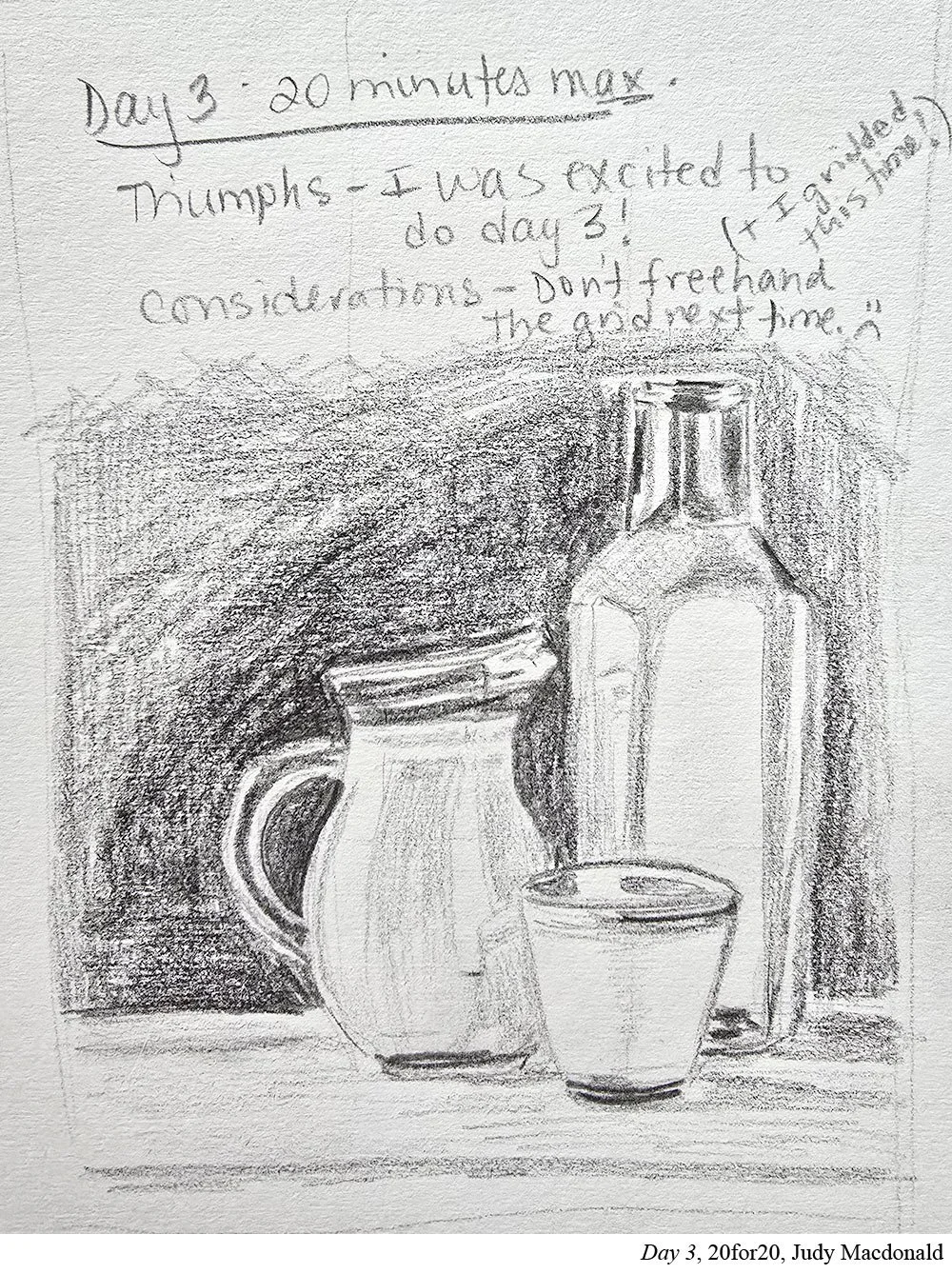
I chose the 20 minutes maximum option because I knew that was realistic, and if it was realistic, I was more likely to stick with it. I used a timer and put my pencil down when it went off. That definitely removed pressure I might have put on myself to keep going until I produced something beautiful. I knew I didn’t want to get burned out, so the 20 minutes maximum was perfect for me.
How long did it take you to adjust to that way of working? What were the challenges and what were the benefits?
After about four days, I noticed sitting down and to do art again began to feel automatic. Even though it was hard to show up on some days, I stuck with it because it was a short-term commitment and I needed to see if it made a difference when the 20 days were up. The benefit was that I was excited to see what I could do in 20 minutes and also to see and read what others were sharing. Having the private community to share in was a really great support and motivator.
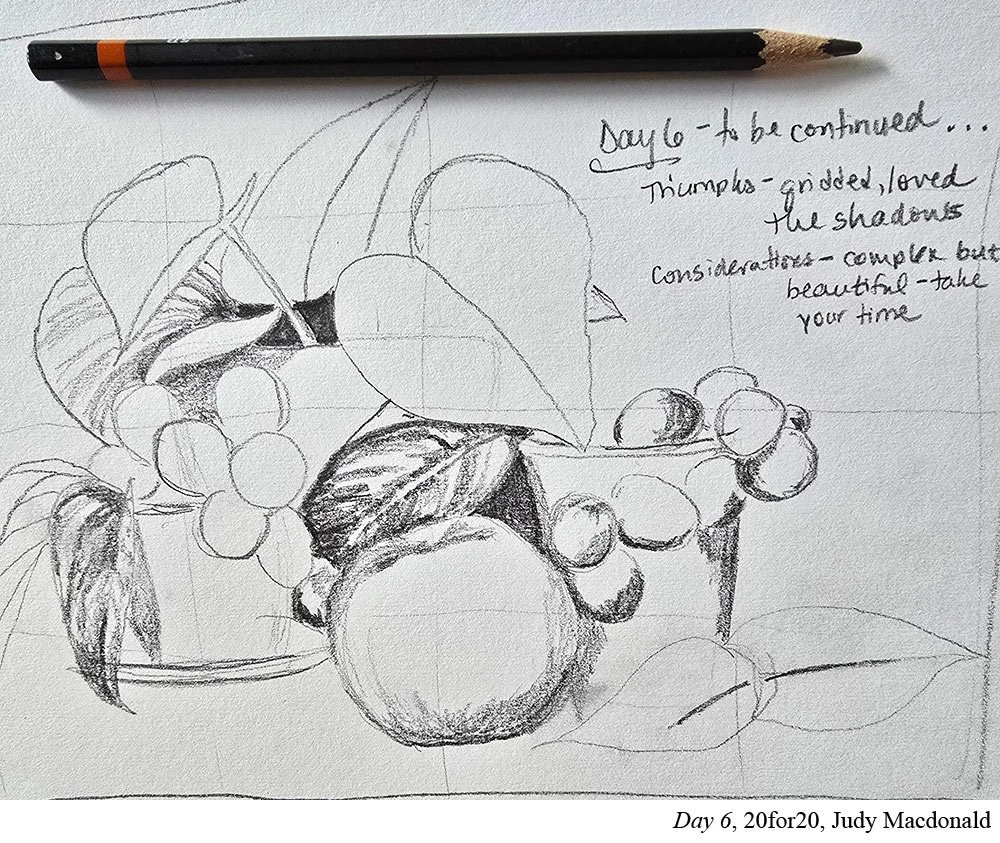
When working, there's a risk in expanding out the time until you’ve “finished a painting” or got something you like enough to share with the world. What is the benefit to you to really hold to the 20 minutes? Did holding it teach you anything that you would have missed if you’d allowed yourself to go as long as you needed to fully finish a painting?
I think the expectation of producing a finished painting was one reason it was feeling so hard for me to start up my art habit again. It felt a bit overwhelming to try to create a finished painting when life was pulling my brain in so many directions.
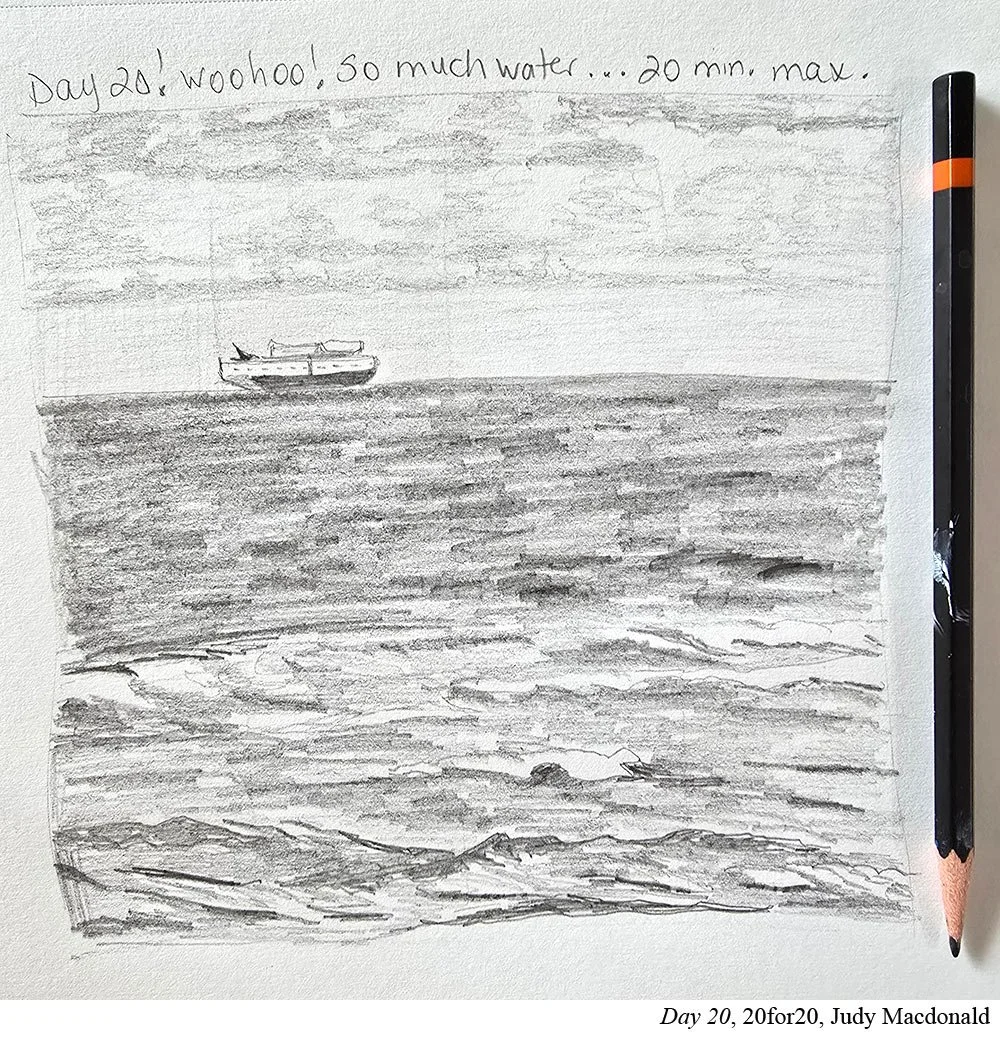
The benefit to holding to the 20 minute max “rule” I set for myself was that I knew going in there was no way to create a finished piece in that time, so the pressure was immediately off. That left me feeling more free to doodle, scribble, or daydream if I wanted. I just put down my pencil at 20 minutes - finished or not - and accepted the sketches as they were. I think that allowed me to really get the most enjoyment out of those 20 minutes. It didn’t feel like a chore.
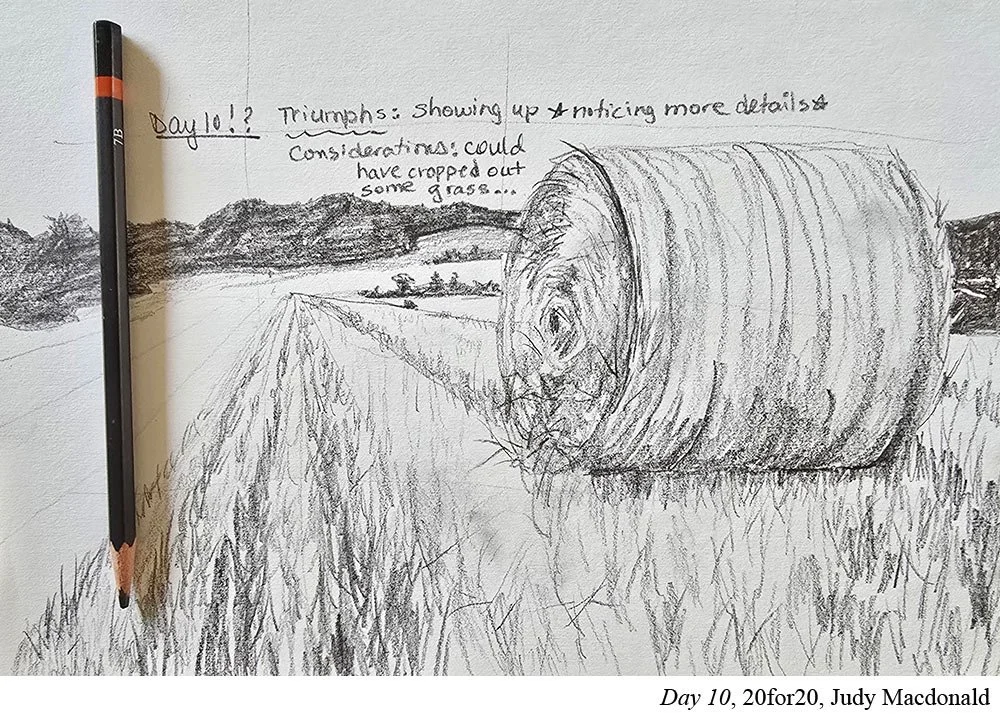
How did you adjust on the days you had low bandwidth? How important was that in helping you hold the habit? Why?
I definitely had low bandwidth days, especially after busy days in the office.
One strategy that worked well for me was putting a reminder in my phone calendar for a specific time for the duration of the challenge. I know that I am more productive when things are planned in advance. When something’s on my calendar, I am mentally prepared for it and am less likely to forget about it or let something else get in the way. I know that doesn’t work for everyone, but for me, calendar events are really helpful.
Also, knowing that the challenge was a short-term commitment helped get me up and going even when I didn’t really feel like it. If I had committed to an hour each day or set a goal of finishing a painting, I would have been a no show on those stressful days.
Having a short-term commitment without a defined outcome was much more practical and realistic for me. So I think tailoring my goals for this moment in my life is what made the difference between showing up or being a no show. This was the right goal for me right now.
What benefits did you find working daily even if not necessarily for a long time?
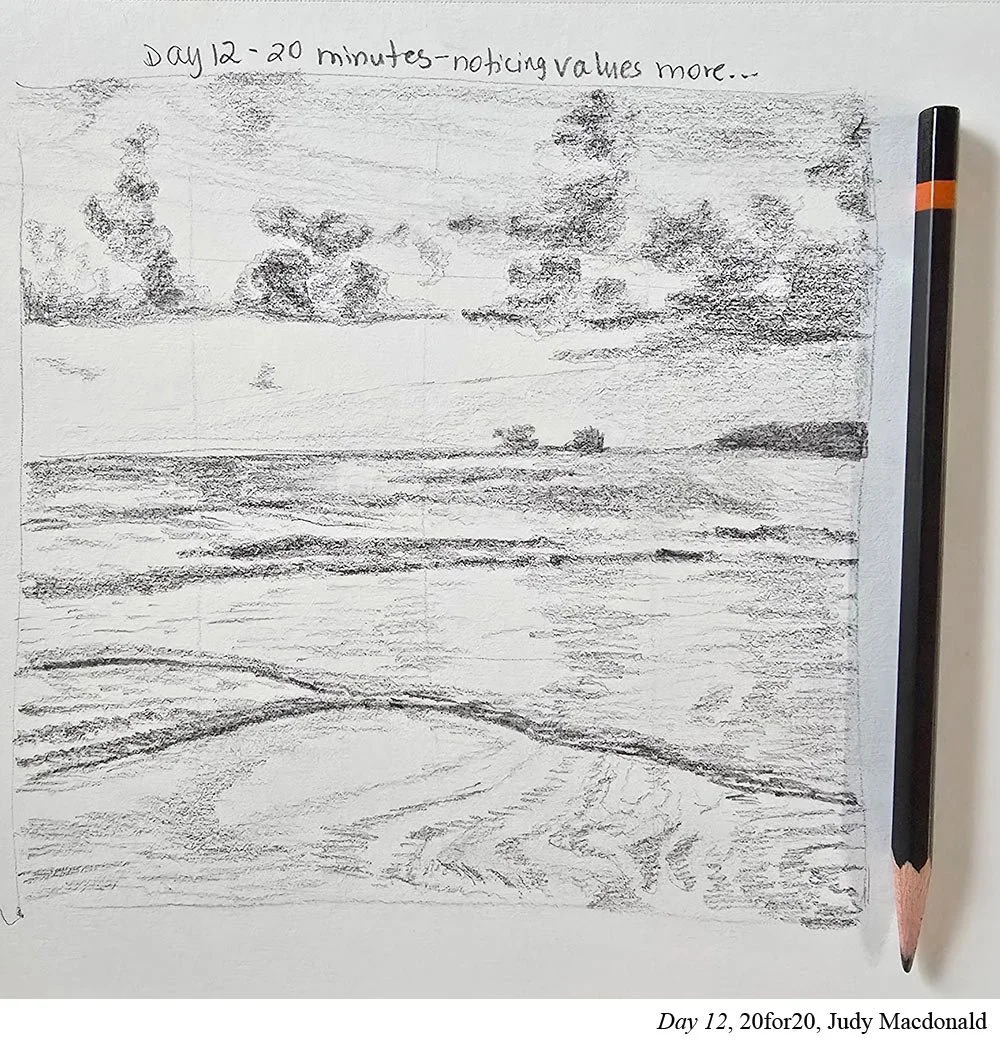
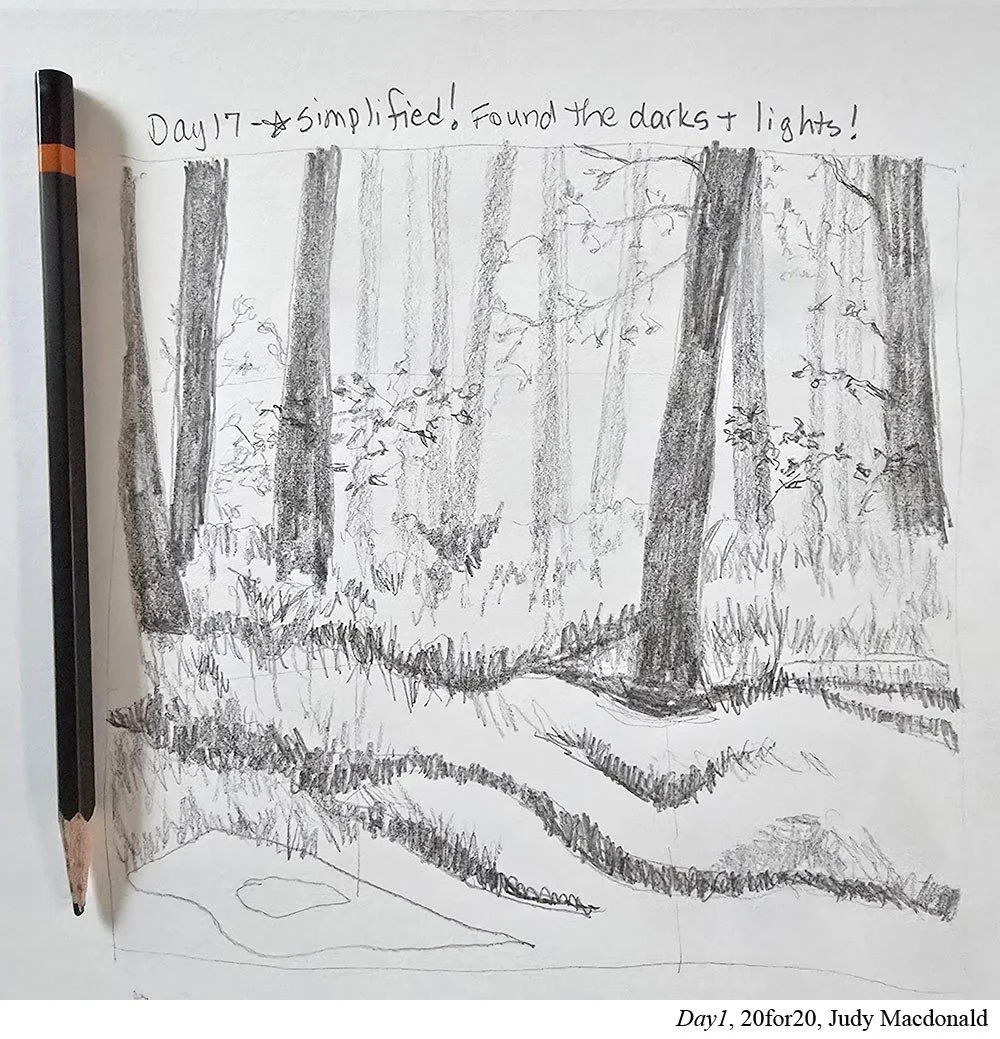
As someone who typically avoids value sketches before painting (even though I know better), I definitely felt I improved my ability to see shapes, darks, and lights and notice details in the references that I may have missed if I’d jumped right into painting it.
Because I only had 20 minutes, I got better at cropping down the complex images, so this improved my sense of composition. I often struggle with finding strong compositions, but having to simplify for the 20 minute timeframe helped me improve those skills. I saw how others cropped down the images even more than I thought possible - sometimes to a single leaf or flower or tiny corner of a building, and the result was amazing, so I learned a lot from the other participants.
Another benefit was that the daily sketching in the evening helped my brain drift away from the stress of my day. Within 5 minutes, work was behind me and I felt my body start to relax.
Any days jump out as having aha moments? Could you share what those were?
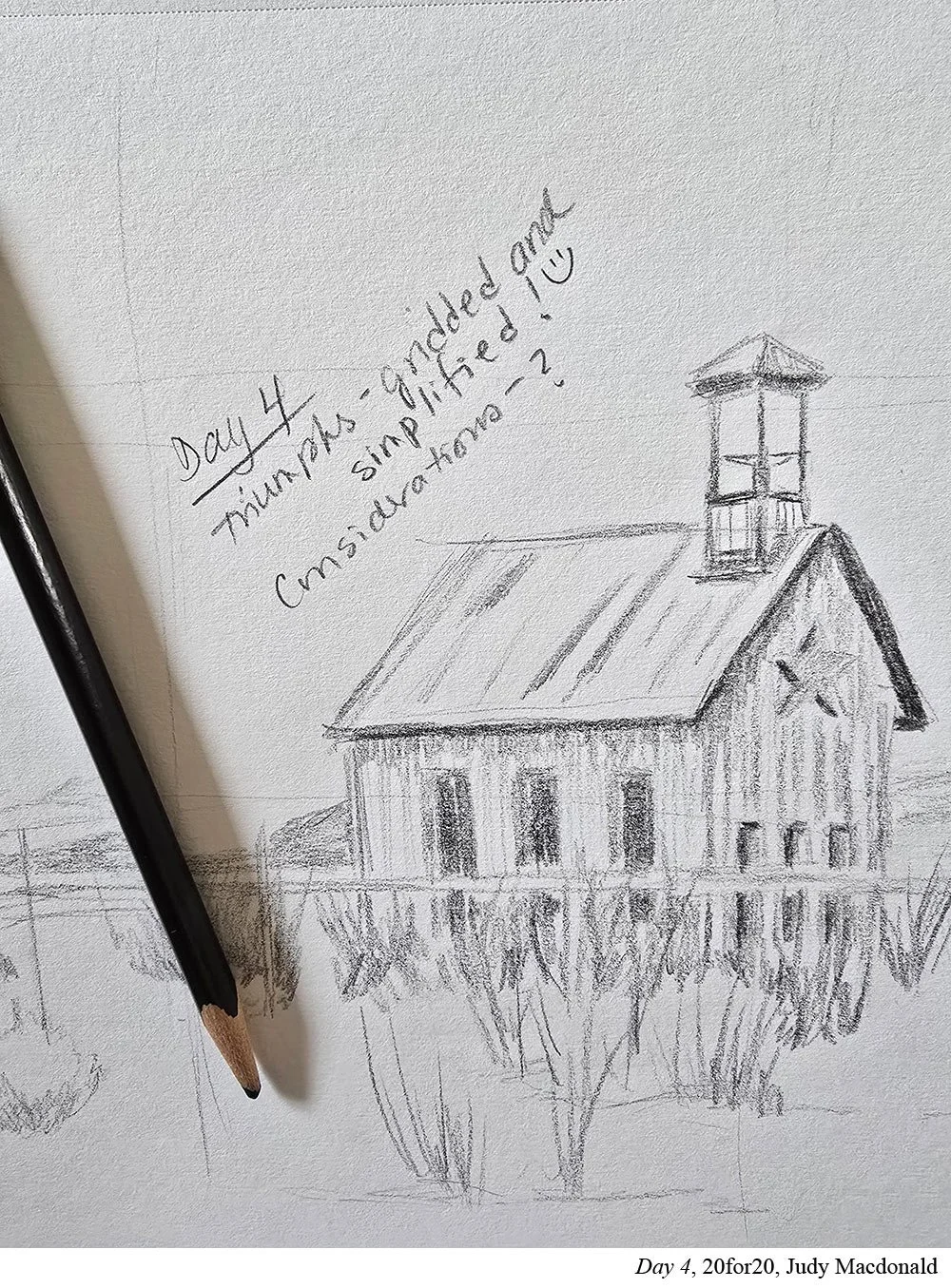
On day four, I actually stopped my sketch a few minutes in because it just was not looking right and I was feeling frustrated. I just put a giant X on my sketch and titled it “False Start.” No judgement. I then started fresh and didn’t worry how much I got done in the remaining 15 minutes.
That was an aha moment for me and a mini breakthrough because I kept my perfectionist tendencies in check and just focused on the process instead of the outcome. It allowed me to really enjoy the next 15 minutes even more.
What was the most helpful mindset for you to try and keep during the 20for20? Was there anything that was useful to remind yourself as you showed up each day? What was that and why?
Knowing this was a short-term commitment where I did not need to worry about producing beautiful finished art made it easier to stick to. I told myself on the tough days that all I needed to do was show up for 20 minutes for 20 days. Beyond that, nothing mattered. Having that continuous support and messaging from Kelly and others helped keep that idea at the forefront.
So often the focus is on finished and beautiful work. Did you feel any difference in shifting the focus to the showing up? (The habit.) How did that change your relationship to your practice?
Yes, my usual goal is to produce a finished painting (or finish a section of one), but since my painting practice has been interrupted these last several months, I needed a different focus and a realistic way to help me ease back into the habit. Knowing it only lasted for a short time definitely took pressure off, and setting a goal where I did not have to think about a finished product made the 20 minute sessions much more enjoyable.
At first, I tried to sketch the reference photos exactly as they were, but when I realized there were too many details to capture in 20 minutes, I started playing with cropping on my computer until I found a smaller area of the image that I wanted to focus on. So the focus went from “I’m going to complete X” to “I’m going to find an interesting area within this photo and explore that. Period. Nothing more.” Within the first week or so, this became more automatic, and I feel this will easily translate to my painting practice once I start up again.
What has been the biggest change to you as an artist (or your practice) because of participating in the Challenge?
Participating in the challenge made me actually enjoy the process instead of focusing on the product. Even though the voice inside my head often reminds me of this, I don’t always do it. During the 20 day commitment, I read and thought about everything Kelly and others were sharing, and I noticed my mindset changing. I started to focus more on things like values and composition, which I know is an area I want to focus on more in my paintings.
What advice would you give to someone who is doing the Challenge for the first time?
Commit to it all. Show up each day (if you miss a day, don’t beat yourself up - just get back on track as soon as possible). Do the pre work, and spend time thinking about the things Kelly and the other participants write about.
Get in the learner mindset for the duration of the challenge, regardless of your artistic skill level. This is about learning about yourself more than learning how to paint, and you can only learn about yourself when you open your mind to new ideas, try new things, and reflect on them. It’s only for a short time, so do it all and see how you feel when it’s all done.
Learn more about Judy Macdonald on Instagram.
Join the next 20for20Art Challenge here.