Twenty Days to Bolder Color
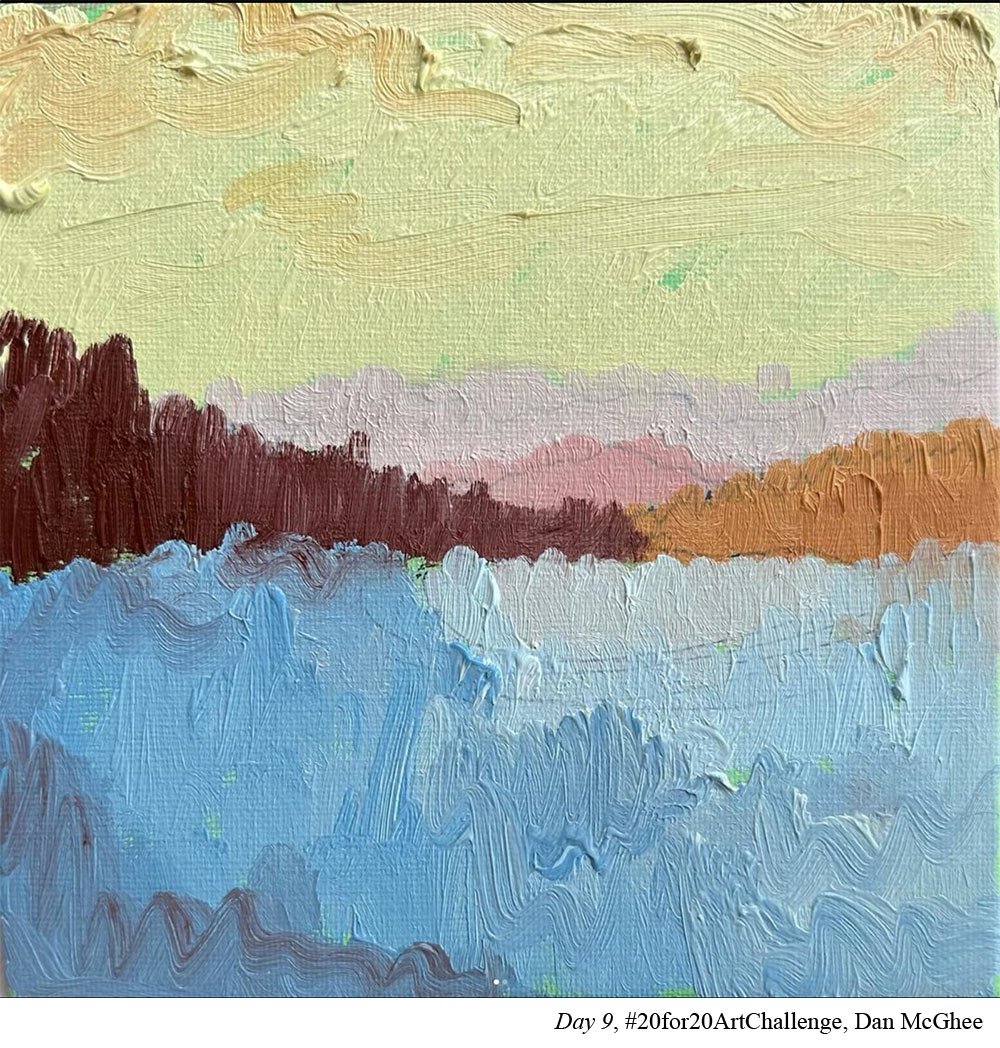
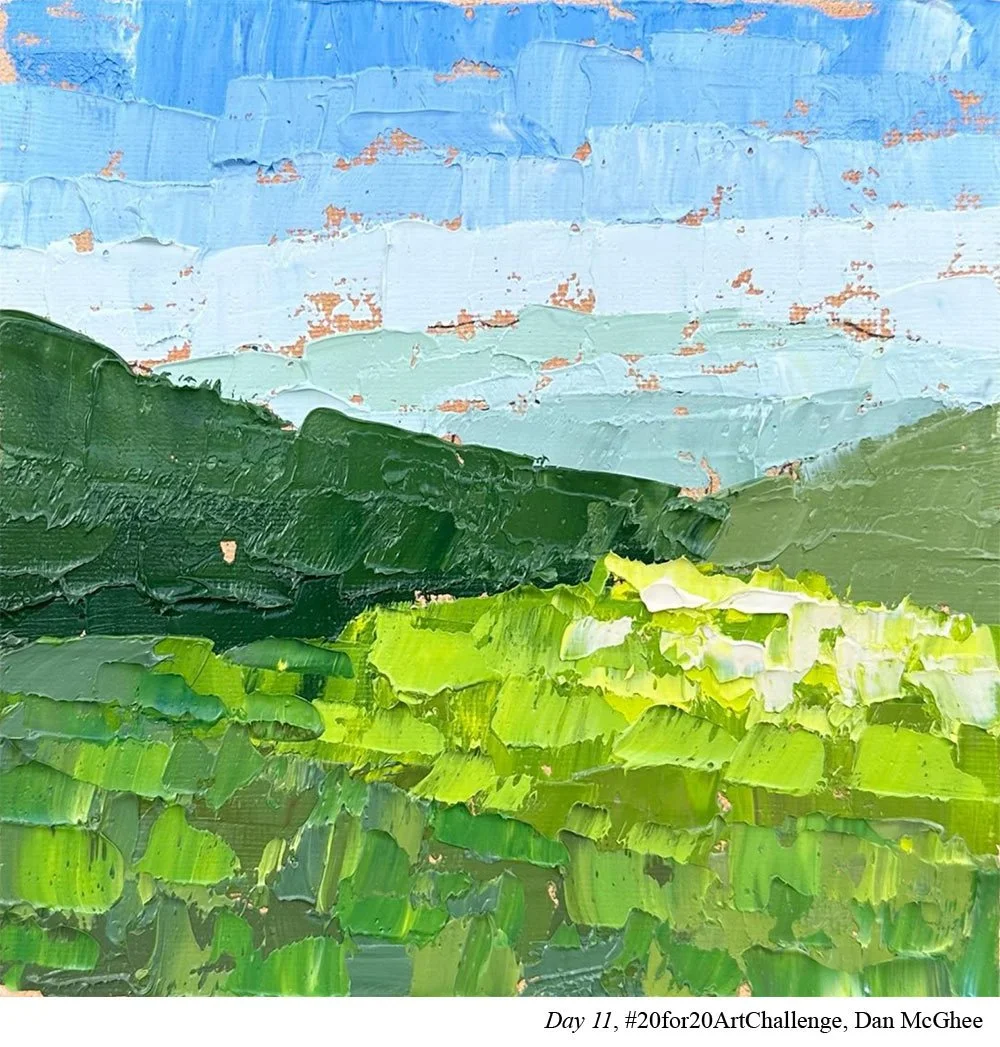
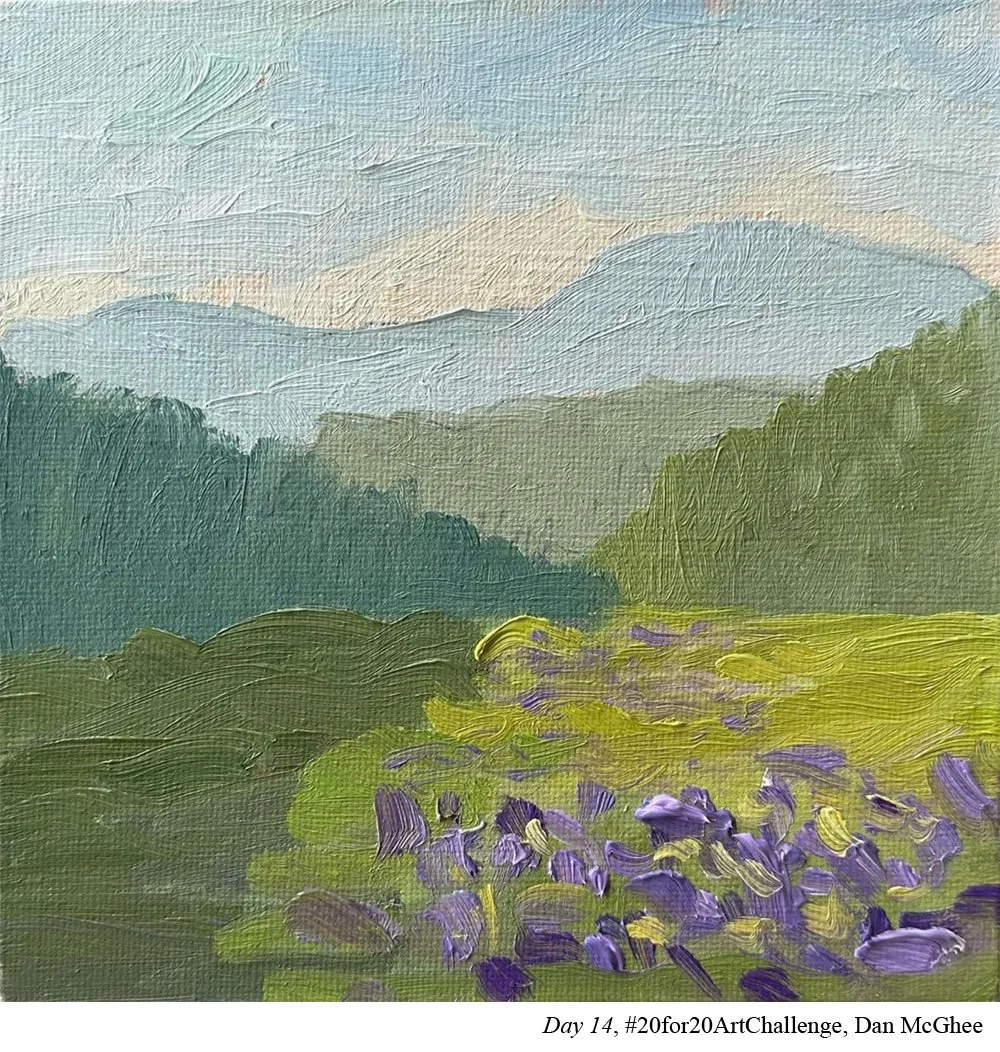
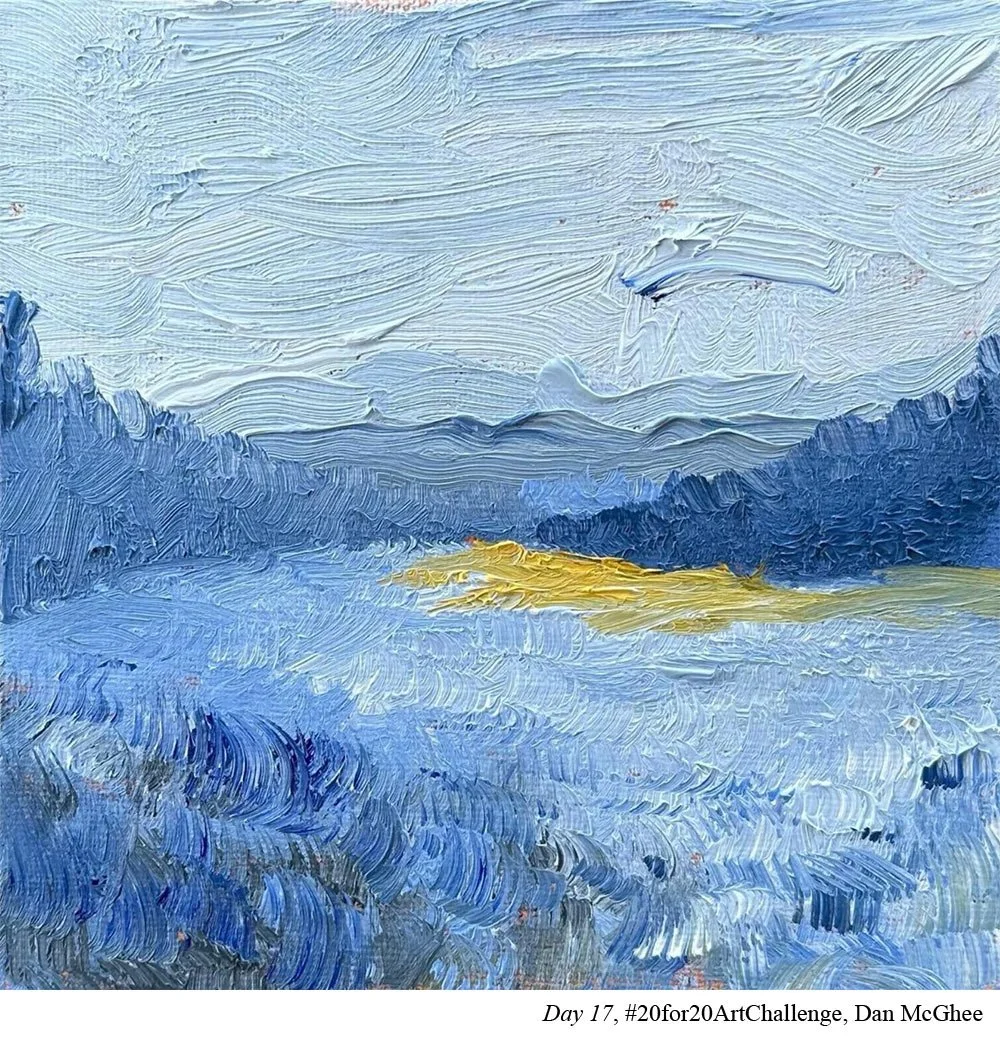
For twenty days, artist Dan McGhee painted the exact same scene.
Yes, you read that right.
The. Same. Scene.
Not twenty different scenes.
Not twenty different references.
The same one.
But each day he changed something key: the three colors he used.
Some days the combinations worked easily. Other days they felt completely unruly.
But his goal wasn't twenty finished masterpieces.
It was to see what color could do.

Pushing Your Color Comfort
This was McGhee's primary reason for the project.
Like many artists, he found himself reaching for the same tubes of paint over and over again. He had color combinations he relied on, but he wanted to see if there was more to color than what he'd been taught. He wanted his color to become more expressive.
Each day he chose three new colors plus white. Some combinations were fairly standard, but by the end of the Challenge he was using color combinations he'd never have dreamed of trying.
Did every painting turn out perfectly? No.
Did he learn a ton about color and color mixing? Yes.
This is one of the wonderful things about intentional projects. If you can verbalize something you're getting stuck on, you can design a project to help you get unstuck.
How do you get more expressive with color? Force yourself to try combinations you'd never normally choose.

The beauty of painting the same reference over and over is that eventually you've already exhausted your favorite color combinations. You need new ways to keep yourself interested. And because you're no longer worried about messing up your subject, it's easier to push yourself into new territory.
The combination of boredom and having zero preciousness around the subject gives you permission to try wild color combinations and simply be open to what's possible.
This project is great for artists who feel stuck in a color rut. If you keep defaulting to the same comfortable combinations, limitations can push you into new territory.
You might be surprised by what you discover.

Building Color Mixing Skills
While McGhee's main focus was expressive color, he loved the idea of building color mixing skills simultaneously.
Again, the magic is in the limitations.
Because he painted the same reference every day, he became incredibly familiar with the subject. He didn't have to spend mental energy figuring out new shapes or new compositions.
That left plenty of bandwidth for color mixing.
Instead of asking, "How do I draw this?" he could ask:
What kinds of secondaries do these two colors create?
How do those colors interact with everything around them?
What possibilities are hiding inside this palette?
By removing the challenge of learning a new subject each day, he could laser his focus on color itself.

Exploring Brushwork
This wasn't McGhee's primary goal, but it became an unexpected bonus.
Each session he used just one brush for the entire painting.
That forced him to really use the brush. To discover what it could and couldn't do.
If you find yourself constantly wondering which brush to use, or if you feel like you don't really understand the brushes you already own, try limiting yourself to one brush for an entire session.
You'll work yourself into corners.
And then you'll find your way back out again.
Sometimes limitations are the fastest way to learn.
A Word About Your Inner Critic
Anytime you work with limitations, your inner critic will have a lot to say.
Your inner critic might say:
"Won't I get bored?"
Maybe.
But boredom is part of the magic.
When you get bored with an image, you're forced to try new things. Forced to get creative. Forced to move outside your comfort zone.
There is magic on the other side of boredom.
And at worst, you paint bored for a day. That's OK.
Or maybe your inner critic says:
"Wouldn't I learn more if I painted different things?"
This is one of the great inner critic falsehoods.
As much as we resist it, we often learn more through sameness than through differentness.
Every time you paint something new, you're introducing dozens if not hundreds of new variables. Each of those variables takes energy to solve. That's energy you don't have available for color work.
The key is getting clear on what you actually want to improve.
If your goal is to improve color, limit the things that don't matter as much, like subject. That leaves energy for the thing you're interested in learning.
Trying to learn a bunch of things at once slows everything down.
It's like learning languages. If you try to learn German, Spanish, and Chinese all at once, you'll make slower progress in all three. You'd actually learn more by focusing on one at a time.
Painting works the same way.
And then your inner critic might whisper:
"Real artists don't work this way."
Real artists work this way all the time.
It's how they intentionally build skills and confidence.
They might not show it on social media, but they're doing sets and reps behind the scenes constantly.
Put it to Practice
Use this project for the 20for20 or on your own. If you're doing it independently, you can still follow these same ideas. Adjust them as necessary.
How to Use Prep Week to Set It Up
Prep Week begins June 22, which means you'll have over a week to prepare your project.
Choose Your Reference
This may actually be the hardest part.
Choose one reference that's interesting enough to hold your attention but not so complicated that it overwhelms you.
Remember, there isn't a perfect reference.
There's just choosing a reference.
Go through the 20for20 image list and audition a few options. You could even spend Prep Week painting several possibilities to see which one sparks the most curiosity.

Prep Your Surfaces
This was one of the secret workhorses of McGhee's project.
He worked on the same surface size each day and had them ready to go before the Challenge started.
Use Prep Week to gesso panels, cut watercolor paper, or prepare a colored ground. Whatever your process requires, get it ready ahead of time.
Decide on Your Limitations
Less is more with this project.
McGhee limited several variables:
One reference for all twenty days.
Three colors plus white each day.
The same surface size throughout the Challenge.
One brush per painting.
Those limitations gave him freedom.
They reduced decision-making and made it easier to focus on what mattered most.
Do a Test Run
Set your timer and audition the process before July 1.
Try a painting using one reference and a limited palette.
You'll discover that some expectations were too ambitious and others were right on target.
Both are valuable information.
Prep Week gives you time to make adjustments before the Challenge officially begins.
Color can feel complicated and intimidating, but there are ways to make it simpler.
If you'd like to feel freer with color and more curious about what's possible, this project is a wonderful place to start.
It might feel strange to make some of these limitation choices. But once the Challenge gets going, I think you'll be delighted by the discoveries waiting on the other side.
Ready to join?
Registration is open! Register today so that you are first in the door when everything goes live June 22nd.