The Myth of the Confident Artist
Looking at Instagram, it can feel like everyone - but you- is overflowing with confidence.
But here’s the truth: artists don’t start confident. They build confidence.
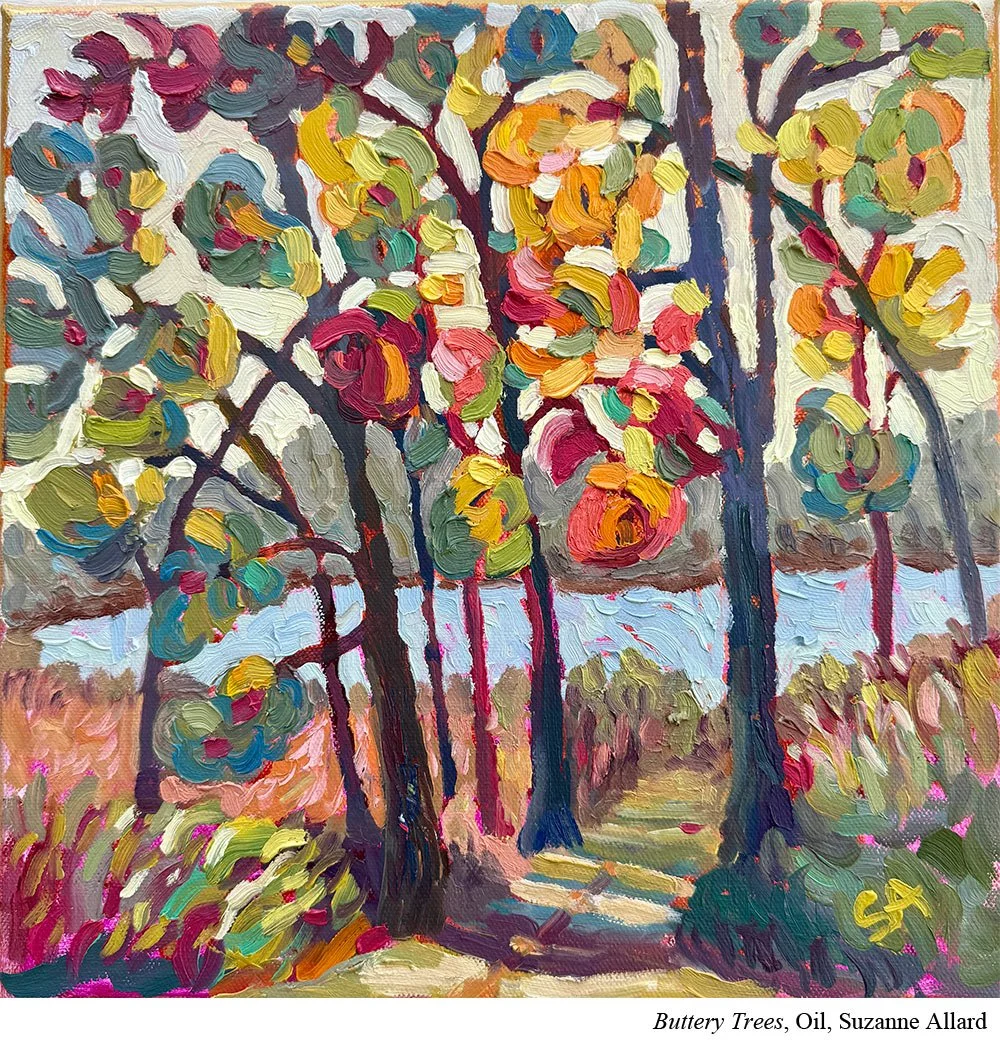
Suzanne Allard (Ep. 121) describes the version of herself who got started as a scared kitten. She had to coax it out of hiding.
She did that through gentle starts, managed expectations, and a lot of positive self-talk.
But she also knew she couldn’t do it alone.
So what did she look for to help her?
She looked outside herself for support and accountability.
For example, she signed up for a 30-day challenge. Each day, the instructor drew a simple object, like a telephone or a flower. Just a simple line drawing. Cute. Fun.
Because the drawings could be silly and wonky, Allard felt no pressure to make anything realistic. That low-pressure structure mattered. It gave her permission to try without worrying about getting it “right.”
She also shared her drawings on Instagram, where she found encouragement from classmates and even complete strangers. That encouragement kept her going.
And she got a little braver each time.
Allard went from thinking she couldn’t do anything to realizing, “I can do this.” And that shift makes all the difference.
You don’t have to learn all of art in a single afternoon. You learn it the same way you build confidence. Piece by piece. Day by day.
You start to notice improvement. You begin to understand your real capacity for learning. And slowly, you stop asking, “Can I do this?” and start thinking, “I’m figuring this out.”
So even if your work doesn’t look the way you want it to right now, that’s OK. It’s not about what it looks like today. It’s about
how it looks better than it did before, and
trusting that you have it in you to keep improving.
You don’t necessarily start out artistically confident.
You become artistically confident.
And it happens sooner than you think, especially when you keep showing up with a little structure and support.
Put It to Practice
Learning to paint can feel scary. If that’s true for you, that’s important information. It means you’ll benefit from low-pressure ways to get started.
Here are two good options.
Beginner in-person classes
If you have an art guild or a community college nearby, look for beginner classes. They’re offered in all kinds of media, including watercolor, acrylic, and oil. When “beginner” is in the title, the class is designed to meet you where you are.
You’ll be surrounded by people who are just as unsure as you are. You’ll also have an in-person teacher who can answer questions quickly. That immediate feedback helps you move through challenges instead of getting stuck. And challenges are a normal part of learning, so asking questions is part of the process.
Join a challenge
You can join low cost challenges, like the 20for20 Art Challenge or free ones online.
Look for challenges that spark your curiosity and keep the time commitment small.
In the 20for20 people commit to 20 minutes a day for 20 days. The daily structure keeps any one session from feeling overwhelming, and you can move at your own pace.
Both of these options share something important: external accountability.
External accountability helps quiet fear. You don’t have to decide what to do next or wonder if you’re choosing the wrong thing. Someone else sets the guardrails. You trust that the structure will move you forward.
That frees up your energy for the real work.
Showing up. Trying. And slowly becoming more confident than you were before.