The Hidden Skills Behind Broken Edges
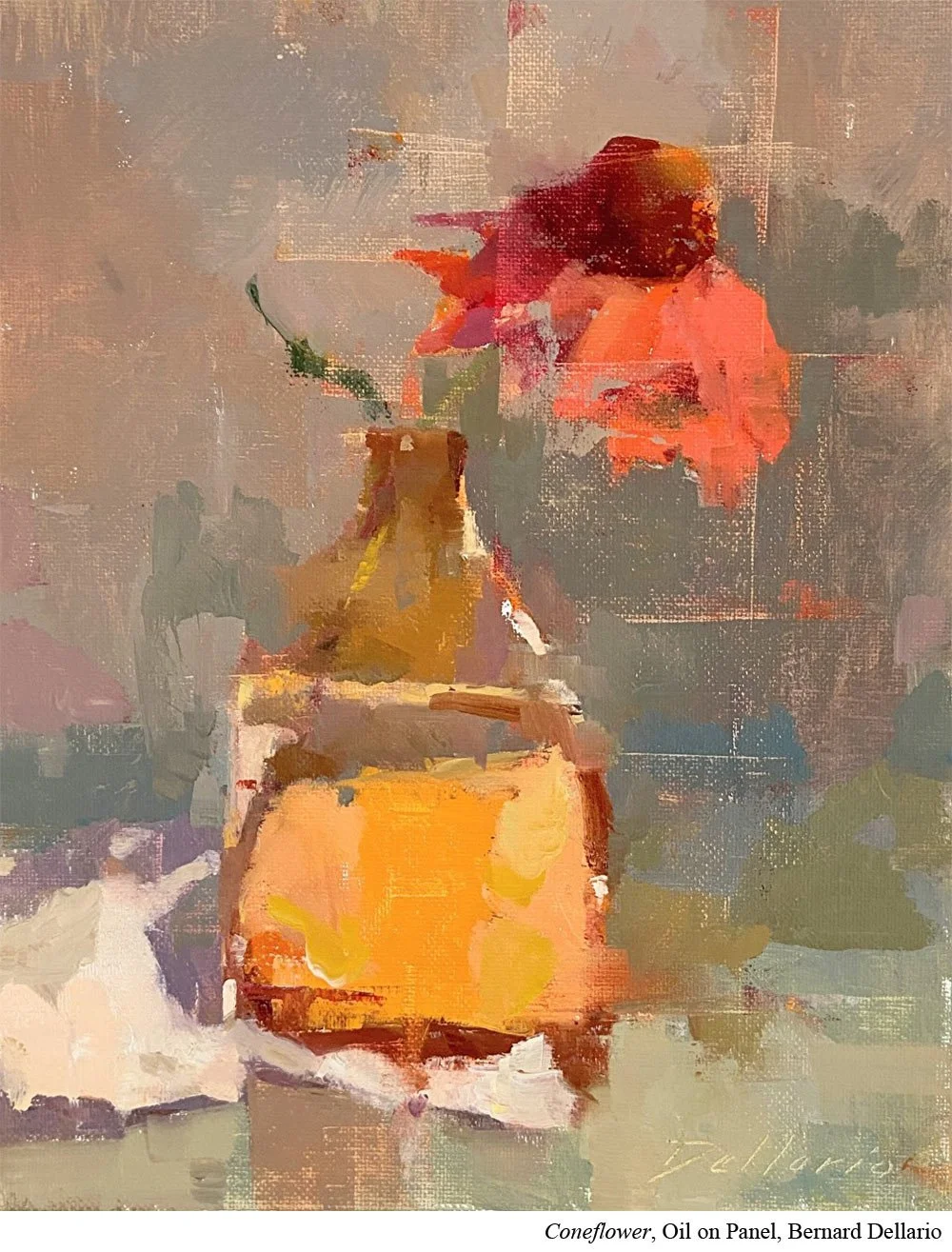
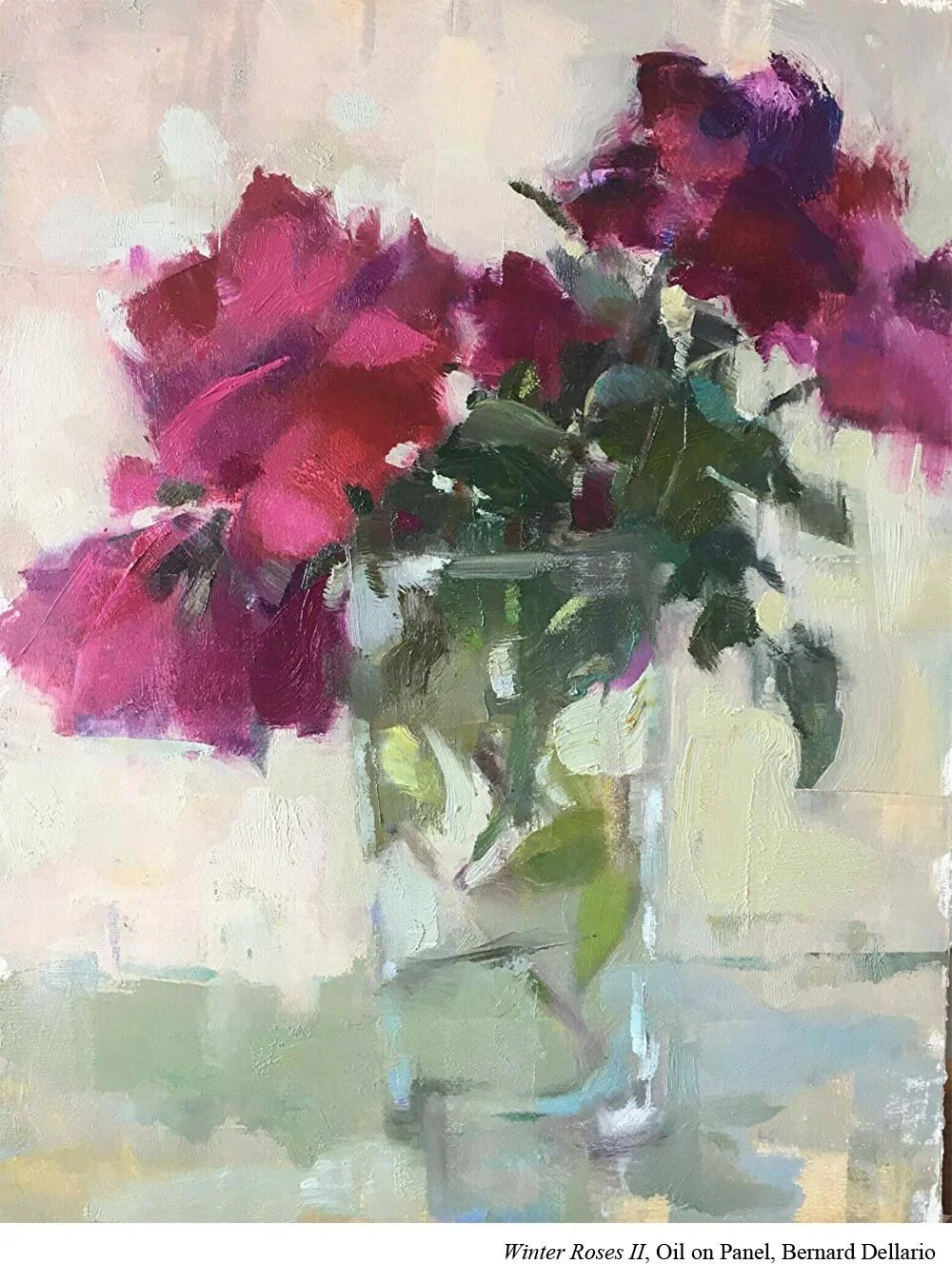
Bernard Dellario (Ep.54) is a wonderful example of a painter who has mastered loose, representational painting.
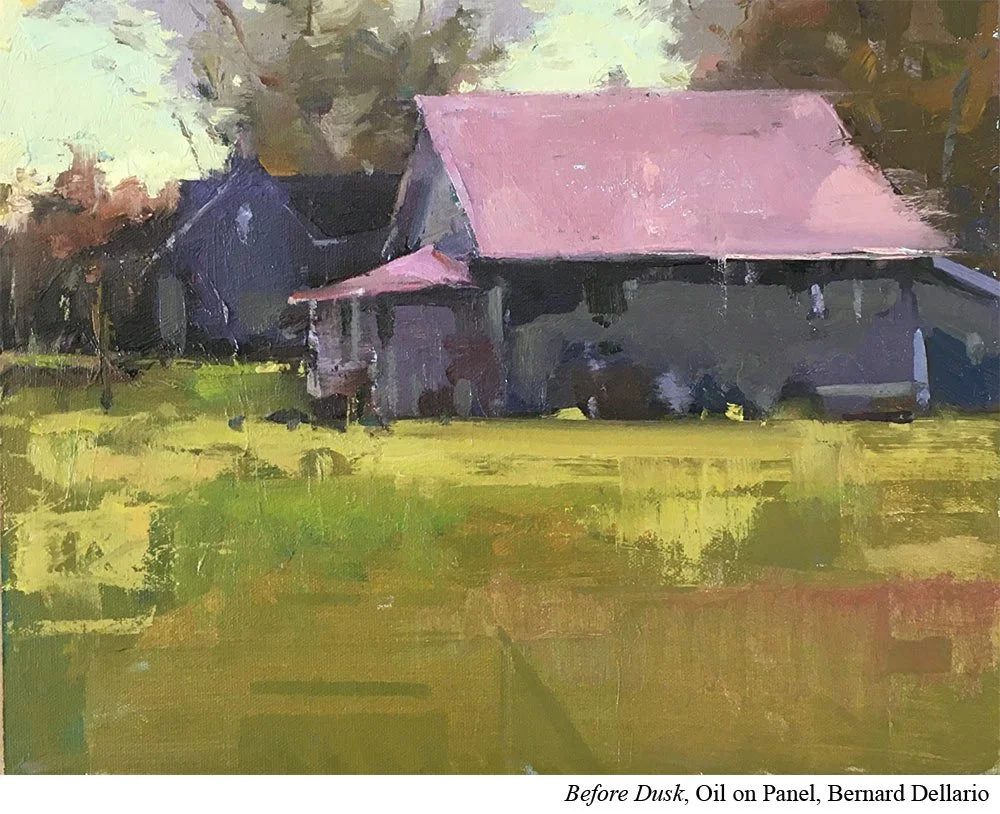
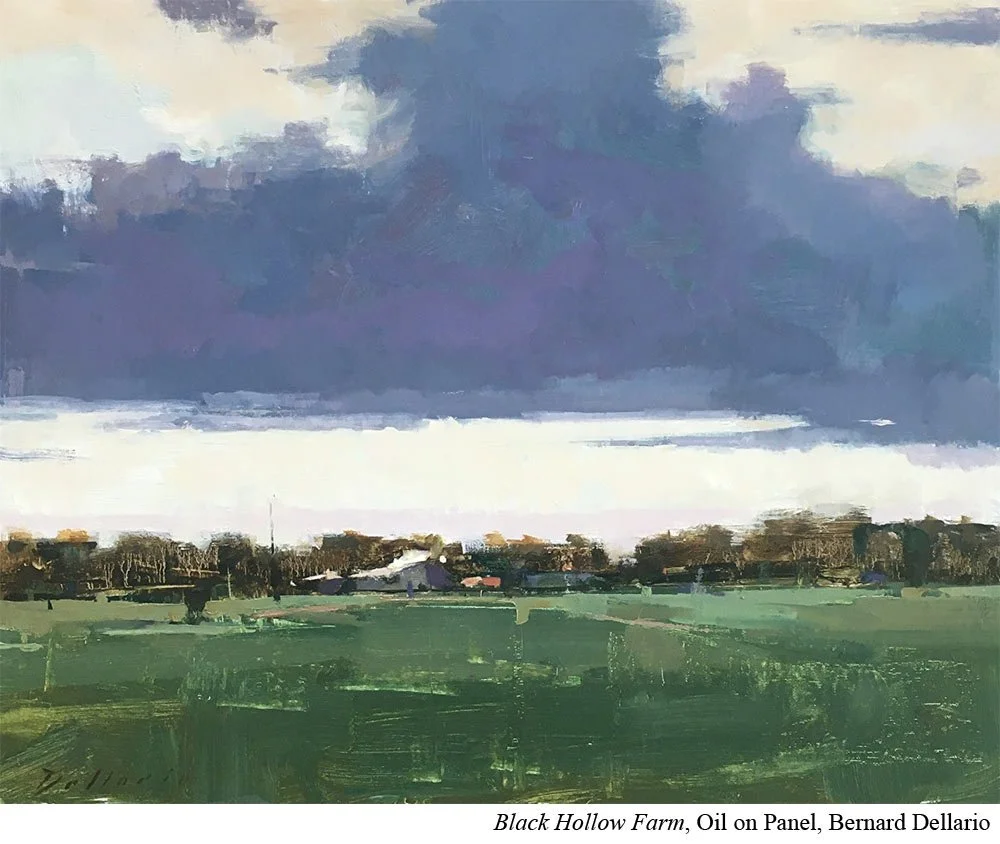
When you look at one of his landscapes or still lifes, there's never any doubt about what you're looking at. It's a barn sitting in a field. A bouquet of daffodils. A vase on a table.
And yet his paintings feel wonderfully expressive.
A big part of that comes from the way he treats edges.
Some edges are crisp and immediately snag your attention. Others gently ease your eye from one area to the next.
And then there are the edges that seem to break all the rules.
They're not quite hard. They're not quite soft. They're not exactly lost.
They're broken.
Once you start noticing broken edges, you'll see them everywhere in Dellario's work. They're one of the qualities that gives his paintings so much life and movement.
So let's look at the hidden skills that make broken edges possible.
(One quick note before we begin. The goal isn't to paint like Bernard Dellario. The goal is to notice something in another artist's work that sparks your curiosity, ask yourself why you respond to it, and then build the skills that let you make those kinds of decisions in your own paintings.)
Broken Edges Aren't Accidents
When most painters first learn about edges, they usually learn there are three types:
Hard edges
Soft edges
Lost edges
Those are incredibly useful categories.
But Dellario's work often feels like it has another kind of edge altogether.
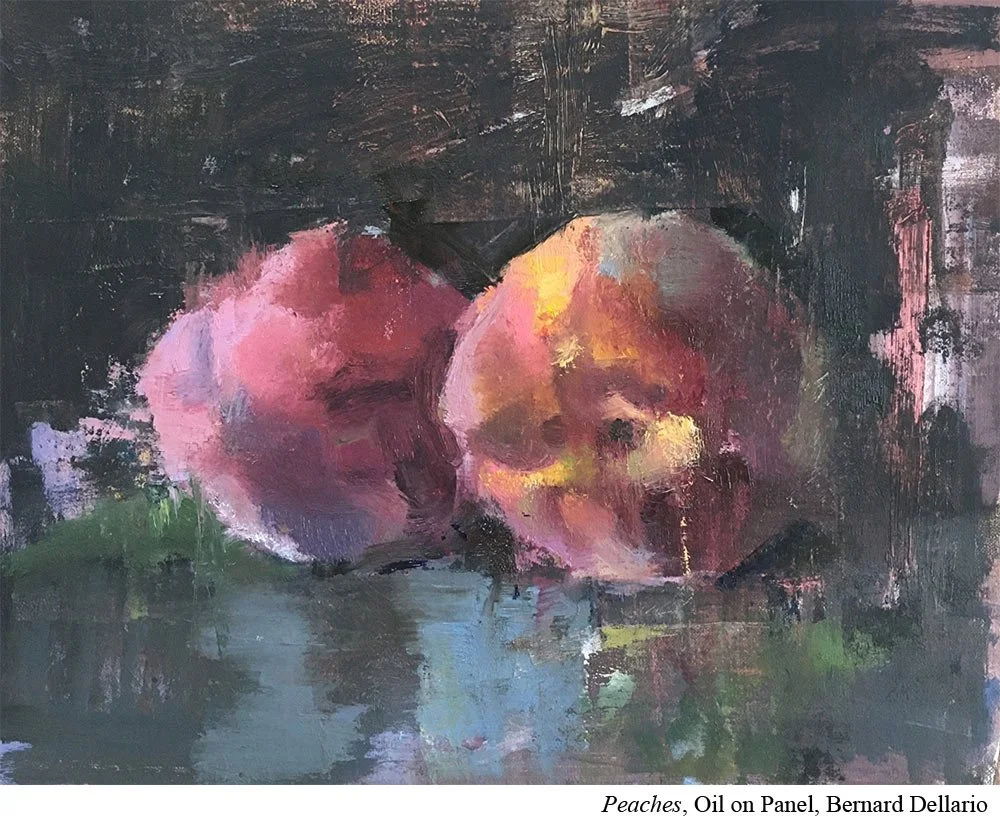
Rather than simply softening or losing an edge, he'll push paint beyond the object and drag it into another area. The edge no longer behaves the way you expect, and yet somehow the object still feels convincing.
That's what's so compelling about this approach.
The painting feels freer, but it never feels confusing.
Those broken edges aren't happy accidents.
They're the result of dozens of small decisions.
And every one of those decisions depends on other skills.
Hidden Skill #1: Seeing Broken Edges
Most beginning painters don't even notice edges.
They see a flower, a pear, or a landscape. They might feel the effect of a broken edge without being able to explain why it feels so expressive.
More experienced painters begin to notice something different.
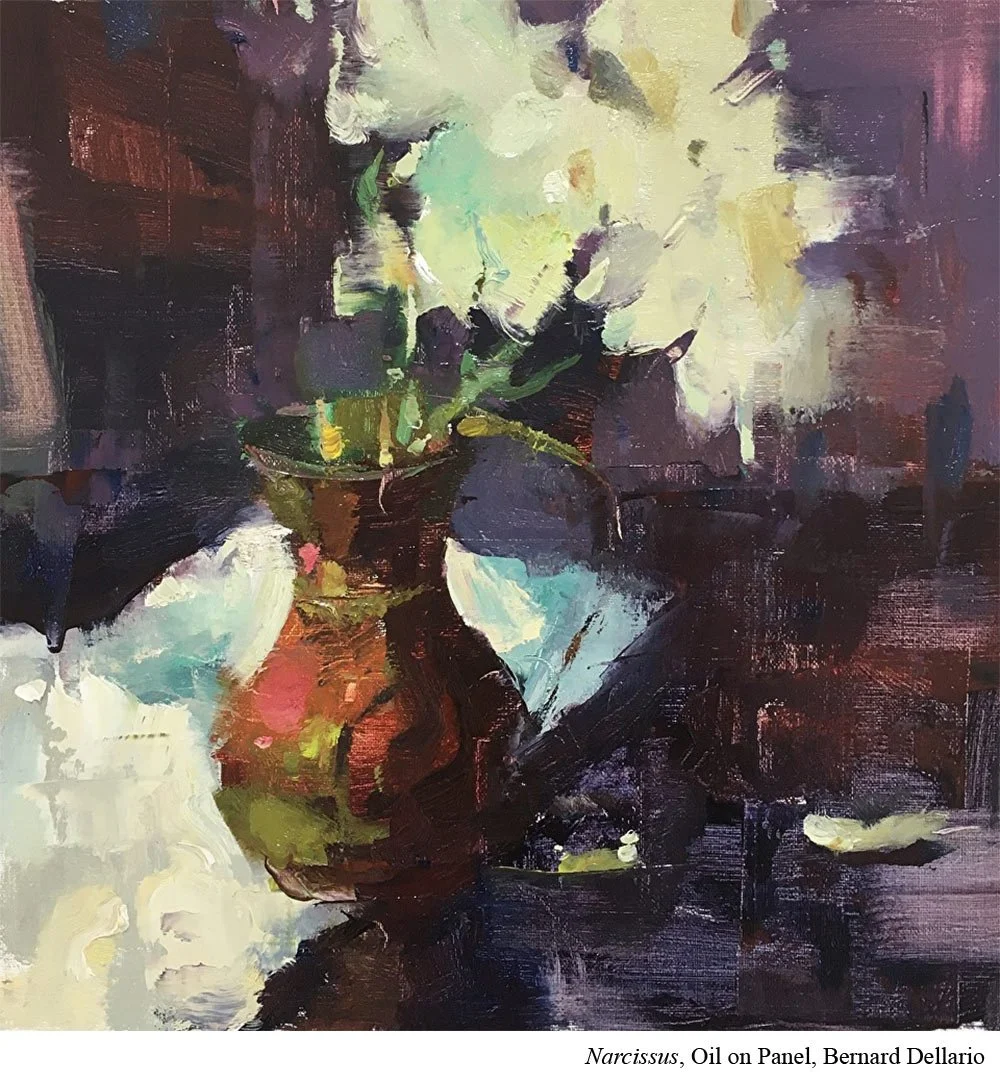
They notice the flower petal that extends into the background.
They notice the interrupted shape of a vase.
They notice where an edge dissolves into a few unexpected marks before coming back together as a different thing.
That's the first hidden skill.
Learning what to look for. And developing the seeing skills to actually see it.
That takes time because your brain naturally wants to recognize objects. It wants to identify the apple or the flower. It doesn't really care about the edge.
As painters, that's exactly the kind of thing we care about.
Once you begin studying edges, you'll start noticing that you have many more options than you thought you had.
Hidden Skill #2: Creating Broken Edges
Once you've started noticing broken edges, the next question becomes practical.
How do artists physically make them?
There are countless variations, but I tend to think about them in two broad categories.
Pull Technique
Imagine you've painted the edge of a daffodil petal.
Instead of leaving that edge alone, you place your brush, palette knife, or even a credit card into the wet paint and pull some of that paint beyond the edge of the shape.
Instead of the yellow paint color ending where the petal ends, the paint moves beyond it.
Place Technique
The second approach is what I think of as a placement technique.
Rather than pulling paint outward, you're intentionally placing fresh paint beyond the edge.
You might use a loaded brush.
You might use a dry brush.
Either way, you're deliberately extending the shape in an unnatural way.
Both approaches create edges that feel more abstracted and looser.
Hidden Skill #3: Understanding Your Medium
Of course, learning a technique isn't enough.
Your medium has to be capable of doing it.
Every medium behaves differently. Some allow you to manipulate wet paint for several hours. Others give you only a few seconds. Some naturally create broken marks. Others fight you every step of the way.
Oil gives you a long working time, allowing you to push and pull paint well after it's been applied. (One of Dellario's two primary media along with gouache.)
Gouache dries much faster but you can still use it similarly. You'll just need to work more deliberately. (Although you'll notice that while Dellario paints in gouache, he uses broken edges less often.)
Standard acrylics are trickier. Timing becomes much more important. If you're using heavier-bodied paint or OPEN Acrylics, you'll have a larger window to manipulate the surface.
Watercolor presents different possibilities altogether. Rather than pulling paint the way you would with oils, wet-into-wet passages and dry brush techniques can create beautifully broken edges of their own. The effect is different because watercolor is transparent, but the underlying idea is remarkably similar.
The point isn't that every medium creates the same effect.
The point is that every medium creates its own version of the effect.
Learning that version takes practice.
It takes brush miles.
You try something. Some of it will work. Some of it won’t work. You learn from both and then you try again.
And again.
And again.
Hidden Skill #4: Building a Painting That Can Support Them
Broken edges don't happen in isolation.
They're the result of everything that came before them.
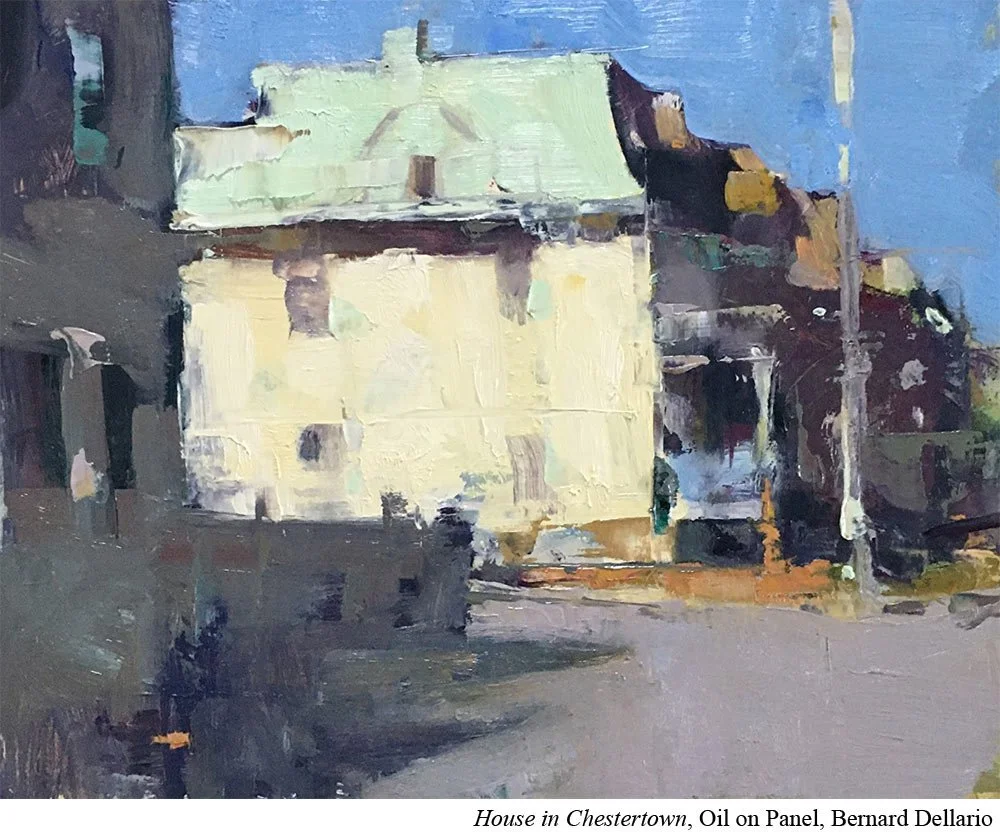
Before you can push paint beyond a shape or disrupt an edge, you need enough information already on the canvas that the painting can survive that decision.
The drawing needs to be established.
The major shapes need to be in place.
The values need to be working.
Only then can you begin breaking things apart.
If you try to create broken edges too early, the rest of the painting often won't support them. And even if you create a beautiful edge, there's a good chance you'll simply paint over it as the painting develops. Or as you try to fix things you hadn’t planned for.
Breaking edges can seem like a spontaneous act.
And sometimes they are.
But that spontaneity only works because it's built on a strong underlying structure. The artist solves the big problems first, then gives themselves permission to become expressive.
Hidden Skill #5: Choosing Which Edges to Break
Not every edge should be broken.
In fact, broken edges are powerful because they're used intentionally.
Hard edges naturally attract the eye. That's especially true when they occur in areas of strong value contrast.
Soft and lost edges allow the eye to move more freely through a painting.
Broken edges often behave the same way.
They create movement rather than stopping it.
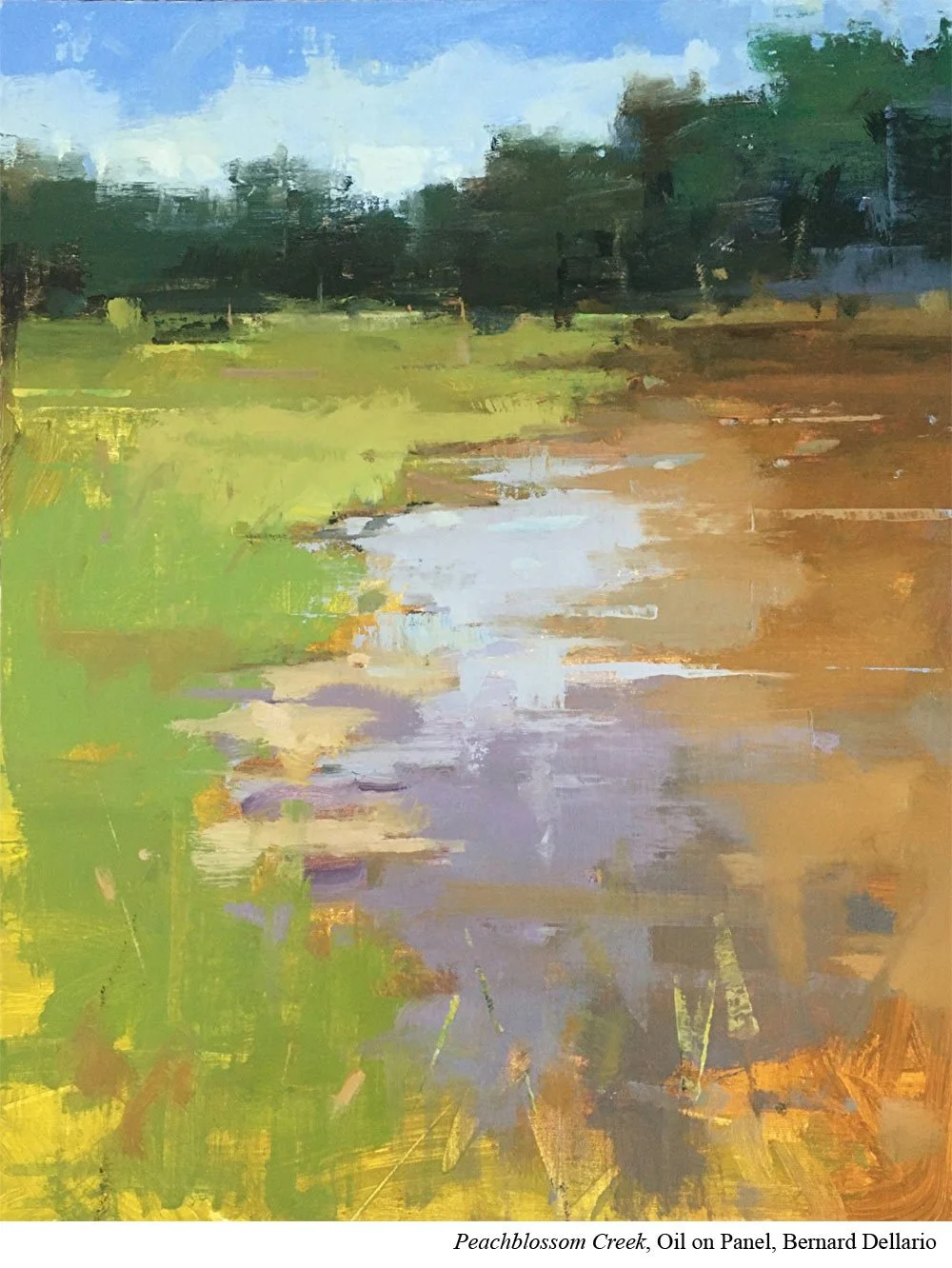
That's why artists often reserve their hardest edges for the focal point. Then they let the areas further out become looser and more abstracted.
So loose painting isn't about breaking every edge.
It's about knowing which edges deserve attention and which ones can do their own thing.
Hidden Skill #6: Building Convincing Structure
I'm so sorry. We have to talk about drawing.
It can be easy to look at loose, expressive paintings and assume the artist isn't concerned with accuracy.
In reality, the opposite is often true.
Dellario can distort his edges because the underlying drawing is so strong. Most of the structure is convincing, so when he chooses to break an edge, your brain happily fills in the missing information.
Accurate drawing anchors the viewer.
If the drawing isn't convincing, broken edges quickly begin to feel sloppy or unintentional rather than interesting.
That's one of the surprising truths about loose painting.
The freedom to push reality sits on top of a surprisingly solid set of foundational skills.
Put It Into Practice
If you want to experiment with broken edges, build the skills that support those decisions from the ground up.
That keeps you from simply copying Bernard Dellario's paintings. Instead, you're adding new skills to your own artistic toolbox.
Start by studying edges. Notice where artists choose hard, soft, lost, and broken edges. Ask yourself what job each edge is doing.
Experiment with pull and place techniques. Learn what your medium allows and how it behaves. Practice those techniques in small studies before expecting them to appear naturally in finished paintings.
Build a painting process that establishes structure before you begin messing with it.
And perhaps most importantly, keep strengthening your drawing. The more accurately and intentionally you place shapes, the more freedom you'll have to break edges while still creating a painting that feels convincing.
The next time you see a broken edge you love, don't stop at admiring it.
Ask yourself, “What skills did the artist need to build to be able to do that?”
That's where the real learning begins.