Drawing Isn't Just Drawing
Drawing gets a bad rap.
We tend to think of drawing as one specific thing: sitting down with a pencil and making a beautiful, detailed sketch. If you try that and it doesn't turn out like a Da Vinci drawing, it's easy to think, "Nope," and dismiss drawing as something you're just not good at.
And that's a problem.
Because drawing is a tool. In fact, it might be one of the most useful tools we have as artists and visual thinkers.
Part of the problem is the expectations we bring to it.
We think drawing only matters if you're trying to create highly realistic work. We also think every drawing has to be good.
But that's only because finished drawings are usually the only drawings we ever see.
Drawing is constantly at work in an artist's life. It's helping them observe, solve problems, organize information, and make decisions long before the painting begins.
The finished sketch is only one small part of what drawing can do.
So what's a better way to think about it?
Think of drawing as a multitool.
Sometimes it's helping you see.
Sometimes it's helping you simplify.
Sometimes it's helping you make decisions.
Let's look at each one.
Drawing as a Seeing Tool
If you've ever looked into how seeing actually works, it's wild.
We think we look out into the world and see the apple sitting in our hand.
But it turns out we aren't actually seeing the apple.
We're seeing a projection our brain is showing us of the apple.
You're not looking through a window and seeing the world directly. Instead, it's almost like you're sitting in a dark room watching a projector screen while your brain decides what appears on it.
This is a nuanced difference but it really matters.
When you first look at something, your brain immediately starts making decisions about what it's going to show you and what it isn't. In some sense, you have to convince your brain, "No really. I actually want to see this."
Then we add another complication: symbols.
If I said, "Bunny!" what appears in your mind?
There's probably an image your brain immediately calls up. Mine is a cartoon bunny with a black outline.
That's a symbol.
It's the shortcut your brain uses for ideas.
We have symbols for shoes, trees, people, cups, and yes, apples.
Which means that when you're looking at your subject, your brain isn't always showing you what's actually there. Sometimes it's showing you what it expects to see.
That's why you'll draw something, look back at your subject, and suddenly notice things you completely missed the first time.
The physical act of drawing helps close the gap between what's actually in front of you and what your brain has decided to show you.
Drawing is one of the best tools we have for learning to see.
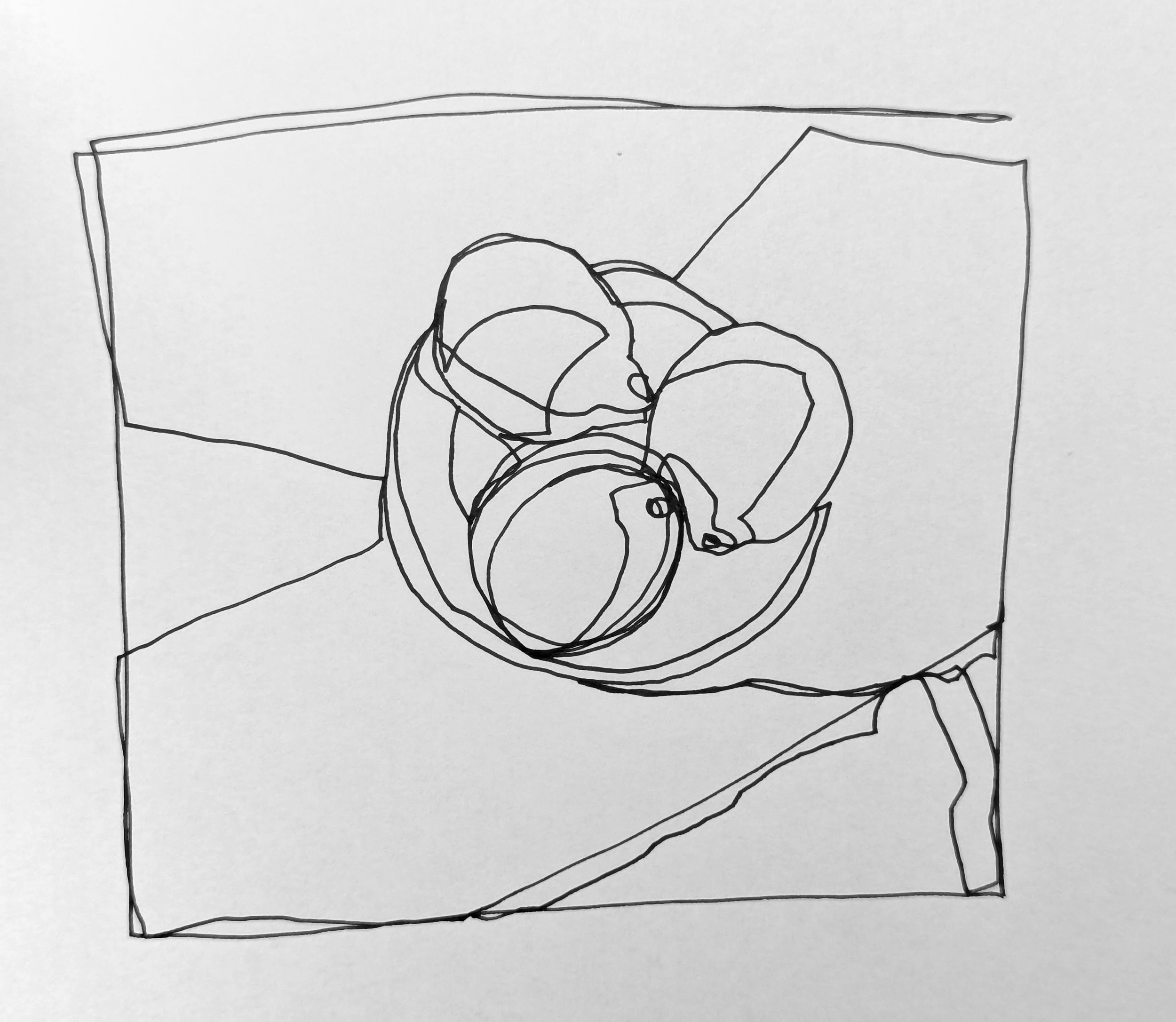
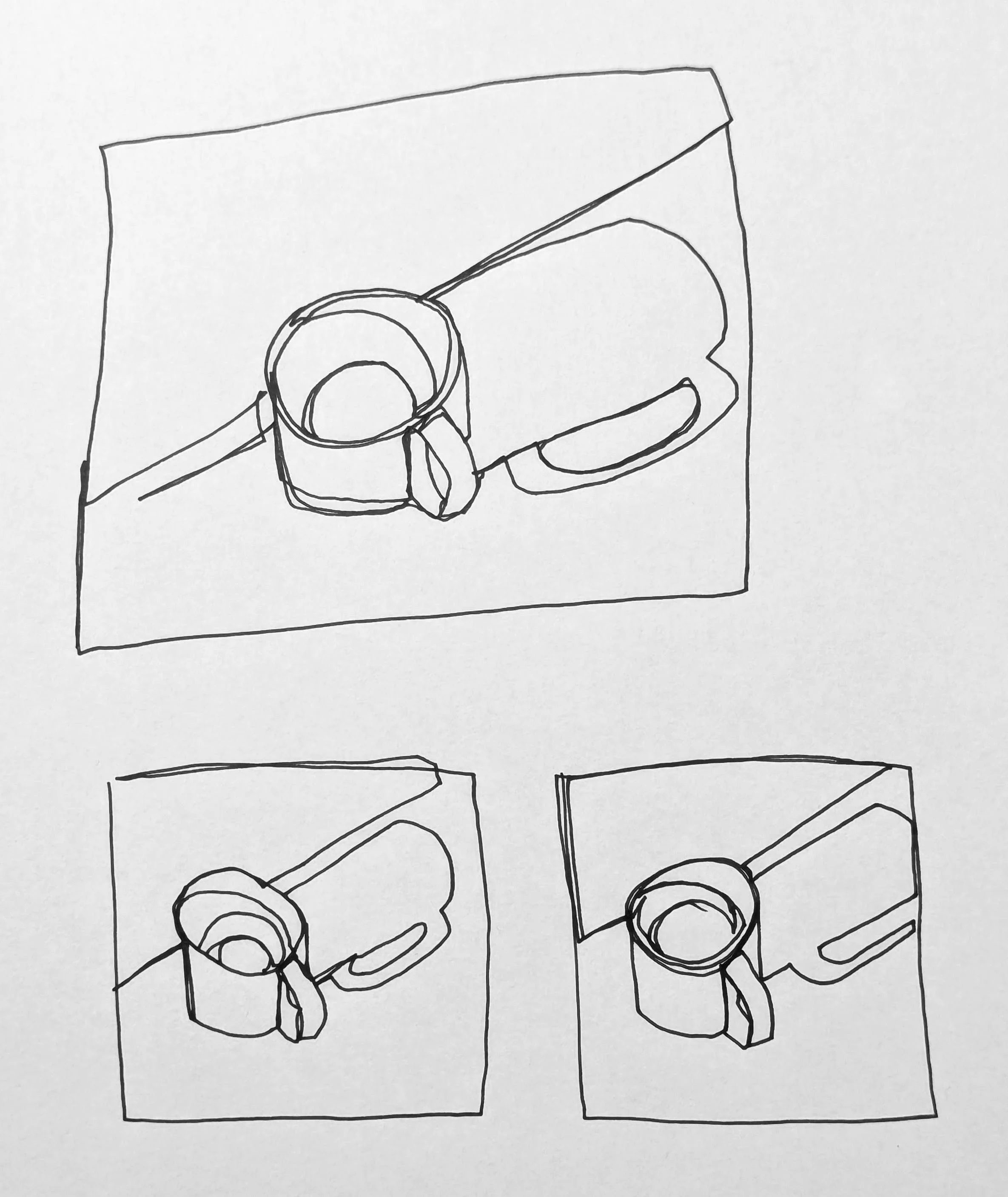
Contour drawing is my favorite tool for this, and it's what we'll spend the first week exploring inside the August Art Habit Membership Challenge.
With contour, you put your pencil on your surface and leave it there while you try to draw just the parts of the image you’re looking at. You move your pencil with you as you notice the top of the apple and then how it curves down, and then the shadow that extends out from it.
The goal isn’t a beautiful drawing. In fact, it's not about the drawing at all. It’s about really LOOKING while working to translate that looking to a surface.
Drawing as a Simplification Tool
Once your brain starts showing you what's actually there, you run into a different problem.
There's a lot there.
One option is to try to paint every single thing you see. That's how many of us begin. We paint every leaf on the tree because we can suddenly see every leaf on the tree.
But you probably don’t actually WANT to paint every leaf.
Now you're faced with a new challenge.
How do you organize all of that visual information into something simpler?
Drawing.
Drawing gives you a low-risk way to experiment with different ways of simplifying a scene before the paint comes out.
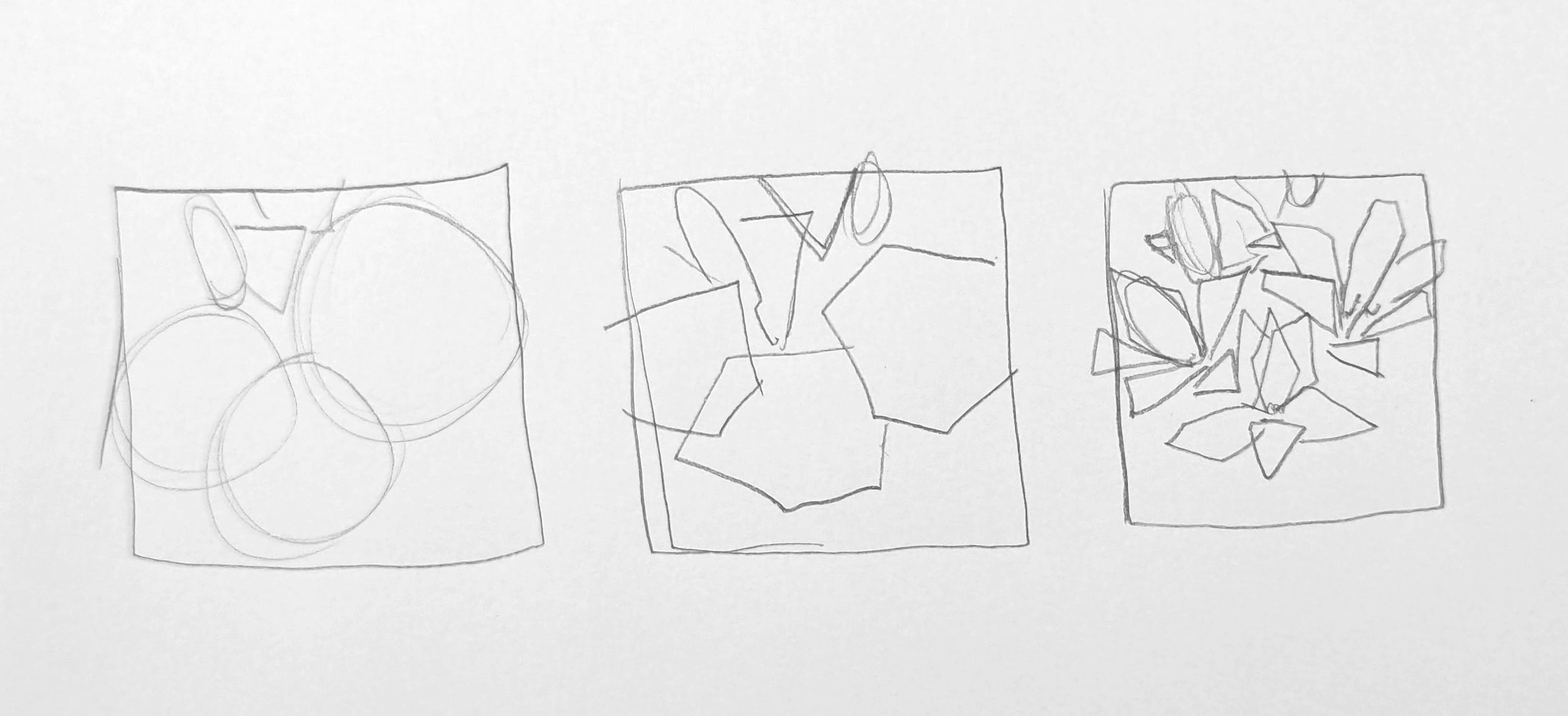
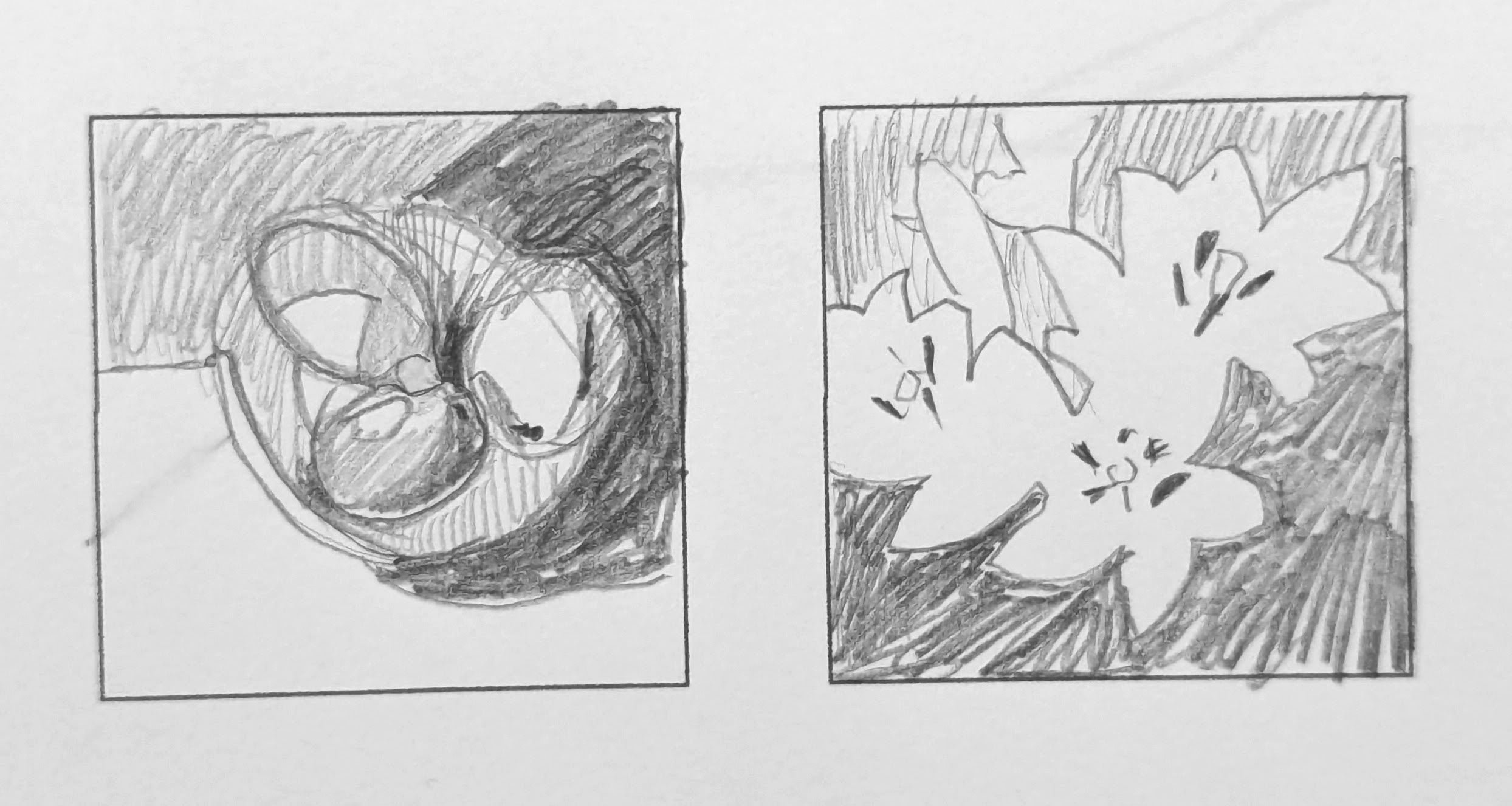
One of my favorite tools for this is simple shape drawing, which we'll explore during Week 2 of the 4 Drawing Tools Challenge inside the Art Habit Membership.
You just turn everything you see into the simplest shape possible.
Trees become collections of triangles, half circles, and ovals.
Fruit becomes circles or half circles.
Flowers become circles and ovals.
As you simplify complicated subjects into basic shapes, you start realizing you don't need every eyelash for someone to recognize a face.
An oval and two half circles for ears can already communicate "person."
That gives you confidence to leave things out.
Instead of translating every detail from your reference, you can choose the few details that help tell the story.
Drawing as a Decision Tool
Every painting begins with a reference, whether that's a photograph or something in front of you.
Every finished painting is the result of hundreds of decisions.
How much information should stay? What should disappear? Where should objects be placed? What are the major value patterns? Where should the focal point live?
Yes, you can make those decisions while you're painting.
Many of us start there.
Sometimes everything works.
But then again, sometimes one decision goes sideways and suddenly you're spending the next three hours trying to rescue the painting.
Imagine you've spent an afternoon painting your mother-in-law sitting at the kitchen table before realizing she's too far to the left.
That's a difficult change to make once the paint is already down. And probably impossible if you work in watercolor.
Experienced artists know that.
They don't want to discover composition problems after they've invested hours into the painting.
They use drawing to figure out what decisions need to be made before the paint comes out.
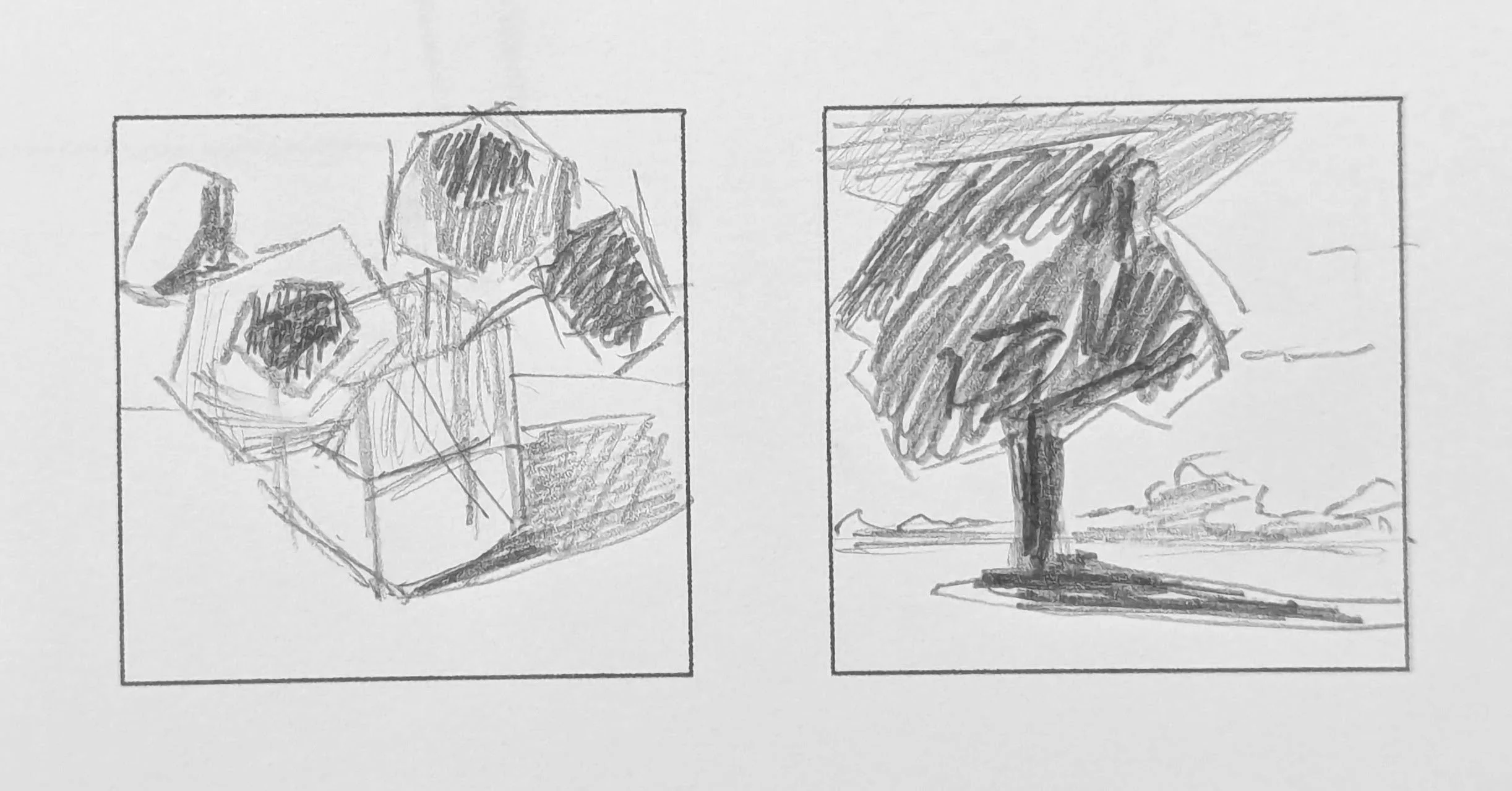
Compositional sketches, which we'll explore in Week 3, help you experiment with value patterns, object placement, and focal points.
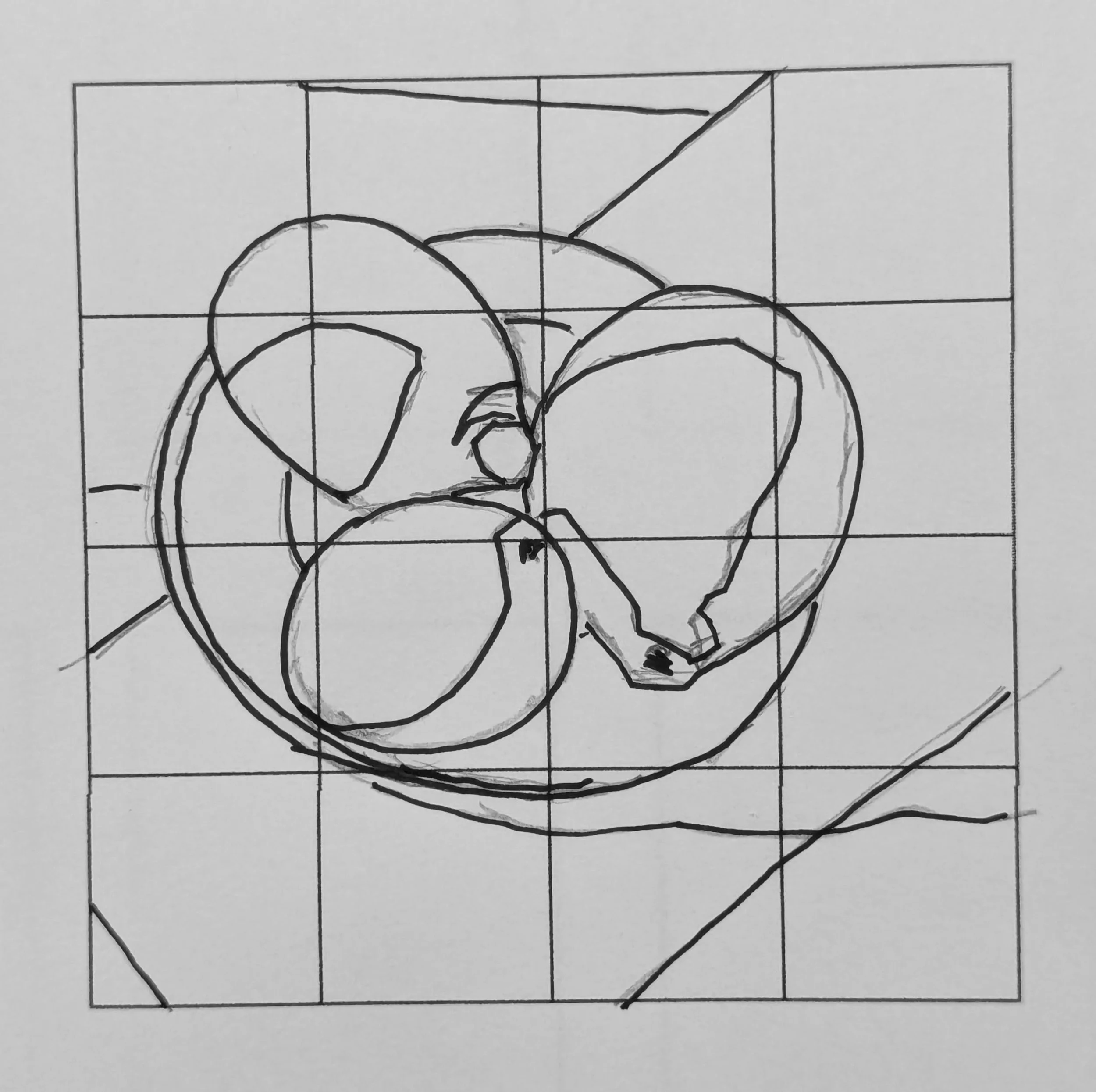
Once you've decided where everything belongs, a grid drawing, which we'll explore in Week 4, helps you place those elements where you intended.
For a grid, you lay down boxes or rectangles over your image. You lay that same grid over your reference. Now you have some guardrails as you transfer information from one to the other. (And no it is not cheating.)
Drawing doesn't remove decisions. But it does give you a safer place to audition them.
Drawing Doesn't Have to Be Beautiful
One of my favorite things about all of these drawing tools is that you don't have to be an accomplished draftsman to benefit from them.
(Also, bonus, using them consistently is one of the fastest ways to become a better drawer.)
I used to hate drawing.
Every time I tried to make an accurate sketch, I felt like I had failed.
Then I discovered contour drawing.
It gave me permission to play while helping me actually see my subject.
Later I found grid drawing.
It slowed me down and helped me become more intentional about placement. That intentionality helped grow my skills.
Eventually I realized I was skipping a step.
I needed to know what belonged where before I reached for the grid.
That's when simple shape drawings and compositional sketches became part of my process.
I used every one of these tools long before I considered myself any good at drawing. (I’m still not a great drawer, but I’m so much better than I was!)
So before you decide drawing isn't for you, ask yourself what you're asking drawing to do.
Are you asking it to become a polished, detailed, highly accurate finished drawing?
Or are you allowing it to be the messy thinking tool it can also be?
Put It to Practice
The next time you sit down to paint, try using drawing for one job instead of expecting it to do everything.
Maybe you spend five minutes doing a contour drawing before you ever pick up a brush. The goal isn't a beautiful drawing. It's to notice three things you hadn't seen before.
Or maybe you make three simple shape drawings to figure out how you want to organize the scene.
Or perhaps you sketch two different compositions before committing to your painting.
In each case, drawing has a specific purpose. It's helping you see, simplify, or make decisions.
That's a very different expectation than asking it to become a finished work of art.
The funny thing is that when you stop judging every drawing by how impressive it looks, your drawing usually starts improving anyway. Not because you're trying harder, but because you're using it more often.
So this week, ask yourself one question before you put pencil to paper:
What job do I need this drawing to do?
Once you have that answer, drawing becomes a lot less intimidating and a whole lot more useful.