5 Reasons to Leave Things Out of Your Paintings
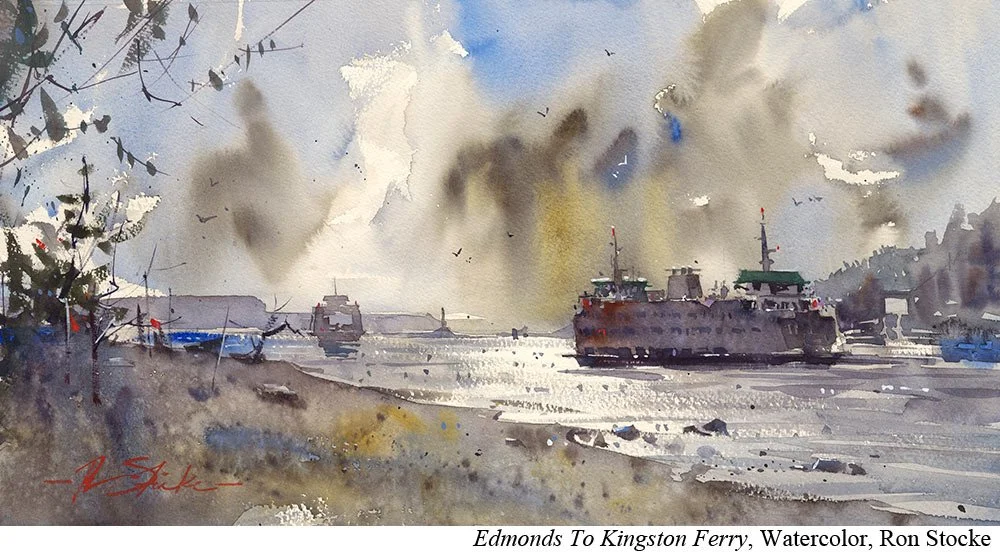
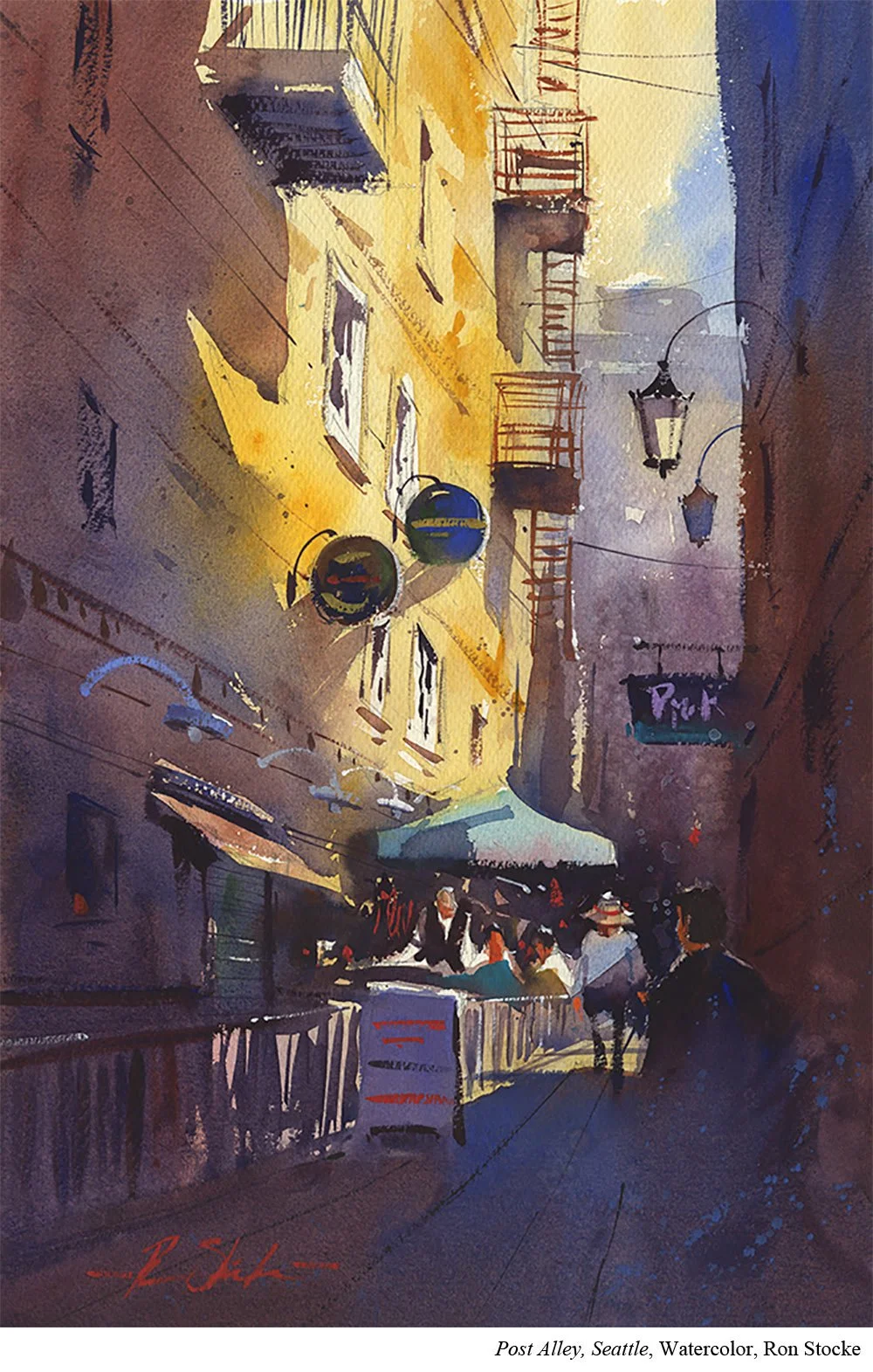
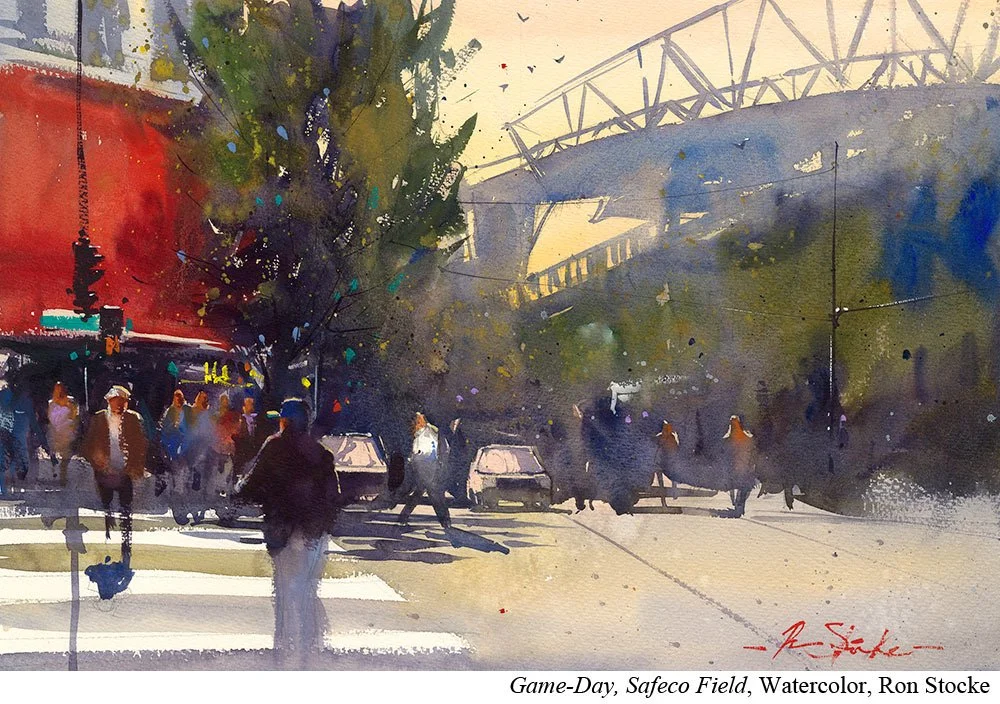
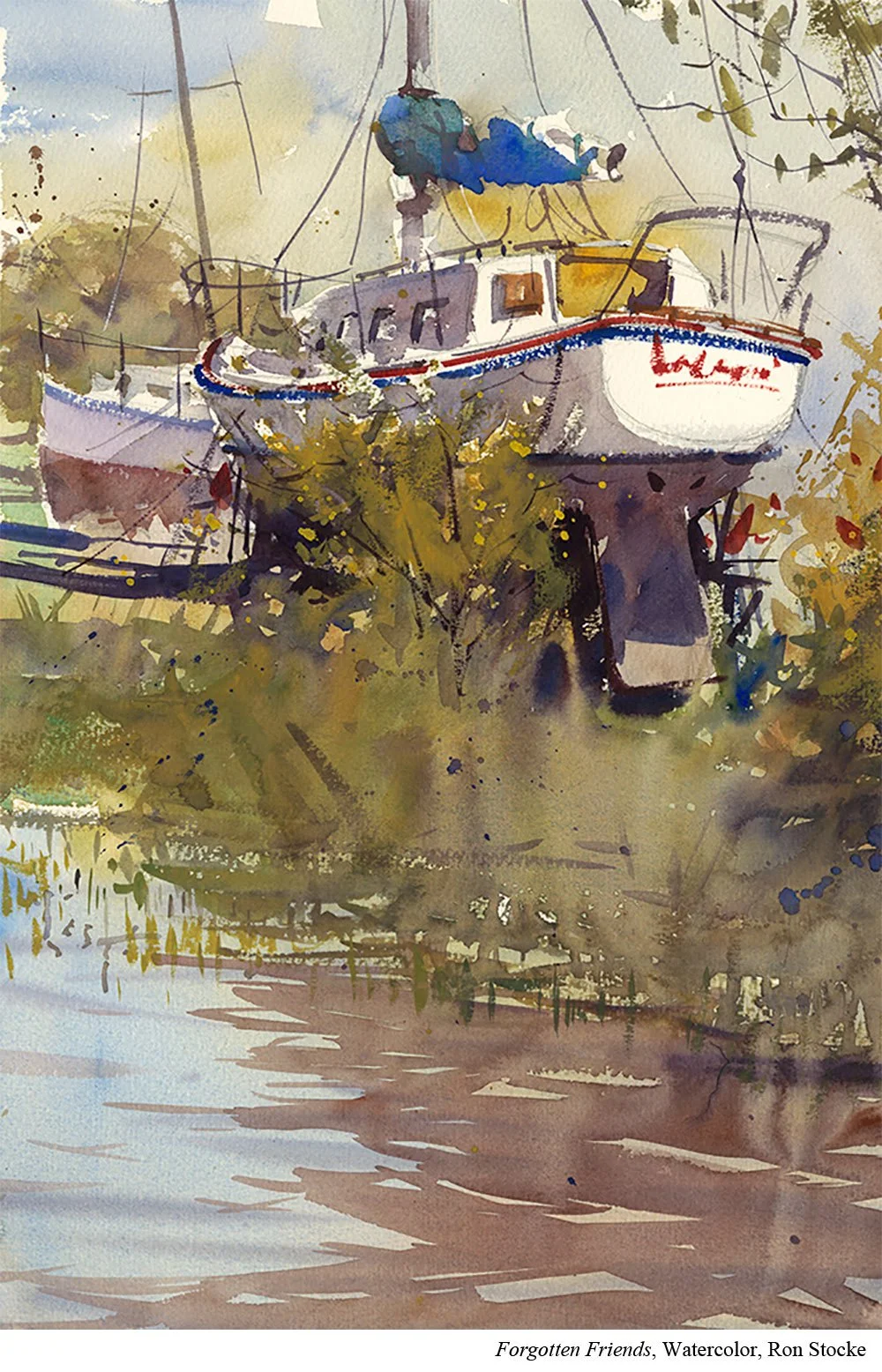
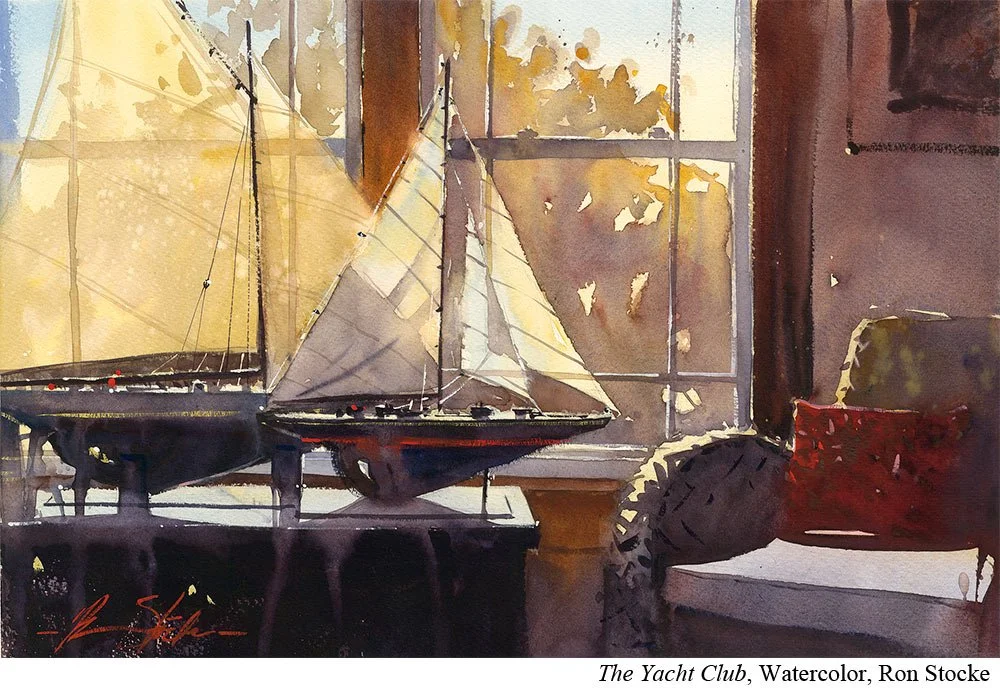
Artist Ron Stocke (Ep.78) is a master of omission. His paintings feel loose, confident, and beautifully designed because he knows what to leave out just as well as he knows what to paint.
That raises an important question.
How do you decide what stays and what goes?
To answer this question, we need to start with an idea: a reference photo isn't law. It's just a starting point. As the artist, you get to decide what does and doesn’t belong in your painting.
Let's look at five good reasons to leave something out. Yes, even if it's in the reference.

1. Leave things out because that's how we see
Stocke once shared a piece of advice from one of his teachers:
"Paint like you're driving by the scene."
Imagine you're driving past a busy street café. You don't notice every fork on every table, the pattern on every shirt, or the color of every napkin.
Instead, something catches your eye. Maybe it's a bright umbrella, a person in a red jacket, or the rhythm of the buildings along the street. That's what you remember. Everything else fades into the periphery.
That's how our eyes naturally work. We focus on one area while everything else becomes less important.
Your painting can work the same way.
Put the most information into your focal area. Everywhere else, simplify. Leave out the details that don't help tell the story.
If you're painting a building, for example, you probably don't need every perfectly drawn window. A few darker window shapes are often enough for your viewer's brain to recognize what they're seeing.
Paint the "that's enough" version of the scene.
2. Leave things out because it makes a better design
Once you realize you're free to change the reference, you can start making decisions based composition and design.
Imagine you're painting a bowl of cherries on a patterned tablecloth. The photo includes a spoon, a napkin, tiny reflections, and lots of wrinkles in the fabric.
Do all of those things help the painting?
Maybe removing the spoon creates a cleaner composition. Maybe simplifying the tablecloth helps the cherries become the clear focal point. Maybe cropping the scene tighter creates stronger shapes.
Just because something is in the photo doesn’t mean it makes a better composition. Often moving things around and kicking things out make a better design.
And good design is what you’re chasing. After all, you're creating a painting, not documenting a table.
3. Leave things out because they're too complicated
Sometimes the right decision is simply… to simplify.
Maybe part of the scene is beyond your current skill level. Maybe it's way too detailed. Maybe the idea of trying to tackle it exhausts you before you even begin.
If it isn't the focal point, it's perfectly reasonable to leave it out.
And if the thing that's overwhelming you is the focal point, that's useful information too. You might decide to simplify it, change your composition so that something ELSE is the focal point, or choose a different reference altogether.
Painting isn't about proving you can paint everything.
It's about meeting yourself where you are. Sometimes we meet something that’s too complicated. It’s OK to not include it.
4. Leave things out because you don't feel like painting them
As the artist, you don’t have to paint part of something for ANY reason. Including, sometimes you simply aren't interested in painting a particular part of the scene today.
Maybe you're painting a street scene and don't have the energy to tackle people.
Leave them out.
Maybe you're painting a landscape and today you really want to focus on perspective instead of rendering every tree.
Simplify the trees.
Sometimes the best reason is simply, "I don't feel like painting that today."
That's reason enough.
You can always bring those elements back in during another painting.
When you finish, get curious about the result. Maybe removing them strengthened the composition. Maybe it weakened it. Either way, you've learned something you can use next time.
5. Leave things out because you don't have time
This is one of the most practical reasons of all.
Some painting sessions are long. Others might only be twenty minutes.
Your approach should change with the time you have.
Imagine you're painting a complex landscape. On a day when you have several hours, you might enjoy painting every tree, shrub, and wildflower.
On a busy day, you might paint only the hills, sky, and large shadow shapes.
The trees won't get their feelings’ hurt.
Sometimes leaving things out creates a stronger painting.
Other times it creates a better painting experience.
Instead of rushing through every detail, you can work at a thoughtful pace and finish feeling calm.
That's a worthwhile trade.
Put It Into Practice
Before your next painting, spend five minutes making a few exploratory sketches.
These aren't finished drawings. They're thinking tools.
As you sketch, ask yourself:
If I drove by this scene, what would I actually remember
Where is the focal point?
What could I remove to create a stronger design?
What feels unnecessarily complicated today?
Is there anything I simply don't feel like painting?
Given the time I have, how much of this do I want to take on?
Making these decisions before you pick up a brush is much easier than making them halfway through a painting.
If you're new to this, it’s going to feel strange. You’ll feel your inner critic straining against the idea, “But it’s IN the reference, you HAVE TO paint it.”
But that’s just not true.
You’re the artist. The reference is a starting point. How (and what) you translate, is totally up to you.