How to See Shapes like a Painter
When Mark Mehaffey (Ep.5) stands on a country road with his easel, to a passing driver it might look like he’s painting trees, sky, and a road.
And yes, to some extent he is.
But as an artist with more than 30 years of experience, tree, sky, and road aren’t necessarily what he’s primarily thinking about.
Instead, he’s thinking about shapes.
Shapes come up a lot when artists talk about painting. You might hear a teacher say, “Don’t paint objects. Paint shapes.”
But what exactly does that mean?
What are shapes and why do they matter?
These are important questions to ask and answer because shapes are one of the fundamental ways artists like Mehaffey make stronger paintings.

What Is a Shape?
At its simplest, a shape is an area with a boundary. And in visual art, we see that boundary because something changes.
Imagine a white circle on a white background but the circle is outlined with a black line. Where the white meets the black, there’s a very strong value contrast, so the edge of the circle is easy to see.
Now imagine a white circle with a white outline on a white background.
Technically, you could tell me there’s a circle there. But if there’s no visible difference between the circle and its background, you can’t actually see its shape.
To see a shape, you need some kind of contrast.
That contrast might come from value, color, saturation, texture, pattern, or some other visual difference.
Sometimes those boundaries are incredibly clear. A dark tree against a bright sky might create a strong, easy-to-see shape.
Other times, the boundary is more ambiguous. Think about a shadow that gradually disappears across a table. You know there’s a shadow shape there, but you might not be able to point to the exact spot where it ends.
As painters, we’re constantly deciding where one shape ends and another begins, even when nature hasn't made that distinction particularly obvious.
Why Do Shapes Matter?
If you’re a representational painter, shapes are one of the ways you anchor your painting to reality.
Imagine you want to paint an apple.
There are certain visual cues you need to give your viewer so that when they look at your painting, they think apple.
There are other elements in play, but shape plays a big role.
If you paint a perfectly round ball and make it orange, your viewer probably isn't going to identify it as an apple simply because you tell them it’s one.
But if you change the silhouette and add the characteristic dip around the stem and the irregularities people associate with an apple, you give the viewer more information. And that new information points them closer to apple.
This is why it can be helpful to begin thinking about shapes as flat silhouettes.
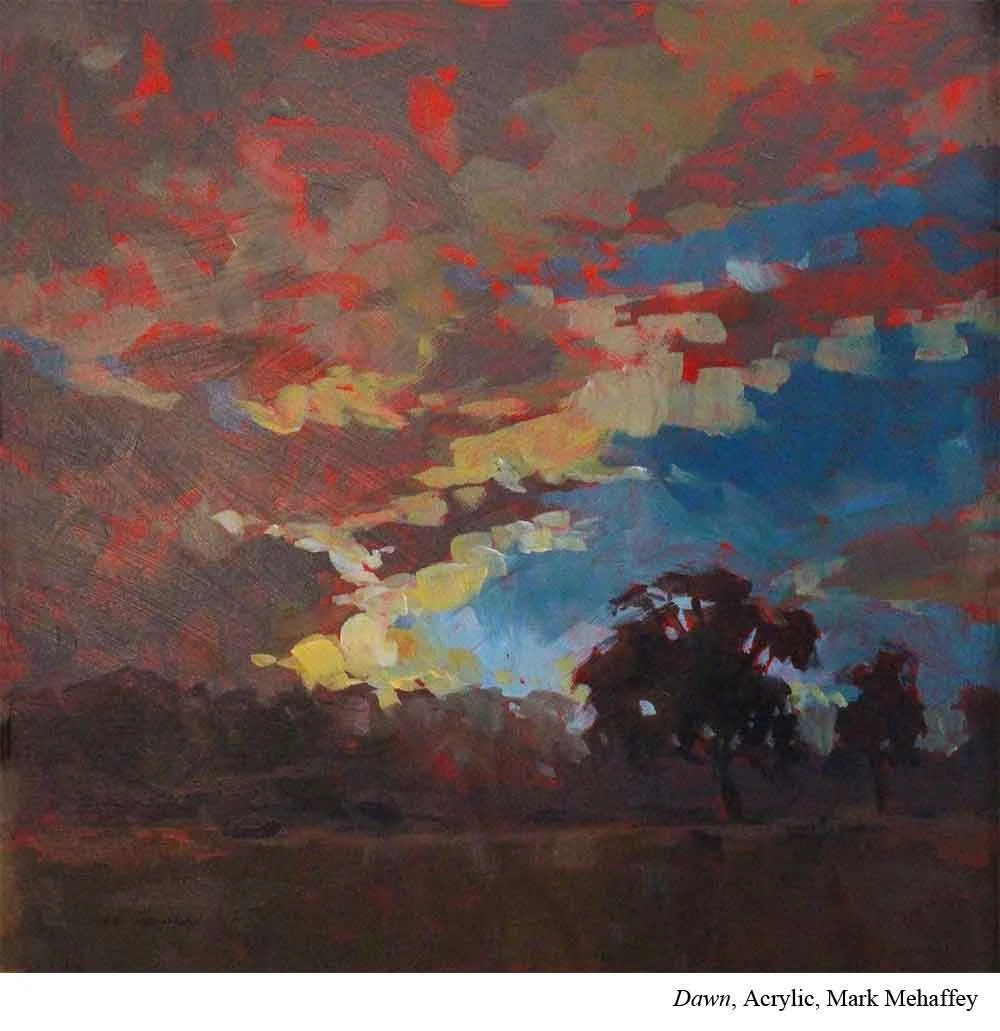
When Mehaffey paints a tree, for example, the silhouette of that tree does a lot of work. If he gets the outer shape convincing enough, the human eye will read it as tree.
In fact, silhouettes can be so powerful that you can fill the interior of a recognizable shape with unexpected colors or marks and still understand what the object is.
Of course, not every subject can be described by its silhouette alone.
A rose or dahlia might have a fairly simple outer shape, while much of the information that tells you what kind of flower it is lives in the smaller shapes inside it.
So learning to see shape isn't only about seeing the outside of an object. It's about noticing which shapes give you the information you need to describe what you're looking at.
Seeing Value Shapes
So far, we’ve been looking at shapes as a way to describe individual objects.
But painters also use shapes to organize everything they see. One of the most useful ways to do that is through value.
Remember how shape comes from contrast? Value contrast is one of the primary ways our eyes differentiate between shapes. And as an artist, you can learn to think that way.
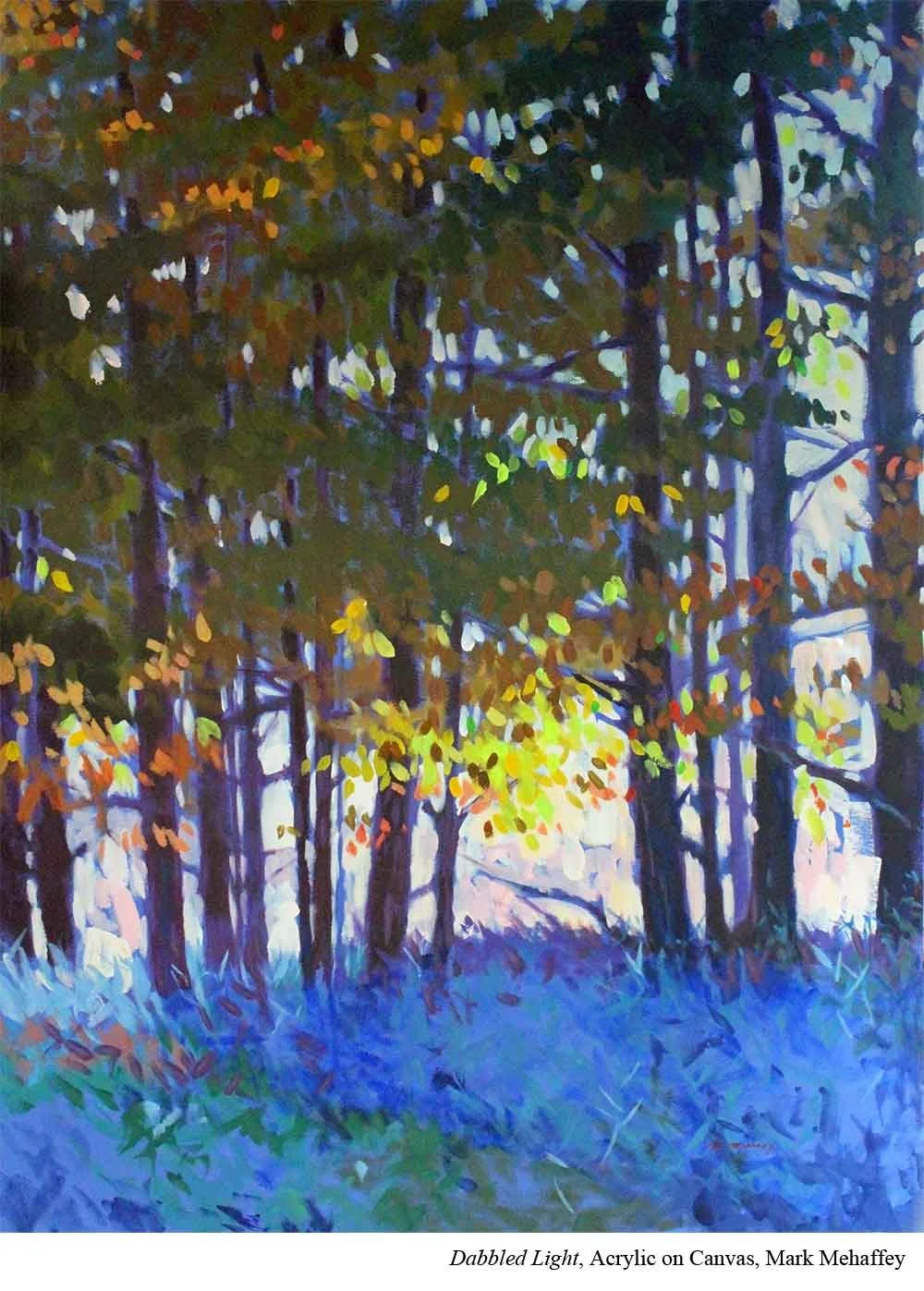
Look at the leaves in a tree and you might be able to distinguish thousands of little leaf shapes.
But squint your eyes.
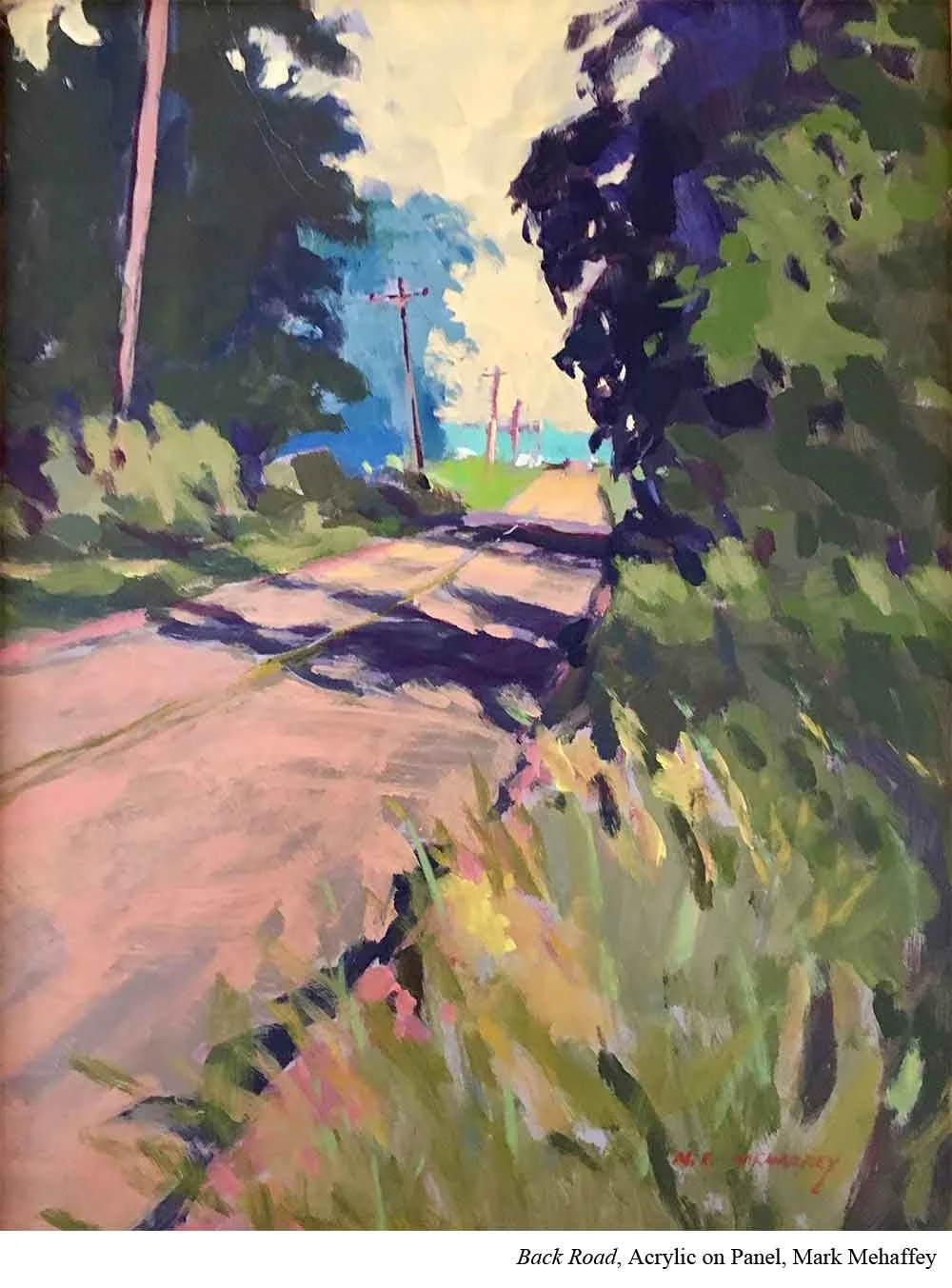
Suddenly, many of those individual leaves begin to disappear. You might notice that large groups of them are actually similar in value.
They might be different colors. They might be different shapes. But their values are similar enough that you can begin grouping them into one larger shape.
And that's something artists do constantly.
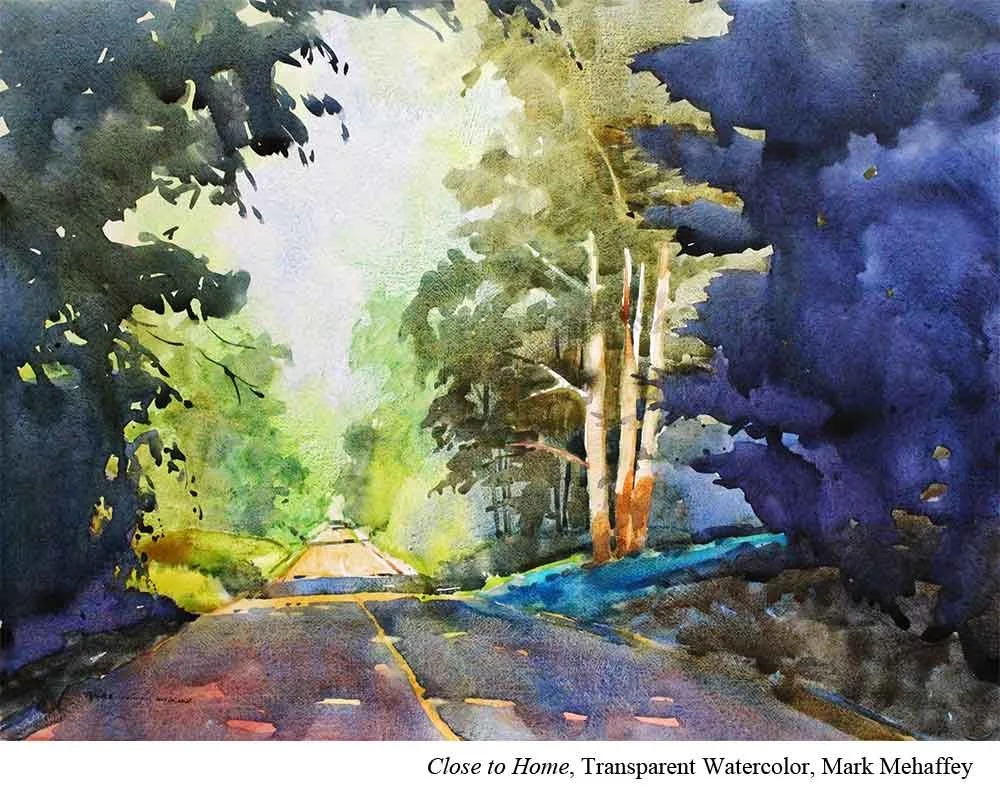
Imagine Mehaffey looking at a row of trees. He doesn't necessarily need to paint every branch, patch of sunlight, or gap between leaves as its own separate shape.
Instead, he can ask which areas are similar enough in value that they could be grouped together.
Several slightly different darks might become one larger dark mass.
This is often called value massing.
The values within that mass don't have to be identical. They just need to stay close enough that the larger shape still holds together.
Value massing allows you to take a scene filled with small, complicated shapes and organize it into fewer, bigger shapes.
Make Those Shapes Interesting
Once you’ve massed things into larger shapes… Now you need to figure out what to do with that shape.
Afterall, simplifying something into a large shape doesn't mean making it flat or boring.
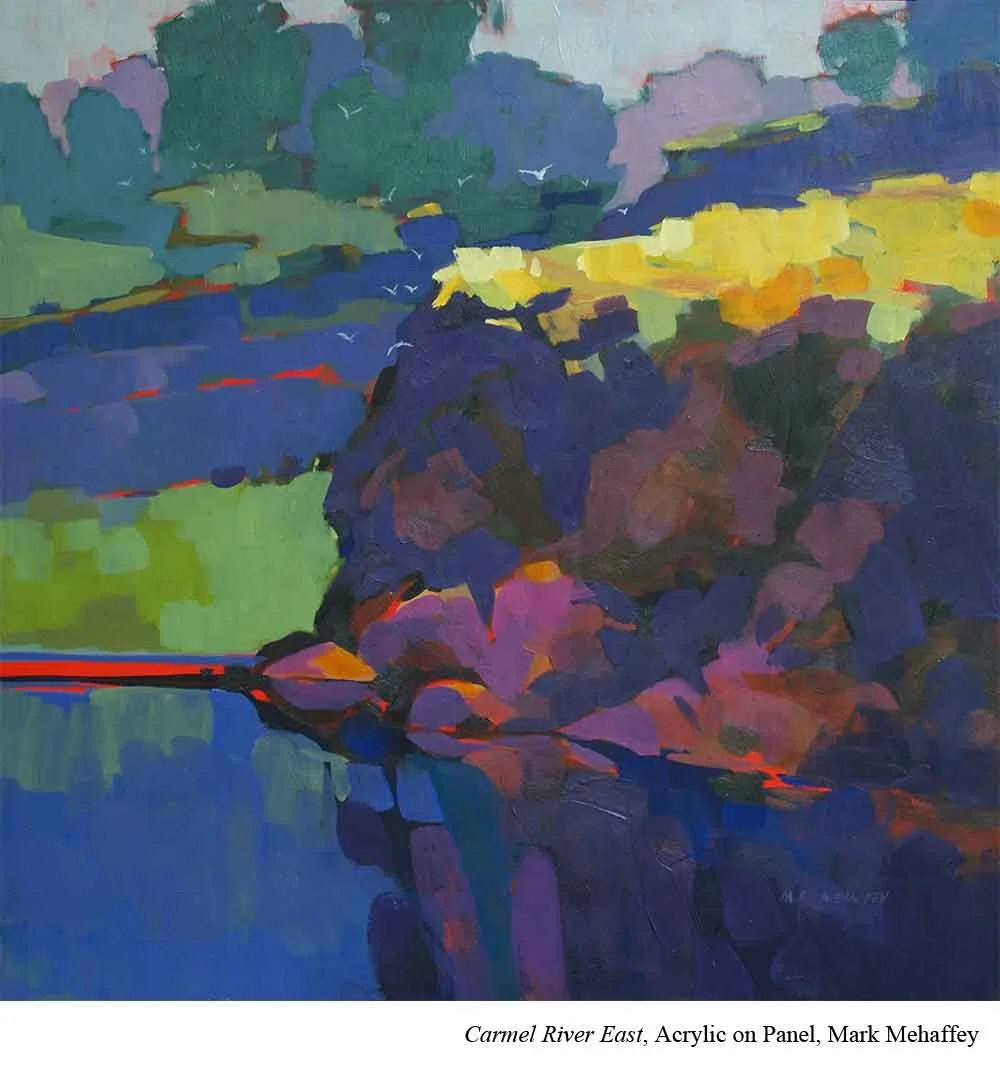
Imagine Mehaffey has grouped several trees into one large dark mass.
He doesn't have to mix one dark green and paint the entire group like he's painting a wall in his house.
He can slightly shift the color. He can vary his brushstrokes. He can suggest smaller forms. He can allow some areas to be slightly lighter or darker.
The important part is that those changes don't become so strong that they accidentally break apart the larger shape.
You can have variation within the shape while still allowing the larger shape to hold together.
Design With Shapes
Once you can see and organize shapes, you can also begin thinking about the relationships between them.
Those relationships give you a way to control where someone looks.
Mehaffey isn't thinking, “This is the prettiest tree, so this is where people will look.”
Instead, he can think like a painter.
If he wants you to look at that tree, he can create stronger contrast around it.
One of the most powerful ways to do that is, again, (surprise!) through value.
If the lightest shape in your painting sits next to the darkest shape, that area is likely to attract attention. If that relationship doesn't occur anywhere else in the painting, it becomes even more noticeable.
So as the artist, you aren't simply recording the shapes that exist in the landscape.
You're designing their relationships.
You can strengthen the contrast between shapes where you want attention and reduce it where you don't.
That gives you some control over how your viewer's eye moves through the painting.
And suddenly, “seeing shapes” becomes much more than a way to simplify objects.
Shape becomes a tool for designing the painting.
Put It to Practice
Part of working with shape effectively is learning to see it in the first place. And you can practice without ever picking up a brush.
Look around your world and choose an object.
Instead of looking at your dog and thinking DOG, with eyes, ears, paws, fur, and a tail, look at its outer silhouette. Instead of noticing the branches, fruit, and leaves of a tree, look for the larger shape it creates against the sky.
Ask yourself:
If I filled this entire object with black, would I still know what it was?
If yes, the silhouette is doing a lot of heavy lifting. If not, what smaller shapes would you need to add before the subject became recognizable?
Next, consider value.
If you had to give the entire shape one general value, would it be light, medium, or dark? How does that compare with the shapes around it?
Now squint. Which smaller shapes begin to merge because their values are similar? Could you group them into one larger light, medium, or dark shape?
Then think about how you might translate that shape into paint. Where could the color or value shift without breaking apart the larger shape? Where could you add variation while still allowing it to hold together?
Finally, choose a spot you’d like your viewer to look at first. How could you adjust the contrast between your value shapes to lead their eye there?
The goal isn't to stop seeing dogs, trees, roads, and skies. It's to get better at seeing the shapes they're made from.
Once you can see those shapes, you have more choices about what to do with them in a painting.