How to Build a Project That Actually Improves Your Painting Skills
Artist Ian Roberts (Ep.36) has spent decades thinking about what makes paintings work.
He's known especially for composition. But when Roberts talks about getting better at painting, he doesn't suggest that you simply make more paintings.
He talks about deliberate practice.
Because making a complete painting asks you to do a lot at once. You're making decisions about drawing, value, color, composition, edges, materials, and process, often all at the same time.
So yes, when you make a painting, you're using all of those individual skills.
But using a skill isn't necessarily the same as intentionally building it.
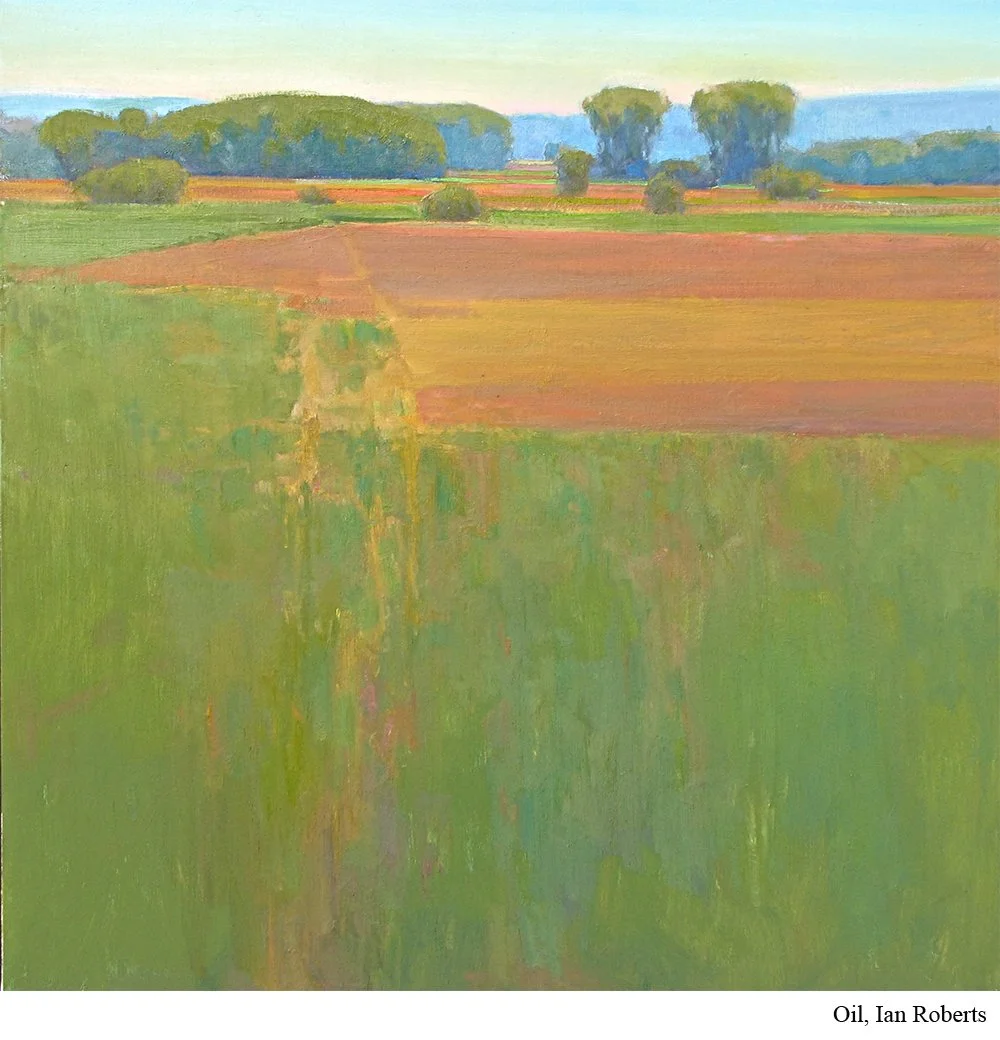
When there are so many moving pieces in a painting, especially if you don't have a set process yet, your attention is divided. You might make dozens of value decisions while you paint, but you're also thinking about whether your drawing is accurate, whether your colors are working, what needs to happen next, and whether the whole painting is coming together.
Roberts' approach is to pull an individual problem out of the complexity of painting and practice it directly.
If you want to get better at value, for example, you might put your paints away. Roberts suggests pulling out your pencils, simplifying your subject, working with just a few objects and using a single light source.
Then you don't just do the exercise once.
You do it again and again.
If you want to improve a painting skill, you don't have to hope you'll encounter it often enough in your regular paintings. You can build a project that makes you practice it repeatedly.
So let's say value is something you struggle with.
What would a focused project actually look like?
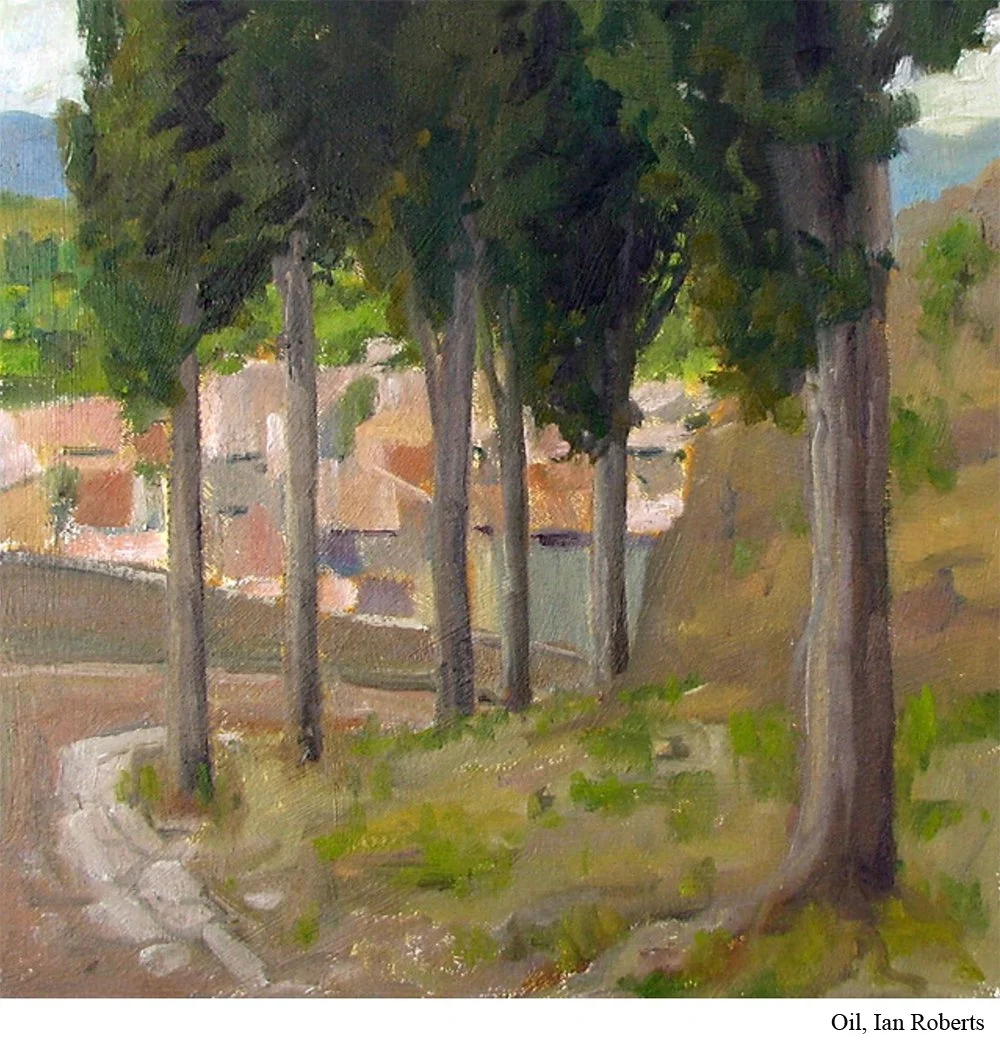
Choose One Skill: Value
This might be the hardest part of building a value project.
Even though you know value is important, as soon as you point focused attention at it, you might start worrying about all the things you're NOT focusing on.
"But what about color?!" your inner critic might be saying. "Or drawing!"
Or! Or! Or!
As soon as you decide to focus, your instinct might be to add in more, more, more.
Value AND color AND drawing.
But if you can, resist this urge.
Remind yourself that you're not doing this forever. Maybe it's two weeks. Maybe it's 20 days. Maybe it's a month.
Choose some span of time that allows you to give the skill real focus but also calms your mind and lowers the preciousness of the decision.
After all, this isn't a forever decision.
It's a decision for the next 20 days.
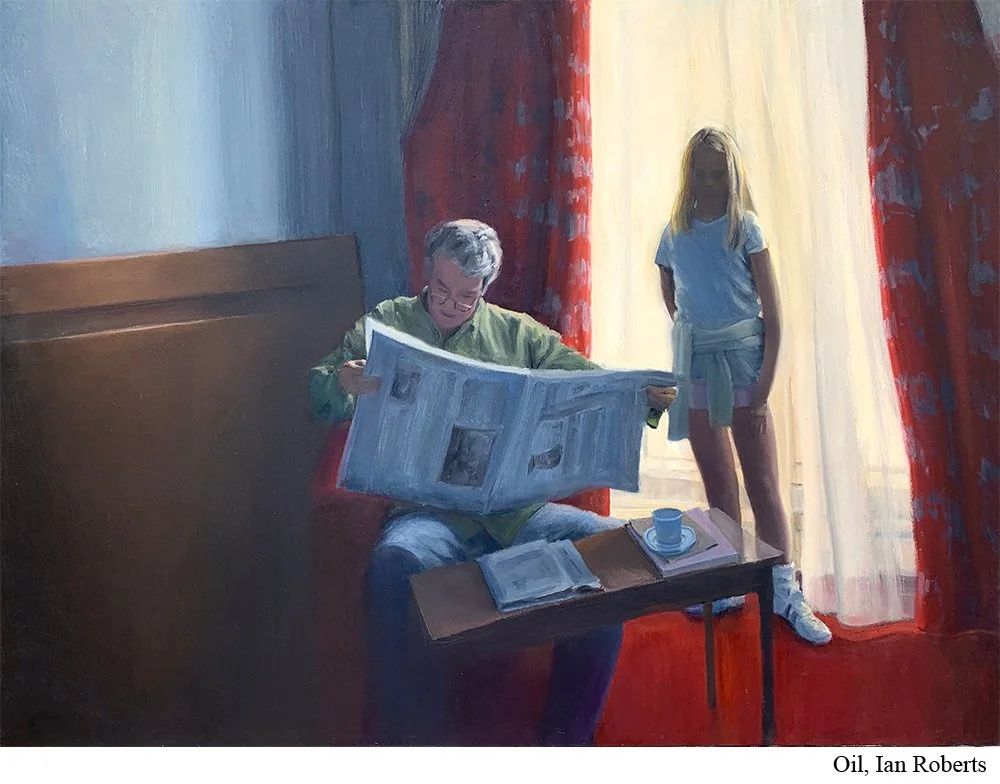
Make It Small and Consistent
When you're focused on intentional skill-building, it doesn't have to be a huge project. In fact, its strength can come from keeping it small.
Spend 20 minutes a day for 20 days working with focused attention on value, and you might be surprised by how much better you understand it by the end.
By doing something small but consistently, you're putting in what artist Allison Moir-Smith calls sets and reps.
Sets and reps build skills much more effectively than doing, say, a 10-hour value marathon once a month.
When you work on a skill once a month, you have 30 days to forget what you've learned.
But when you do a little bit each day, you get to take yesterday's knowledge into today's session. Then you take what you learned today into tomorrow's session.
Each time you return, what you noticed the day before is still relatively fresh.
Maybe yesterday you struggled to separate the middle value from the light. Today, you get another chance to look for that difference.
Tomorrow, you get another.
Strip Away Things That Compete With That Skill
Even when you focus on one fundamental skill, learning can still feel pretty complex. A lot of learning art is unintuitive and awkward. The more variables you add, the harder and more complicated it gets.
With intentional focus, you want to simplify as much as possible.
This is something Roberts does with his own exercises.
If you're working on value, he suggests pulling out your pencils instead of your paints. You might choose a simple still life with only a few objects instead of a complicated subject. Use one light source instead of several. Make small studies rather than trying to finish complicated paintings.
Each choice removes another problem you don't need to solve right now.
You don't need to figure out how to mix the right color.
You don't need to manage a complicated arrangement of objects.
You don't need to finish a painting you're worried about ruining.
You get to spend more of your attention on value.
A focused project becomes stronger through what you choose NOT to do.
By not adding complexity in these other areas, you're giving yourself more of a chance to improve in the place you've actually set out to improve.
If your goal is to improve value, it doesn't make much sense to add in all the bells and whistles. They'll just compete for the attention you want to give to value.
Create a Repeatable Problem
Repetition is project gold because it gives your brain time to work through the problem.
You get to look at it from different angles. You can try things again and again and then adjust based on the feedback.
Roberts doesn't suggest making one value study and calling it done. He talks about making many studies because each one gives you another opportunity to work through the problem.
At first, it might feel strange to slow down and try the same thing again and again. You might worry you'll get bored.
But you might be surprised by how much repetition gives you.
You know what materials you'll use. You know what kind of problem you'll be working on. You know what you're going to do when you sit down.
That's useful from a habit standpoint because you can walk into your studio knowing exactly what you'll be working on.
It's also useful for learning because your brain has time to dig more deeply into the problem you're trying to solve.
So use the same setup each day. Use the same materials. You could even draw the same object several times during the week.
Give yourself a chance to really think about what you're exploring.
Change One Variable and Try Again
Repetition can mean working on the exact same setup day in and day out.
But it can also mean adjusting one small variable.
Notice I'm saying one variable. Not the whole thing.
If you're working with pencils, one lighting setup, and an apple, resist the temptation to jump from that setup into paint, a whole fruit basket, and complex lighting.
When you change one variable, you're slowly turning up the dial on complexity.
You start with something simple. You repeat it so your brain has time to work through the problem.
Then you add a little complexity and see how well you can use what you've already figured out in this slightly different situation.
This gives you a chance to integrate what you're learning.
Maybe you worked really hard to see the light, middle, and dark values on a lemon. You translated what you saw into your sketchbook. You feel like you're starting to get it.
Now add a second lemon.
It can feel like you've added a whole picnic.
It's wild how much changing one variable can change the problem.
Now you have to compare the values between the two lemons. You have another cast shadow to consider. Maybe one lemon is getting more light than the other.
You're taking what you just learned and figuring out how to use it in a slightly more complicated situation.
Give yourself enough time to work through these new pieces.
This is what skill-building looks like.
Repeat Long Enough to Notice Patterns
Doing something once gives you information.
Doing something 20 times gives you a pattern.
And when you have a pattern, you have a map of your own tendencies.
Maybe you repeatedly make your middle values too dark.
Maybe you have trouble simplifying all the subtle shifts you see into a few larger value groups.
Maybe your value structure works when you're looking at one object but gets confusing when you add a second.
Or maybe something that felt nearly impossible on Day 1 feels much easier by Day 15.
Now you have information about what you do well and where you still struggle. You can use that information to decide what you want to work on next.
So commit to building your value skills for 20 days.
Build a simple value project. Then put your head down and get to work.
Don't ask each day to give you some amazing breakthrough. Don't ask every session to produce an incredible drawing.
After all, the goal isn't to make 20 good drawings. It's to get 20 chances to solve the same kind of problem again and again so that you have more information to work with.
You're going to show up, stay curious, ask questions, and try again.
At the end of the 20 days, look at where you built skills and where you still have work to do.
Because you stuck with the project long enough, you'll have actual information you can use to design your next learning step.
Put It to Practice
If you feel like your paintings could use some value strengthening, design a value project.
This might mean allocating 5 to 20 minutes at the beginning of each studio session to focus primarily on value studies.
Or, if you have less time in your schedule, it might mean swapping out your regular painting time for value studies for 20 days. Your inner critic might puff up at this idea, but your paintings will thank you.
Decide what your project is and what it isn't.
Choose one skill to focus on. Choose simple materials and a small setup. Decide how much time you'll spend each day and how long you'll run the project.
Then get to work.
And if you'd like to build and run a focused project like this with a group, join us for the next 20for20.
During Prep Week, we'll work through what you want to focus on and how to design a project that fits the time, energy, and bandwidth you actually have.
Then, for 20 days, you'll put that project to work for at least 20 minutes a day.
You'll get your sets and reps. You'll get multiple chances to work through the same kinds of problems. And at the end, you'll have 20 days of information you can use to decide where you want to go next.
Join the next 20for20 here.