
Why Your Watercolor Looks Grainy (And Why That’s Actually Good)
You squeeze out some watercolor, mix it with another color, and something strange starts to happen.
Instead of forming a smooth wash, the paint begins to separate. Tiny particles appear across the surface of the paper. It almost looks like sand settling into the wash.
Your first thought might be that something is wrong with the paint.
Is this tube bad? Did it go bad somehow?
Ep.21 guest Carolyn Lord says not so fast. What you’ve likely discovered is a granulating pigment.

Granulating pigments do exactly what their name suggests. They granulate.
Instead of spreading evenly across the paper, the pigment particles separate slightly as the paint dries. Those particles settle into the tiny valleys of the watercolor paper and create a textured appearance.
If you’ve ever noticed speckled or sandy looking passages in a watercolor wash, there’s a good chance a granulating pigment was involved.
Some pigments are especially known for this quality. Many of the earth pigments have a tendency to granulate. Cerulean blue, raw sienna, and many of the cobalt pigments are classic examples.

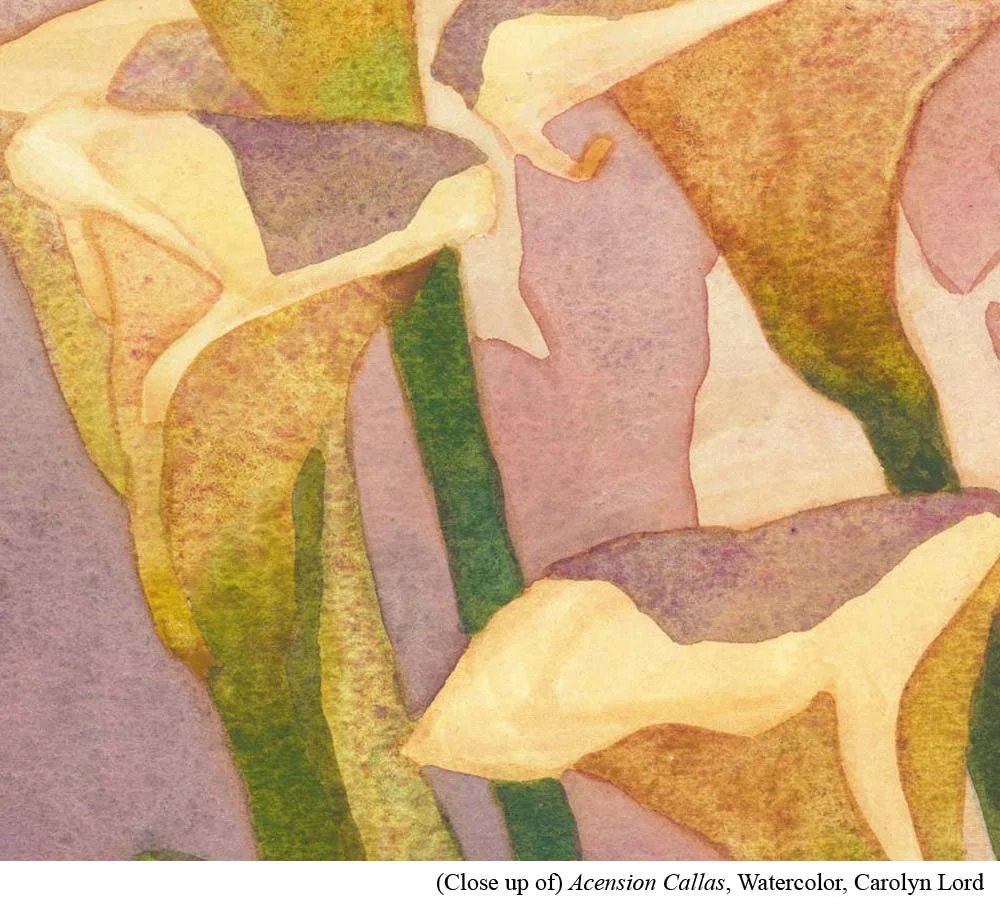
At first, this effect can be confusing. Most beginners expect watercolor to behave smoothly. When a wash separates into little particles, it can look like something has gone wrong.
But in reality, many watercolorists love granulation because it adds visual interest and texture that would be difficult to create intentionally with a brush.
Instead of a flat, even wash of color, granulating pigments create subtle variation across the surface of the paper. Some areas appear darker where pigment gathers. Other areas stay lighter where the wash thins out.
That natural variation can make a painting feel more alive.
Think about subjects that naturally contain texture. Weathered stone. Old walls. Sidewalks. Distant mountains. Coastal cliffs. Even tree bark.

Granulating pigments can help suggest those surfaces without requiring you to paint every detail.
At the same time, granulation is not always desirable. There are moments when a painter wants the opposite effect. Smooth, even passages of color.
If you’re painting a child’s face, for example, you probably want soft, clean transitions in the skin. A heavily granulating pigment could create unwanted speckling that distracts from that softness.
The key is not that granulation is good or bad. It is simply a characteristic of certain pigments.
Once you understand which colors in your palette granulate and which ones stay smooth, you can make better decisions about where to use them.

Put It to Practice
If you’re not sure whether your paints granulate, the best way to learn is to test them.
Pull out a sheet of watercolor paper and create a simple set of swatches. Mix each color with water and lay down a small wash. Then watch what happens as the paint dries.
Some pigments will settle into tiny particles across the paper. Others will dry almost perfectly smooth.
Once you know which pigments granulate, commit to using a set of granulating pigments for20 days to work through small paintings.
Over time, you’ll start to recognize the behavior of your colors. And once you know how your pigments behave, you can start using those characteristics intentionally in your paintings.