The Surprising Thing I Noticed Visiting Artist Studios
Every October, Portland, Oregon, artists open their studios for two consecutive weekends of Open Studios. It’s my favorite art event in Portland. And I spent 8 hours over four days looking at art and talking with artists.
Nothing better.
And as I tromped up (so many) stairs in a refurbished old John Deere warehouse and wound through tree-lined neighborhood streets, I had time to really think about what I was seeing. Not just the art but the attitudes of the people creating it.
And there was something that really stood out to me. It was a sense of permission.
Being an artist is all about permission. And it shows up in some really surprising ways.
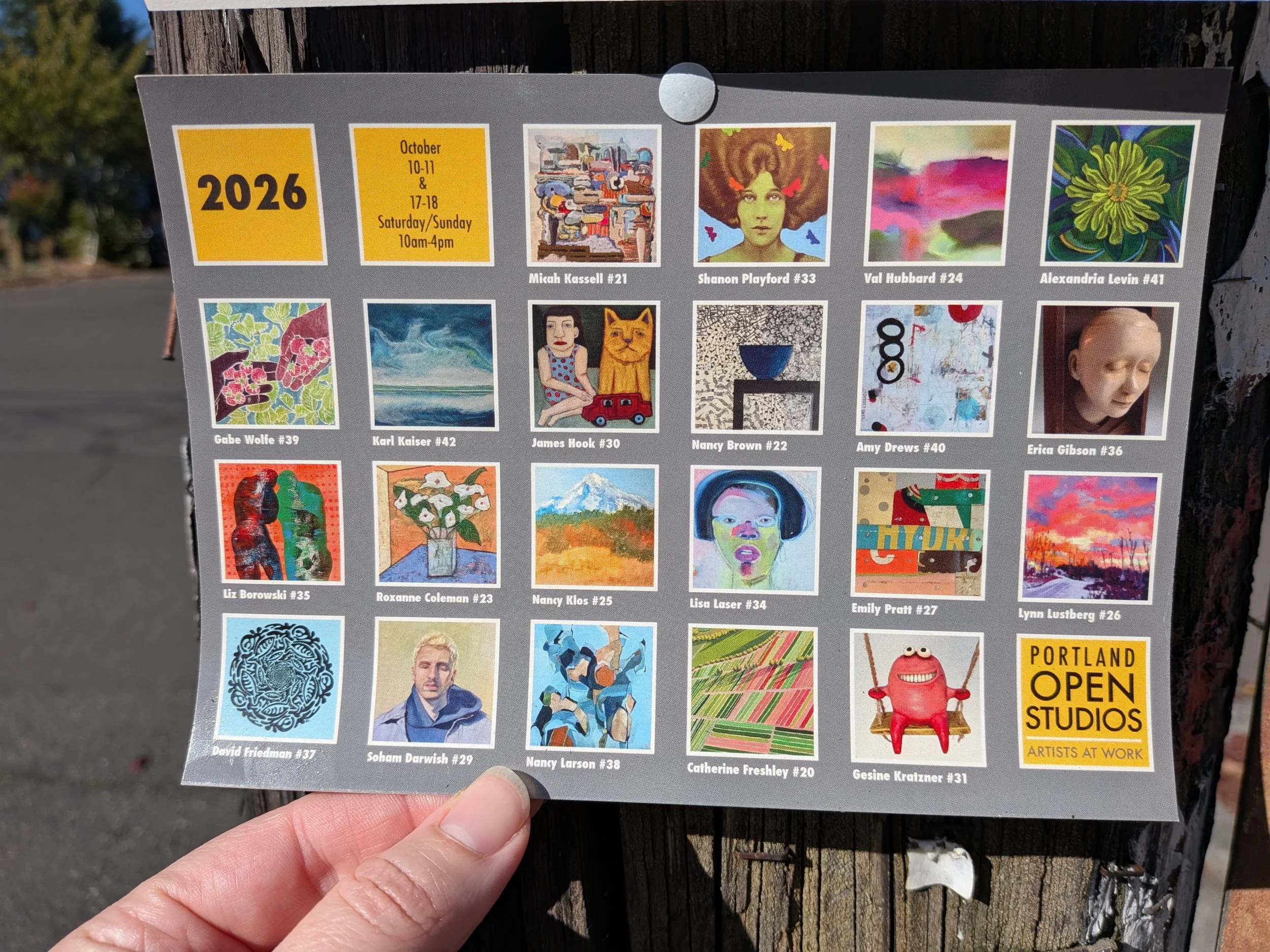
Seriously, if your local artists do an Open Studios, you won't regret going.
Permission to Start
And I mean really start.
Often we think of starting as buying the materials. Or signing up for the class. And those are almost like pre-starts.
Starting happens when you put a brush to a surface.
This is why it requires permission. Because you’re not just buying the materials to potentially create the thing. You’re committing to actually trying the thing.
Starting is hard. But what comes next is even harder.
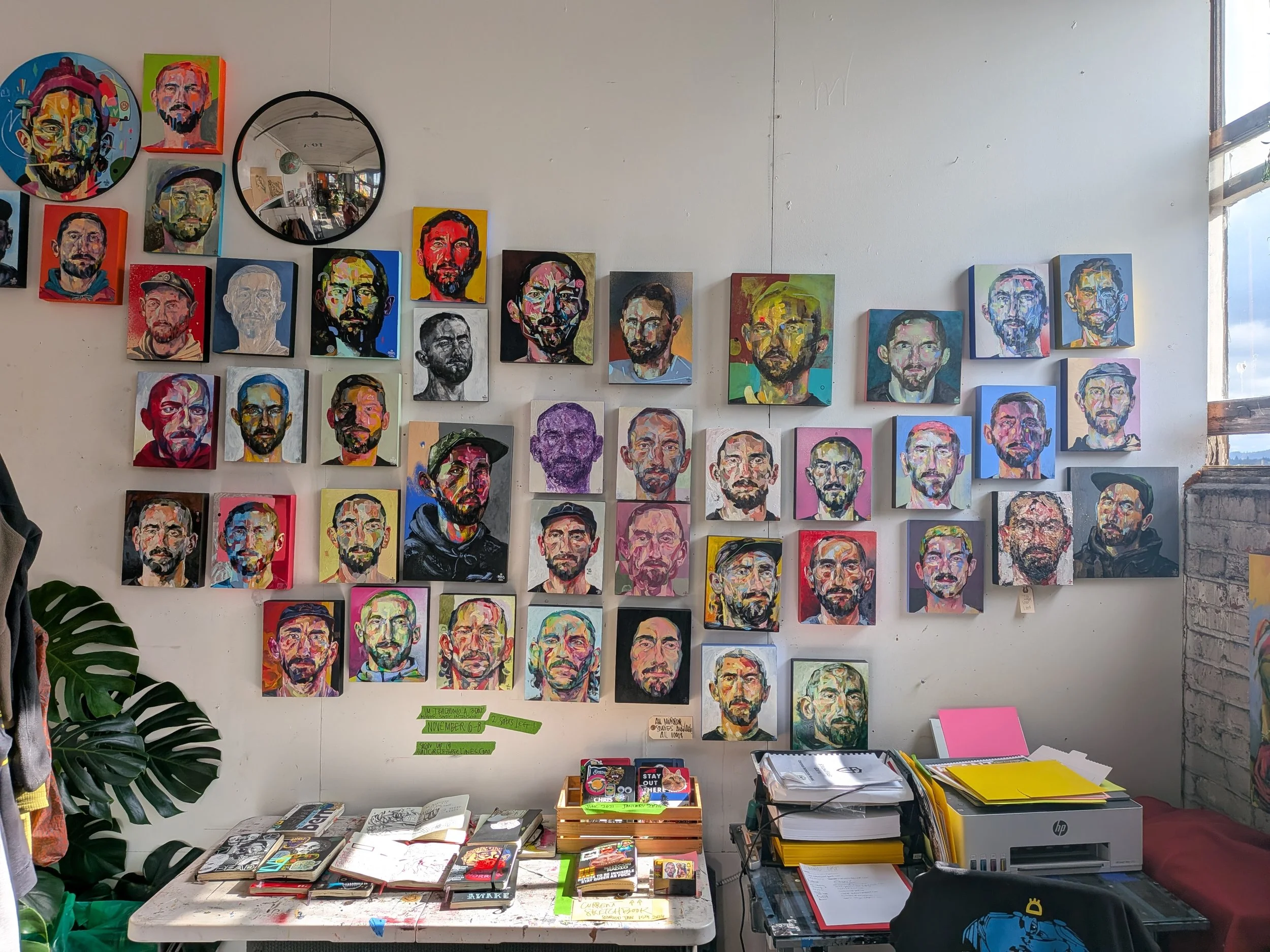
Tyler Bingham started doing mirror portraits to learn how to paint faces. He challenges himself to finish one a month. He's now done this for several years.
Permission to Fail
Art is a skill you build. The way you build it? Through trying… and failing.
A lot. You don't like what you create. Or you can’t quite make the thing you’re trying to create. You discover you don’t have the skills, or bandwidth, or studio stamina. Or knowledge.
The more you try, the more you realize just how much you don’t know. And if you’re not careful, all that failure can become a pile of evidence that you’re not meant to be an artist.
Everyone builds their own personal failure pile. But it’s what you DO with that pile that makes the difference.
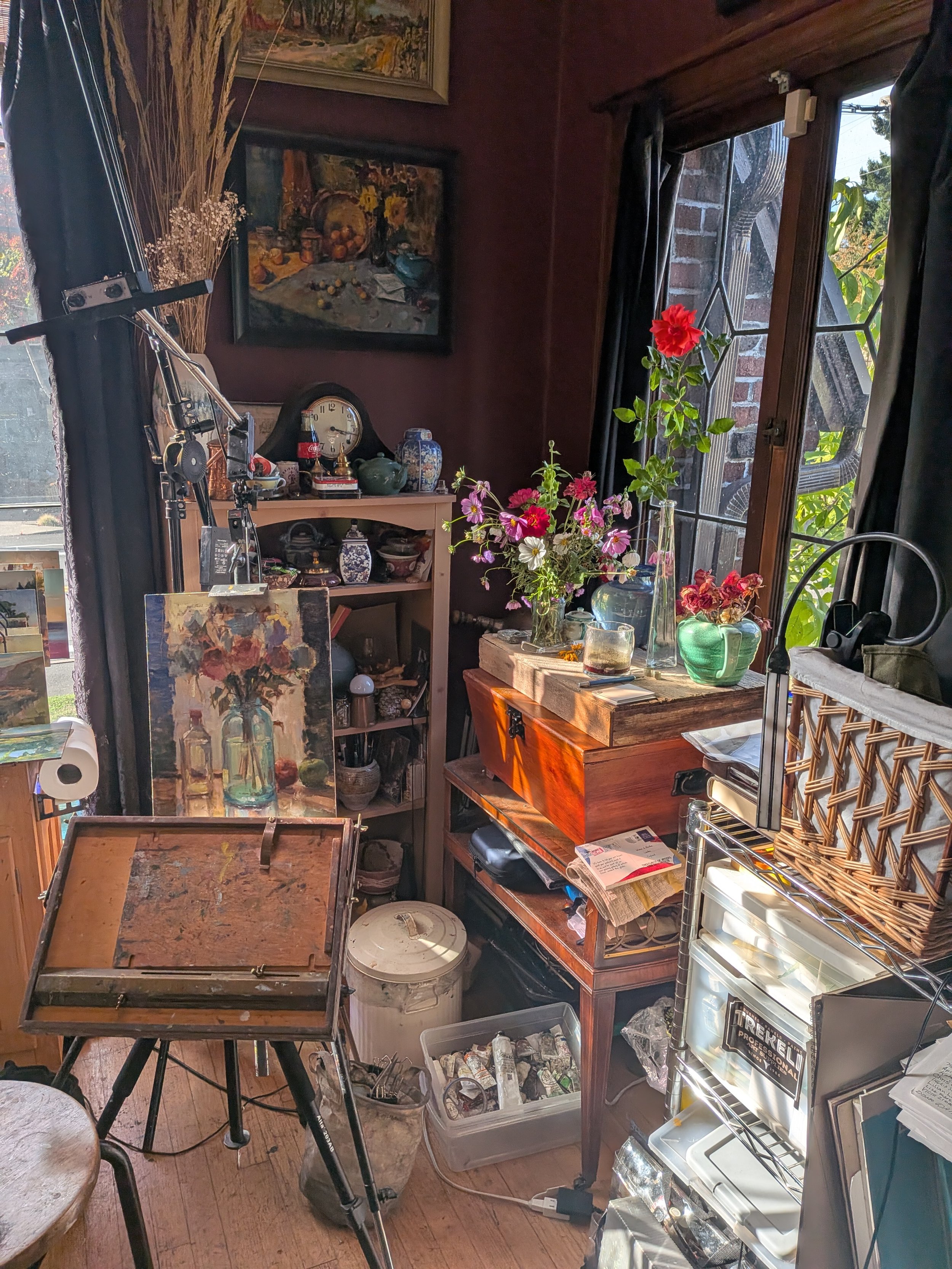
Sometimes Joanne Radmilovich Kollman loves what she's done immediately. but not always. She keeps a stack of paintings that she returns to with new eyes.
These artists didn’t see those failed attempts as proof they were doing it wrong.
They saw them as evidence that they had more to learn.
Oh, you don't know how to mix your paints yet? Time to mix more paint.
Don't know how you work yet? Time to work more to figure it out.
Failure isn’t a stack of dead ends. It’s a stack of signs pointing to “learning ahead.”
But that takes permission, doesn’t it?
Permission to fail. Permission to believe that you can use that information to try again. Permission to try again.
And again.
And again.
Then comes the fun part:
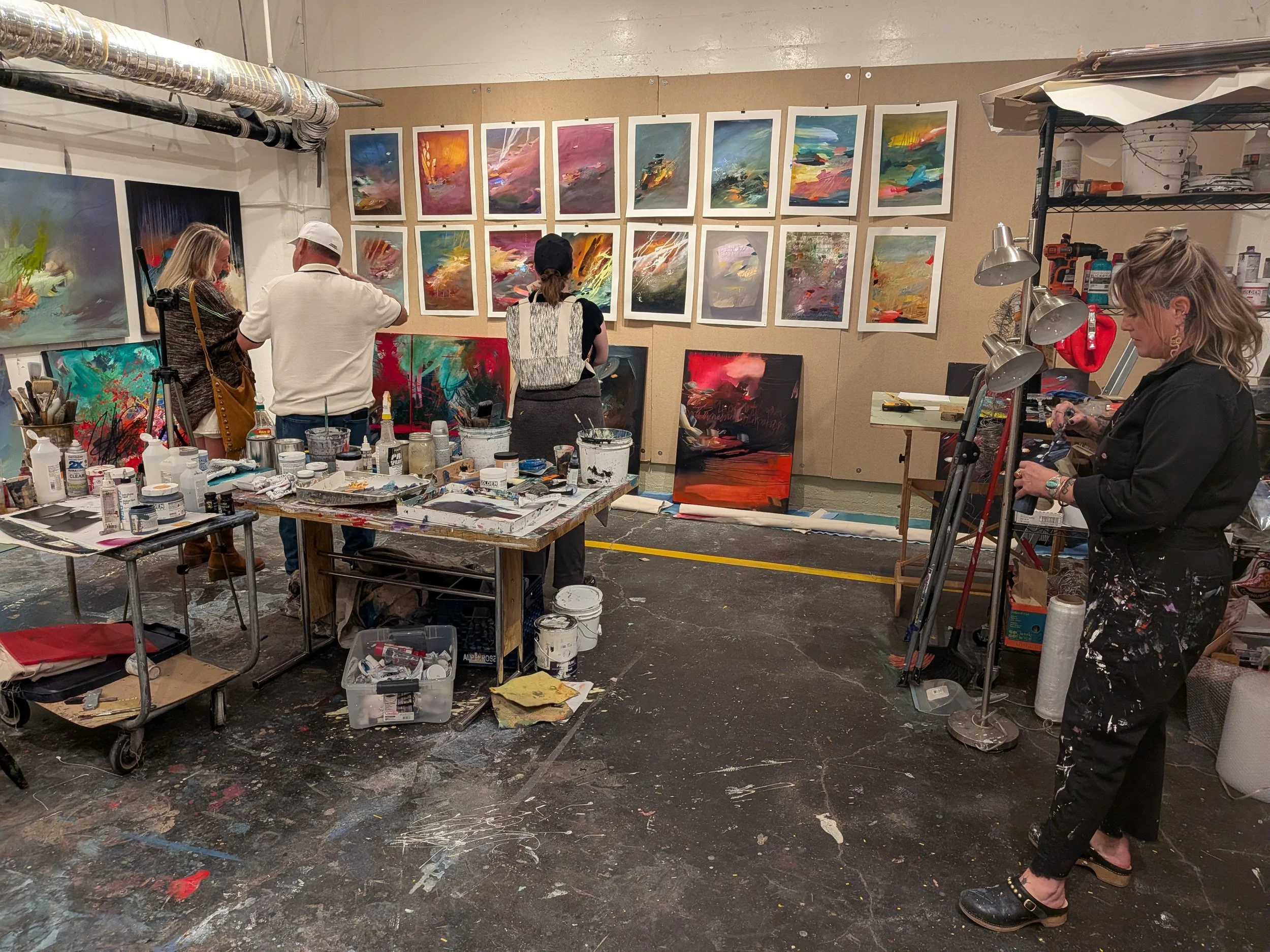
Alison Dougherty gathers physical objects like rocks and then uses those colors as a springboard for her paintings.
Permission to Be Who You Are
A lot of early painting involves an internal monologue around not trusting ourselves as artists.
“That’s not what real artists do.” “It should be easier than it is.” “My [teacher, spouse, artist neighbor] must know better than me.”
When you really look at these statements, they are all about removing trust from ourselves and trying to look for someone else to give it to.
We’re uncertain about our painting… and then our spouse doesn’t like it, so we think it must be stupid.
We’re trying to decide on portraits or pets, and someone makes an offhand comment about no one wanting to buy portraits, and so pets it is!
But that information isn’t coming from inside of us. It’s originating outside of us.
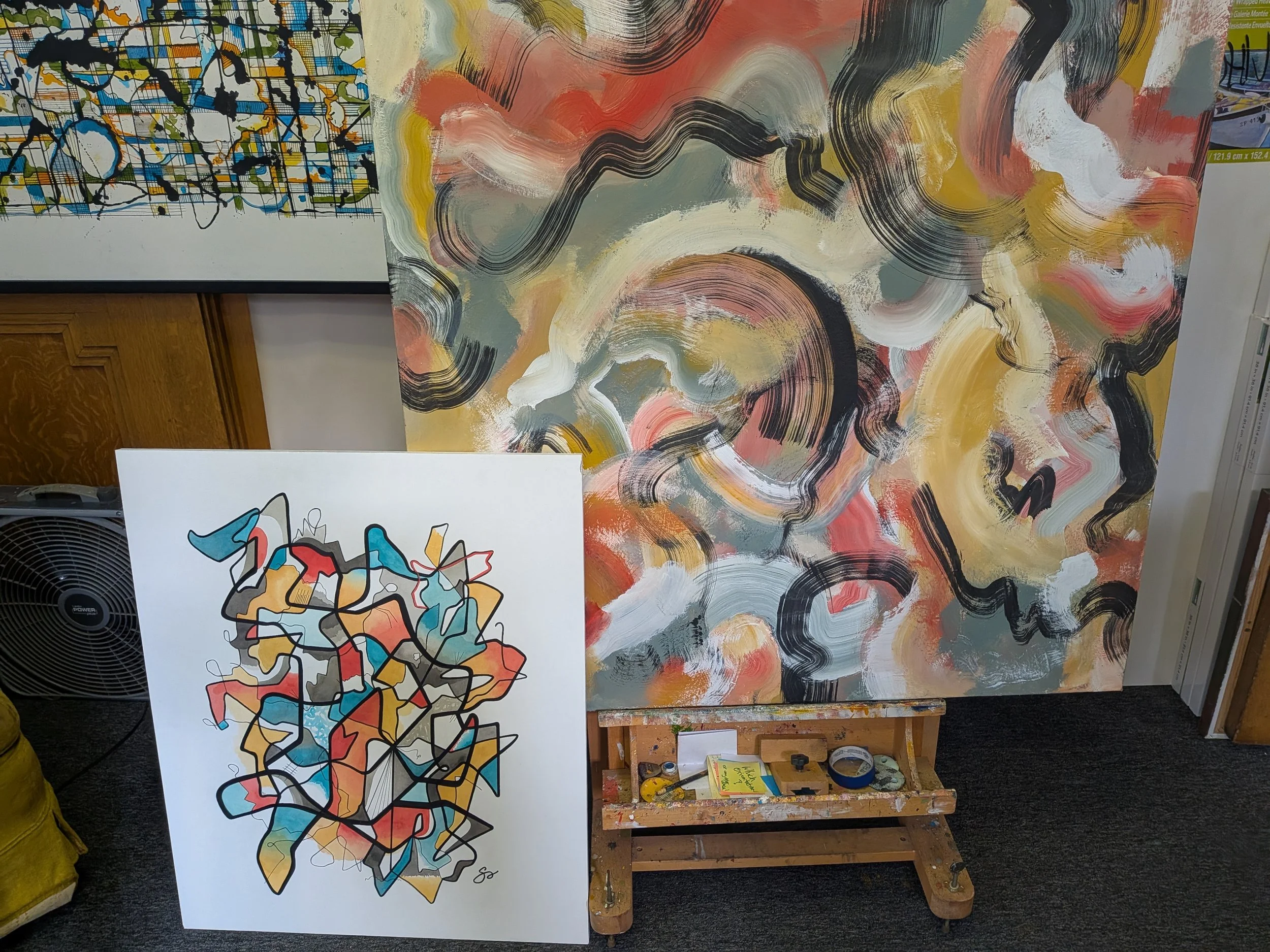
Sara Sjol started in watercolor and inks and then expanded to acrylics.
The artists I talked to at some point learned (and it’s learning!) to transfer that trust to the inside of themselves.
Try it.. to see how you like it. And then if you like it.. keep trying it.
Even if others don’t like it.
Even if someone thinks it might be harder to sell.
Art is a fingerprint. You can’t borrow other fingers to make that mark. It has to be yours. Otherwise… it isn’t yours. It’s your spouse’s. Or your children's. Or your teacher’s.
These artists noticed a spark of curiosity. Then they followed it. Then they iterated on it enough times that they figured out how it worked for them.
Notice that those are different steps. You don’t just happen upon something good and have it work the first time and forever after.
You find a spark. And then you give yourself permission to follow the spark while you figure out how to actually turn it into fire.
This part is where permission really becomes part of who you are as an artist. Because it’s going to take a while. And it’s going to come with a lot of doubt. You’re going to wonder, “Is this stupid?” Or “Am I on the wrong path?”
Anytime it gets hard, you might wonder if something out there is easier.
And it’s not. It might be at first when it’s still new and fun. But if you are following YOUR curiosity and giving yourself permission, real permission, to fail, this part is tricky.
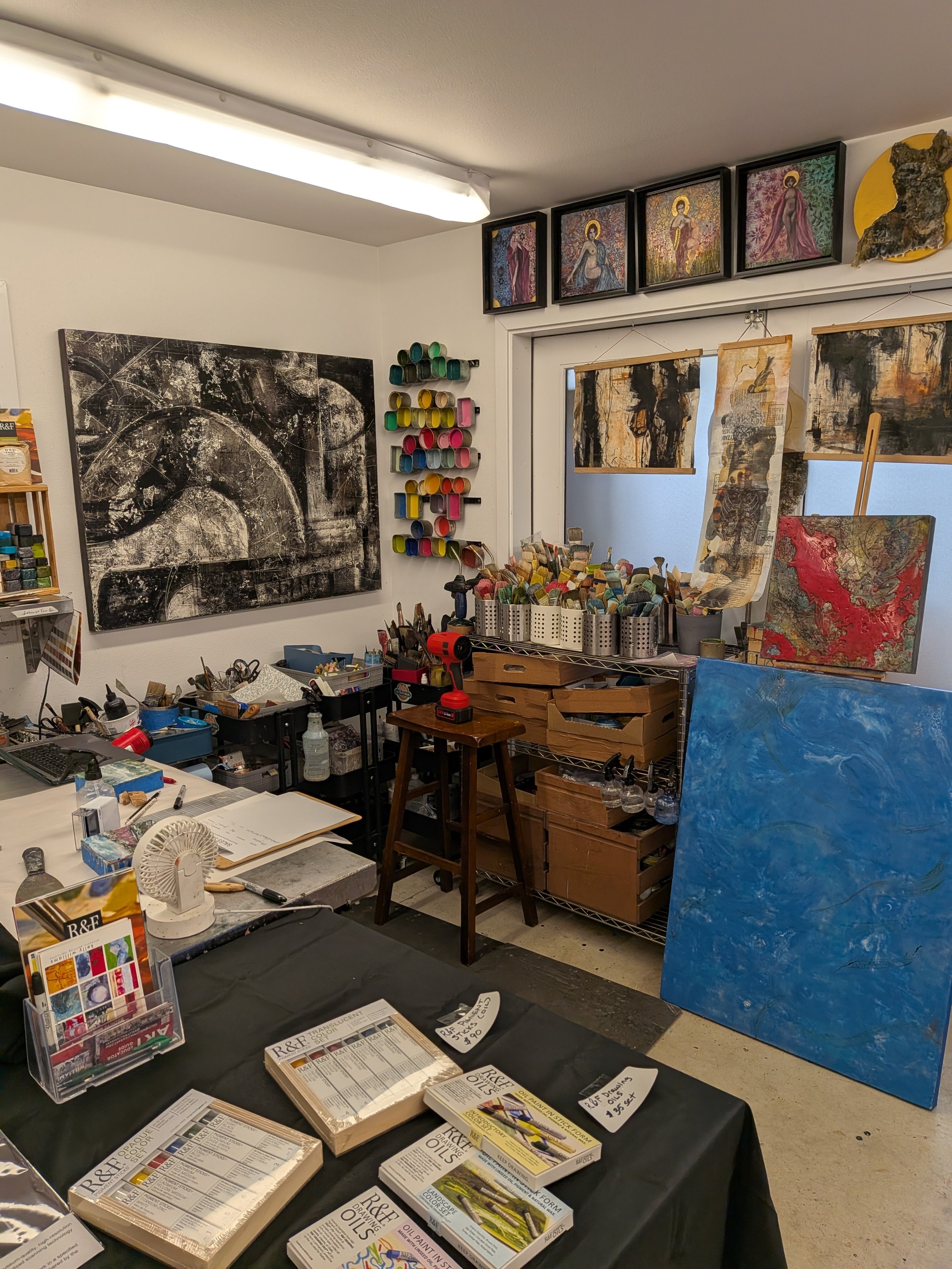
Kelly Williams will do smaller works before translating those ideas into larger works.
Permission for It to Be Tricky
As artists, we have to give ourselves permission for the road to not always be smooth.
In a world where you can ask any question to an LLM and get a quick response, our relationship with hard might be changing.
Art is sometimes hard. But that doesn't mean it’s not wonderful. Something important can be hard. Easy and good aren’t always paired up. .
Give yourself permission for it to be hard.
And when it IS hard, give yourself permission to be curious. To create and to fail as many times as you need until you finally get clarity about how this material works for YOU.
And the result?
Art that is wholly yours. A practice that is wholly yours. An outlook that is wholly yours. A style that is wholly yours. And dare I say, a life that is wholly yours.
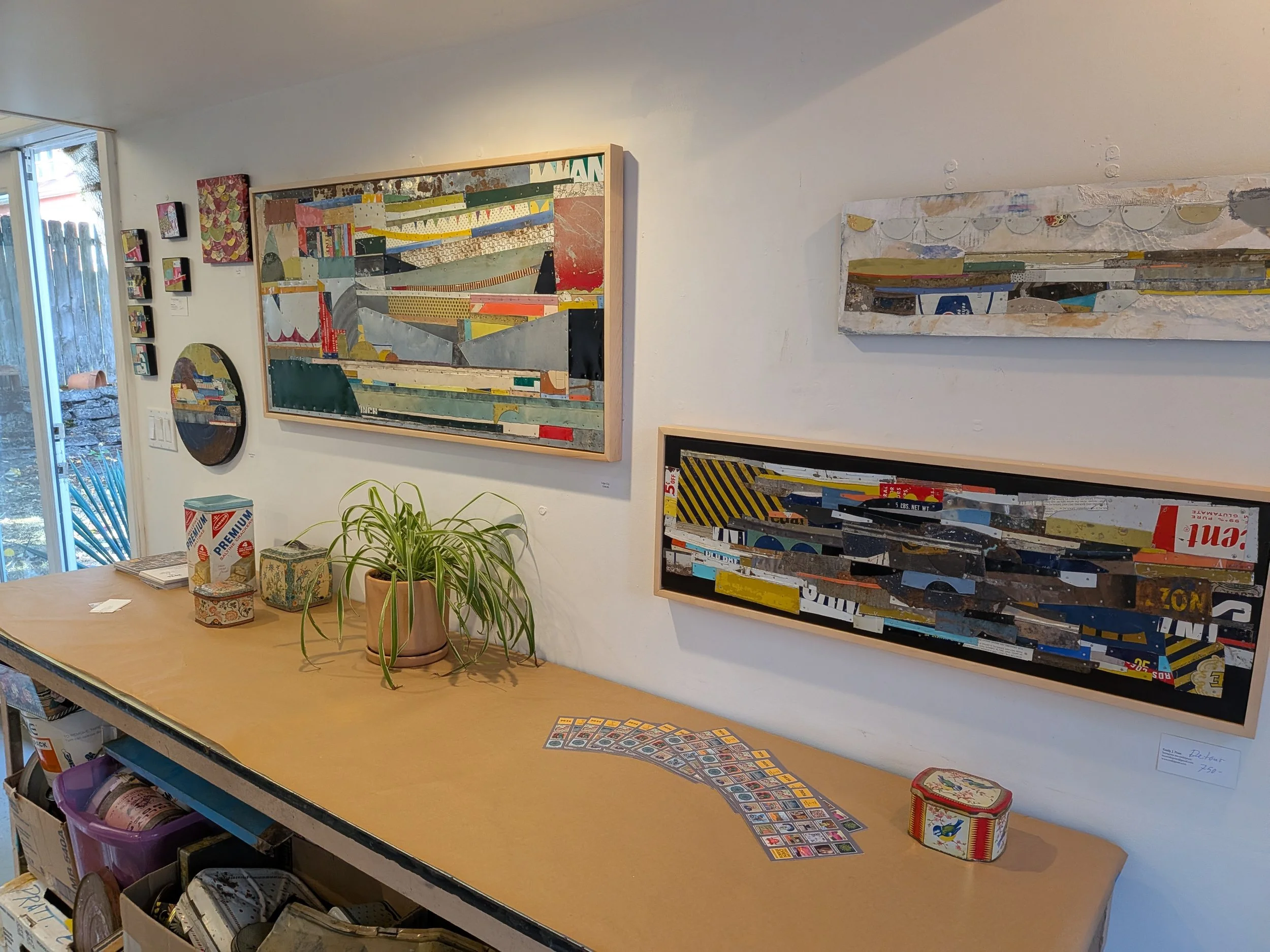
Emily Pratt worked in paper collage before one day trying tin.
Put It to Practice
Think about your practice.
Where in your practice are you not yet giving yourself permission?
To start? To fail? To be who you are? For it to be tricky?
This might take some journaling or thinking about it on a walk away from your phone.
Once you have some ideas, is there a way you can give yourself permission?
Write your permissions on Post-it notes.
“I have permission to make work my kids don’t love.”
“I have permission to use my materials even if the work doesn’t turn out great.”
“I have permission to not know.”
Put them somewhere you can see them.
Then when you come into your space, get into the habit of spending a few moments reading through them.
When you feel stuck, read through them.
When you leave at the end of a session, read through them.
Add to them as you notice more.
And intentionally practice giving yourself the permission you need to be the artist you want to become.
[Bonus points: Send me a picture of your Permission Post-it Notes and let me know what struggle you're working on.]
Artists mentioned:
Alison Dougherty | Emily Pratt | Joanne Kollman | Kelly Williams | Sara Sjol | Tyler Bingham: