How Your Art Style Actually Develops
How do you develop your style?
It seems like it could be as simple as reverse engineering. You figure out what you like visually and then work backward. You determine how to create that kind of work through materials, color, and composition.
But Sari Shryack (Ep.40) says that is the opposite direction you should be looking.

Shryack knows that style grows organically, unpredictably, and slowly.
Style develops through deep knowledge, not just about what you want your finished pieces to look like, but more importantly about what you want your art practice and your life to feel like.
Put It to Practice
Think about what you want to spend your days doing.
What do you want your studio time to look and feel like? What subjects spark curiosity in you?
What steps do you enjoy walking through as you paint?
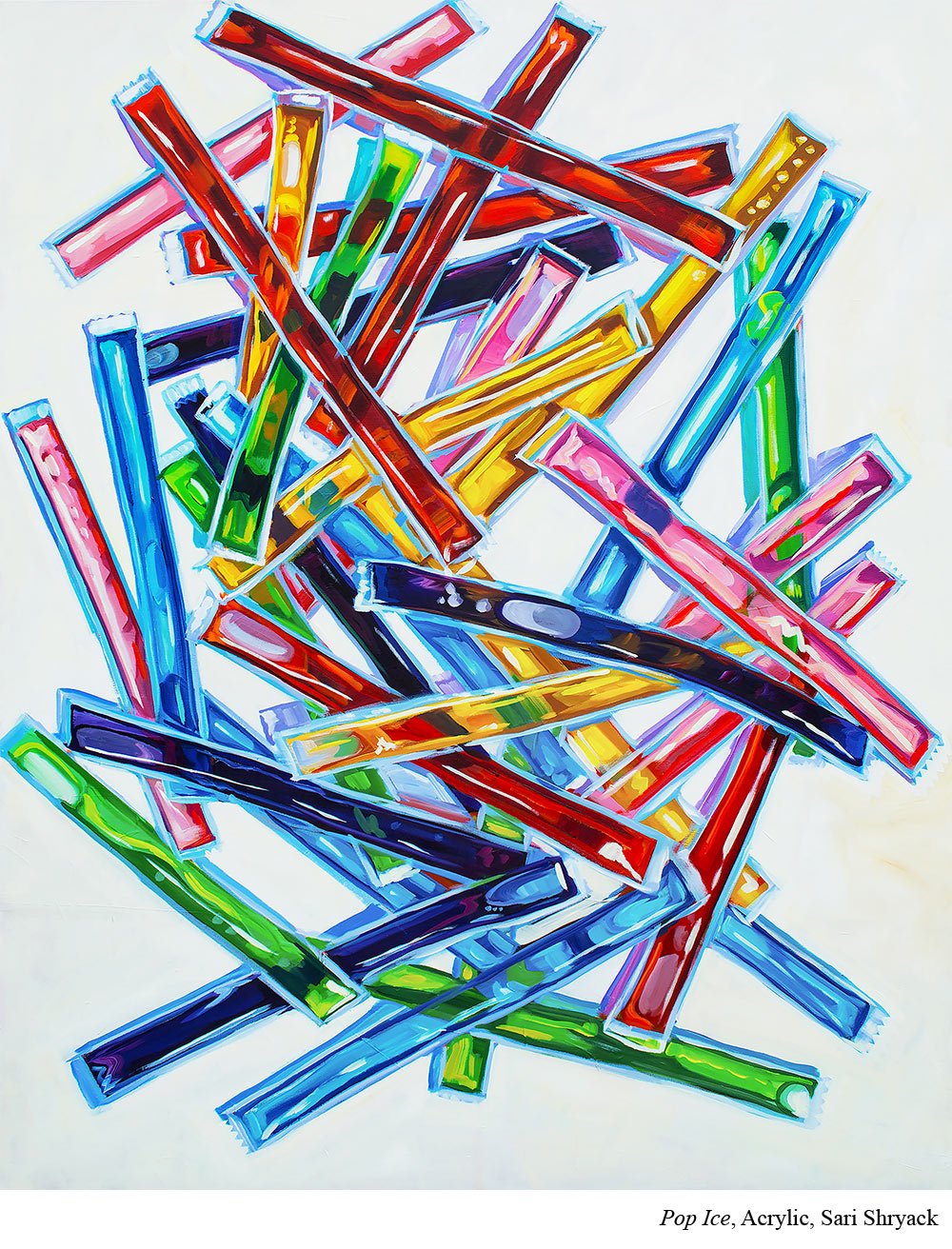
These questions matter because not all styles will fit your answers.
For example, if you love non-representational work but do not enjoy unpredictability, you may not enjoy the process of making pure abstract art.
Or if you love photorealism but hate spending hours on a single painting, photorealism probably is not going to work for you.
Maybe you love looking at paintings filled with subtle grays, but you find that you prefer mixing bright, saturated color.

Just because you love how someone else's finished work looks does not mean you would enjoy the steps they took to get there.
And if you do not enjoy the steps, you will not keep doing them, no matter how beautiful the final painting is.
Finding your style begins with learning what you like and dislike. The only way to discover that is by making a lot of work and paying attention to how you feel while you are working. Then you build a practice and process that pursue what you genuinely enjoy.
Slowly, through that process and a lot of painting, your style will emerge. A style built not just on a final painting you love, but on materials and steps you actually enjoy using.