One of the great (and, uh, terrible) things about being a self-taught artist is that there are just so many different types of paintings you could make.
Not just medium or subject… But style.
Even within representational painting as a category, you've got an enormous number of options.
You can paint something incredibly realistically. You can loosen things up and let the paint look like paint. Or you can take representation even further into abstraction, where recognizable subjects emerge from shapes, colors, and marks.
So how do you begin finding the best style fit for you?
Process & Product
When you're finding your style, you're really coming at it from two sides: the product and the process.
The product is how the painting looks after the last stroke.
The process is everything it takes to get there.
And ideally, you want a good fit on both fronts.
The product angle is pretty clear. You can look at something and know if you feel a connection.
The process angle is a little more opaque for two reasons.
First, you might like how something looks (the product) but not enjoy the process it took to get there.
You might love highly realistic paintings, but find the slow, deliberate process frustrating.
Or maybe your house is filled with abstracted paintings, but that level of uncertainty in the process makes you feel totally stressed out.
And second, it’s not always clear how paintings get made.
So let's dig into what it takes, generally speaking, to create three different types of representational paintings.

Highly Realistic Painting: Working Toward a Clear Destination
For this first category, we're talking about work that's anywhere from photorealistic to incredibly realistic.
The goal is to represent something as accurately as possible.
If you're painting an apple, you're paying close attention to what happens when light crosses its surface. You're looking at changes in value, color temperature, hue, saturation, shape, and texture.
And you're trying to capture all of that.
In order to do that, your skills, techniques, and process need to work toward that goal.
One interesting thing about this group of artists is how important the subject and reference materials become.
Often, a huge number of decisions happen before the artist ever puts brush to surface.
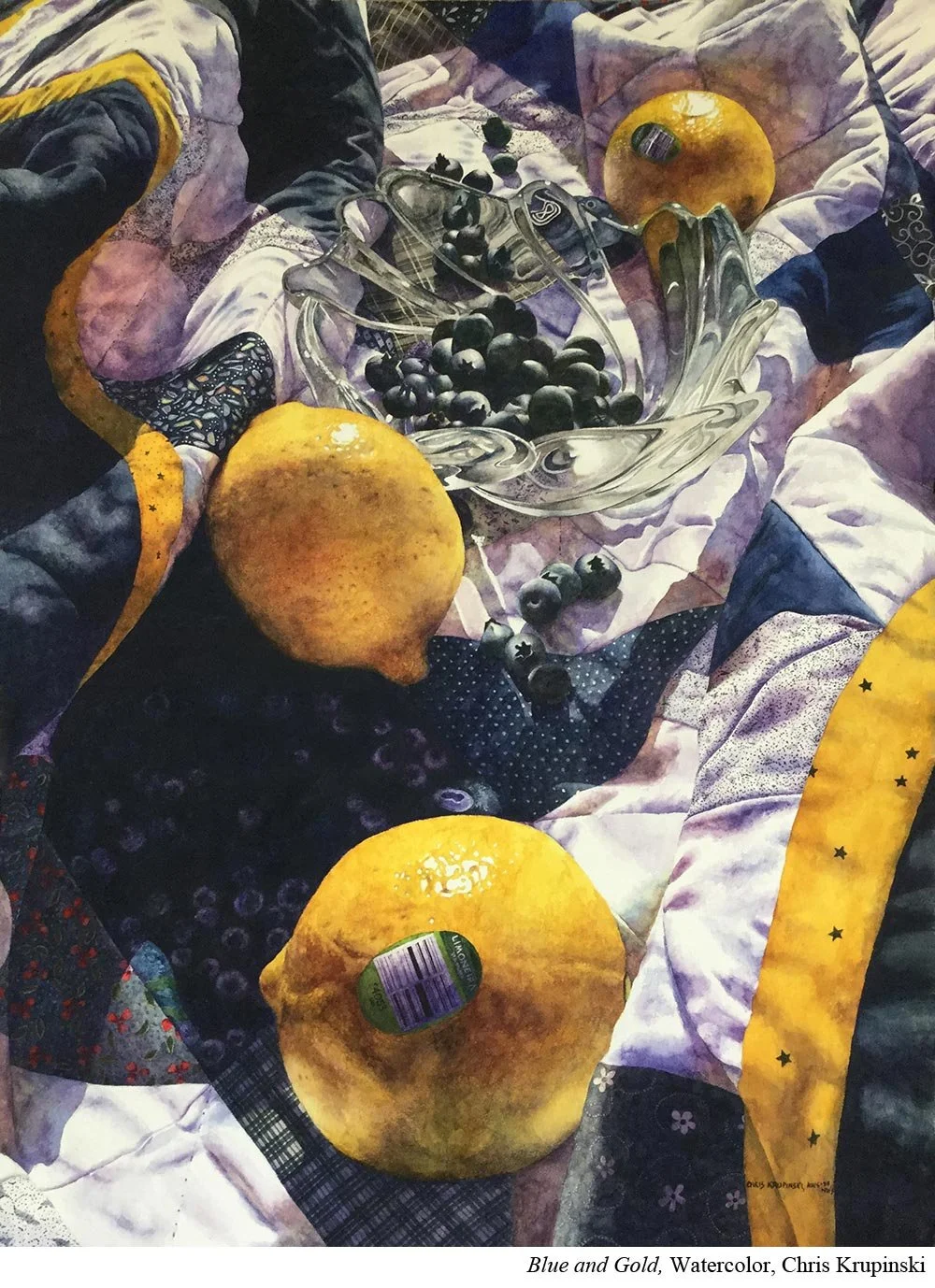
Watercolorist Carrie Waller (Ep.8) spends a lot of time taking high-quality photographs in the best light possible. Chris Krupinski (Ep.2) also puts considerable thought into her reference photography.
And this makes sense. When you're going to spend many hours painting something, you want to be confident that the lighting, arrangement, and composition are what you want.
Now, if you hate taking pictures, you could also work from life.
Todd M. Casey (Ep.24) works this way, and you'll notice that he doesn't paint a lot of fruit or vegetables. His still-life setups often involve subjects that won't rot while he's working.
But that doesn't mean he's any less fastidious about his preparation.
Casey will do studies and even a small painting before feeling like his subject works well enough to become a larger painting.
Krupinski, on the other hand, makes many of her decisions during her photography session and then jumps directly into the painting. No thumbnails or color studies required.
Different processes, but both artists know what they're headed toward.
With this level of realism, you're generally working toward a clear destination. You know what you want the painting to look like, and you're building the skills and techniques to get there.
The process isn't necessarily fast. Paintings that are highly realistic take a lot of time to create.
But that process can also be incredibly meditative.
Because you already know what you're headed toward, and you trust that your techniques and process will get you there, you can listen to music or a podcast and get to work.
There's another benefit from a learning standpoint.
When you finish a highly realistic painting, you can often look at the work and see where you need to strengthen your skills.
If the apple's shape is off, that's drawing. If the color is off, that's color mixing or observation. If the apple doesn't look three-dimensional, you might need to strengthen your understanding of value and form.
You have a clear destination, which means you have a fairly clear way to evaluate how close you got.
And that kind of clarity might be really comforting.
Loose Realism: Knowing What to Keep and What to Leave Out
Maybe you're someone who wants to paint loosely.
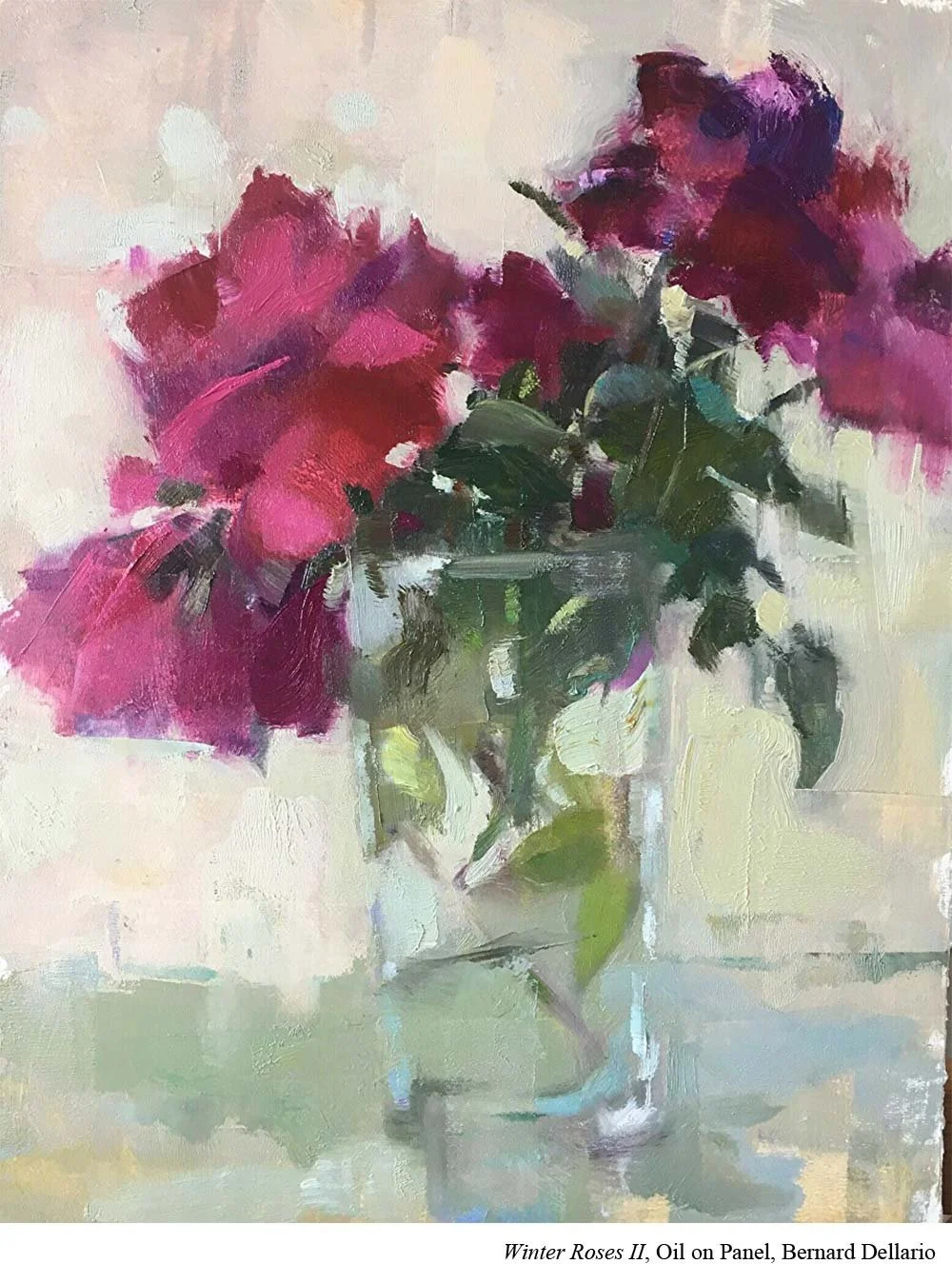
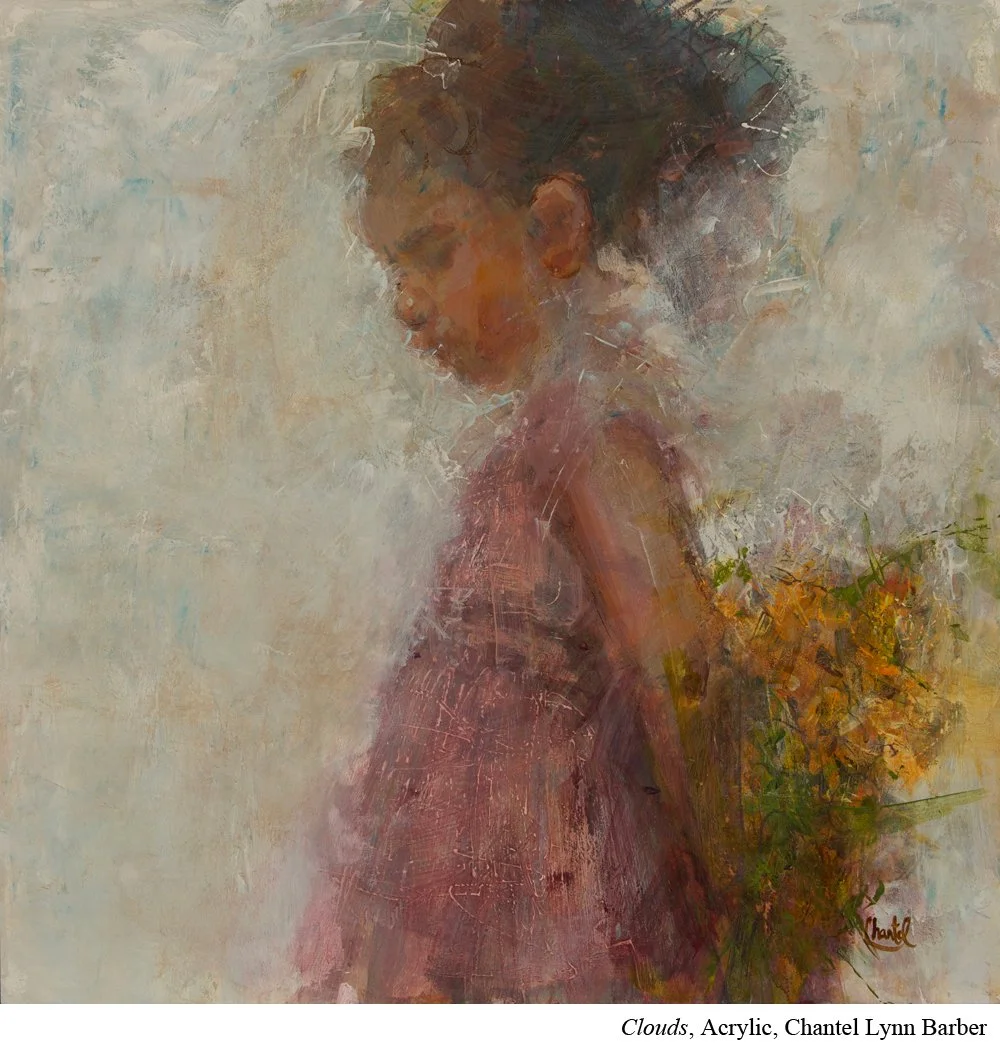
You want your subjects to be recognizable, but you also want the painting to feel like paint.
You want to see brushstrokes. You want some lost edges. You want areas where the artist has simplified what's happening rather than describing every last detail.
Loose realism is this interesting area because, in some ways, it relies on just as many skills as highly realistic work. It's just how you use them that's different.
Think about that apple again.
If you want to make something feel like an apple, it has to have some percentage of the characteristics of an apple translated from life.
Shape, value, hue, temperature, saturation, texture, and edges.
But now you're making decisions about which of those characteristics are most important and which ones you can simplify.
You might use just a few large shapes to describe the apple's form. You might exaggerate the color. You might lose an edge where the apple meets the background.
And this is one of the reasons loose realism can be harder than it looks.
Something that LOOKS effortless is actually built on a lot of effort (and knowledge).
For example, one of the biggest differences between highly realistic and loose realism is often how artists handle edges.
In loose realism, you might use hard edges around the focal point and softer or lost edges elsewhere.
This can mimic the way our eyes see.

If you're focused on one tree in a forest, everything in your peripheral vision is less distinct. It's only when you shift your attention to look at the river that the river comes into focus.
And now the tree is less distinct.
To make this work in a painting, you need to know your materials well enough to control your edges. You need to understand what techniques create hard, soft, and lost edges.
But almost more complicated than that, you need to know how to design a painting so that it has a focal point worthy of that hard edge.
There's a lot of decision-making involved.
And while loose paintings can look like they happened quickly, the process isn't necessarily fast.
Many loose realism artists have varied pacing as they move through their process.
Their gestural compositional sketches might be quick. Their value or color studies might be slower. They might block in the drawing quickly or slowly based on their skill and comfort with the subject.
Their first layers might be fast. Their later layers are slower.
And often, the reason they can paint so freely is that they've already made many of their important decisions.
They walk in with a plan.
Or they've spent decades creating plans and are already very comfortable with what they need to do.
If working quickly really is what you want, look for ways to get yourself to that point. Give yourself permission to take the time you need to plan, figure out what decisions you need to make, and then once you have a plan, let yourself go.

Abstracted Realism: Discovering Where the Painting Wants to Go
But representational painting doesn't end at loose realism.
You can take things even further into abstraction.
This might look a number of ways.
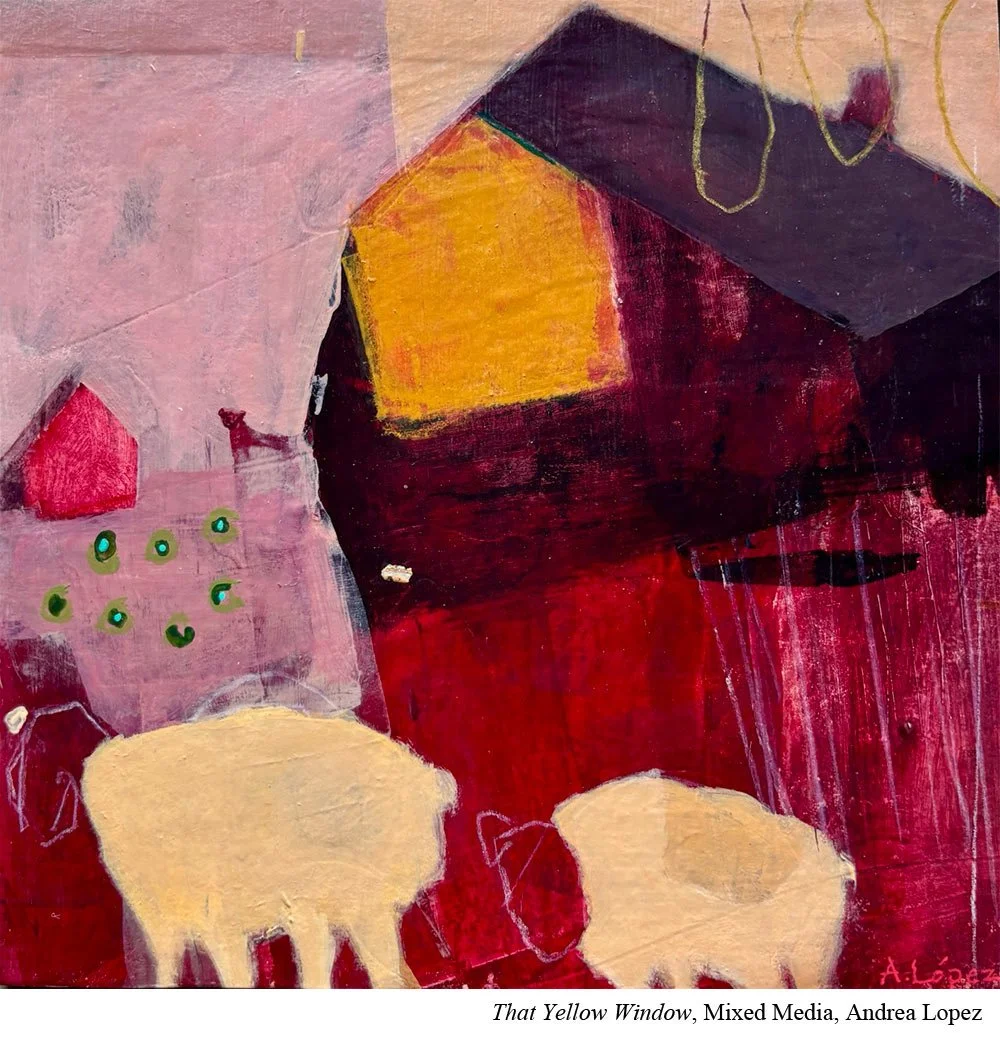
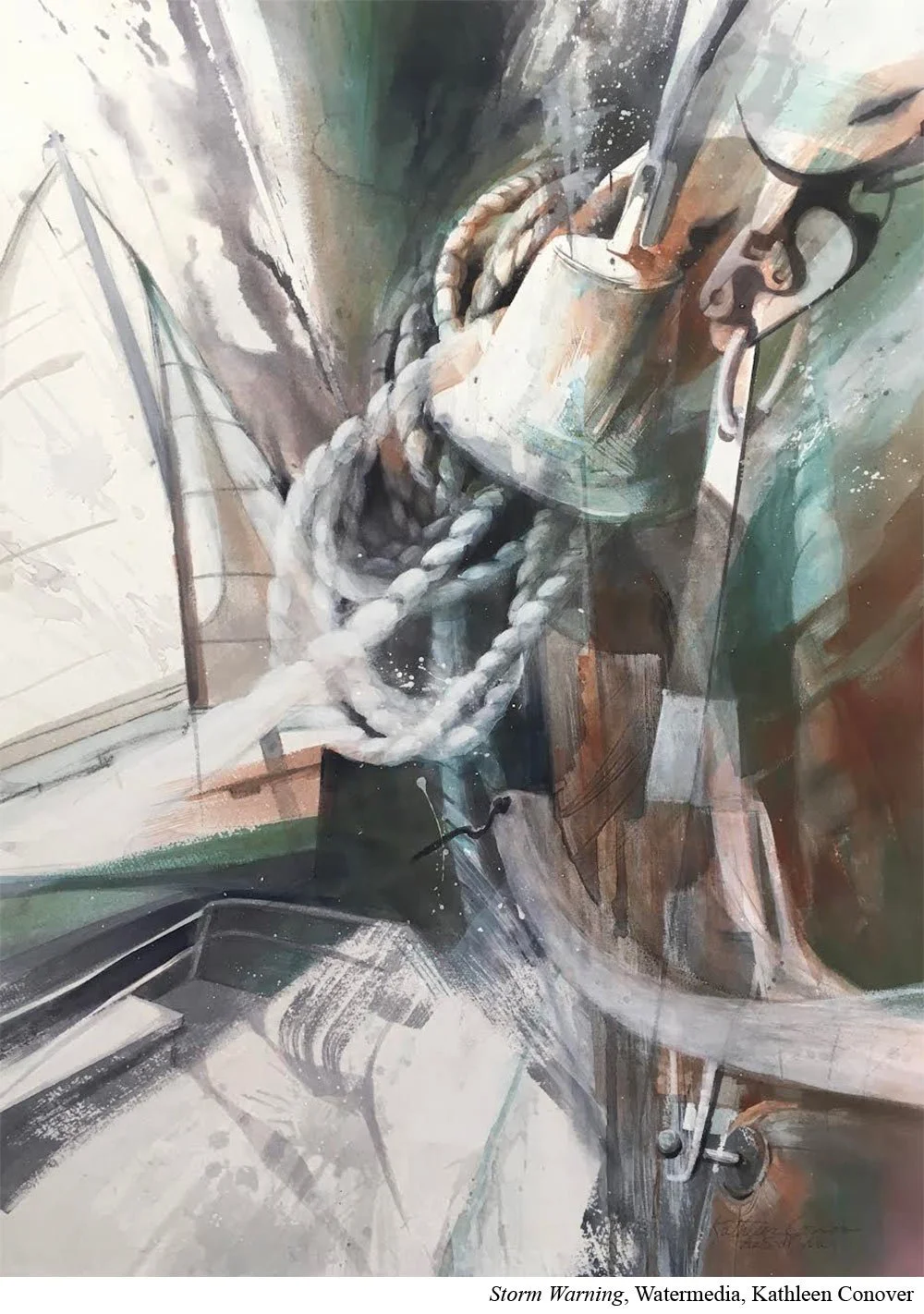
You might have pure abstraction, like patterns and shapes, mixed with representational objects (Julia Katz, Ep.110). Or you might have everything fairly abstracted, like much of Andrea Lopez's (Ep.128) representational work.
And there's an interesting shift that can happen with this type of painting.
Instead of deciding from the outset that you're going to paint an apple, you might build a process that begins with play.
You start with experimentation.
Maybe you're putting down colors, creating textures, or making marks without a specific subject in mind.
And then part of your process becomes noticing what that particular surface could become.
Artists like Kathleen Conover (Ep.106) and Lopez offer examples of this kind of approach.
They work in very different media, but both explore the possibilities that emerge from their materials and marks.
Something in the painting might begin to suggest a landscape, a flower, or another recognizable subject.
And if that happens, the artist can begin developing those representational elements.
But if it doesn't, the painting might stay completely abstract.
Think about how different that feels as an artist and as a process.
You're starting with experimentation and allowing the destination to reveal itself as you work.
You don't have to make all your decisions before you begin. You can get into the painting quickly and see what happens.
But that doesn't mean the entire process is fast.
Many artists who work this way start quickly and then eventually slow down to make decisions about what the painting is telling them and where it could go.
At some point, you'll need to decide what direction to take the piece.
And you're making all of these calls.
Which can feel really scary before you learn how to trust yourself.
When you know you're painting an apple from the beginning, you can trust that you're heading toward something. You have a clear goal, and you can evaluate your progress against it.
But when you begin with experimentation, you don't necessarily know where you're going.
You have to have patience with yourself and the work. You have to trust that something will come of it.
And sometimes it doesn't.
So you have to learn how to handle that level of patience and trust. Until we build it, that can be its own kind of stress.
This approach still requires technical skills. It definitely requires a process.
But the steps are in a different order, and the kinds of decisions you're making can feel very different.

Put It to Practice: Finding Your Fit
Now, these three categories are broad generalizations.
There are highly realistic painters who work spontaneously, loose realism painters who spend hours on careful preparation, and abstracted painters who begin with a very clear plan.
And there are plenty of artists whose work falls somewhere between these categories.
But looking at these different approaches can help us understand what we might want from our own painting practice.
So how do you decide which approach is right for you?
Sometimes you just know. And you find that you were right. Both the final product and the process required to get there work for what you want as an artist.
But the majority of artists don't just know.
They learn what is a good fit for them through a lot of trial and error. They try something. Some of it works, some of it doesn't, and they learn from both.
So let's start with the product side.
Step 1: What kind of paintings do you love?
When you look at these different kinds of representational paintings, which appeals to you most strongly?
Not which one you feel like you SHOULD do. Or which one feels like it counts as REAL art. Or which one you think would probably sell the best.
Which one lights YOU up?
That's the product side. The outcome side.
Step 2: Try working that way.
Now it's time to test whether the process is also a good fit for you.
And this is a much more complex and long-term consideration.
You have to actually make the work. A lot of it.
If you're drawn to highly realistic painting, spend time carefully observing and translating what you see.
If loose realism appeals to you, experiment with simplifying shapes, losing edges, and deciding what information to keep.
Or if abstracted realism feels like a good fit, try beginning with marks and colors and seeing where they take you.
Step 3: Pay attention to the experience.
As you work, ask yourself:
Which parts of the process do I enjoy?
Which parts frustrate me?
Do I like knowing where I'm headed, or do I enjoy discovering possibilities as I go?
Is this a process I want to spend more time learning?
And remember, just because something feels difficult doesn't necessarily mean it's a poor fit.
You might find a particular process challenging because you haven't developed the skills for it yet. And those might be exactly the skills you're excited to learn.
But you might also discover that some ways of working simply don't appeal to you, even when you love the finished paintings.
Finding your style takes experimentation. And your preferences may change as your skills grow and you discover new ways of working.
So as you explore, pay attention to both sides.
What do you want your paintings to look like?
And what kind of experience do you want while making them?
I'd love to know which of these approaches feels like a better fit for you and why.
Let me know in the comments!