The Skill-Building Power of One Brush
Ep.75 guest Patti Vincent has discovered something surprising.
In a world of endless brush options, using just one can make you a better painter.

Vincent’s brush of choice is a Raphael Kaerell No. 8796, size 16 flat.
She found a brush that feels good in her hand and creates a wide range of marks.
But what she loves most is not the versatility. It is the simplicity.
When you only use one brush, you simplify dozens of decisions into one.
You are not deciding between rounds, flats, filberts, brights, and fans. You are not switching tools every few minutes. You are not wondering if a different brush would fix the painting.
You work with what you have.
This gives you four big benefits:
First, you carry less. Your plein air kit or studio setup becomes lighter and simpler. The fewer tools you manage, the fewer barriers stand between you and starting.
Second, you can buy backups of that exact brush and place them wherever you might paint.
One in your studio. One in your travel kit. One in your car.
When time unexpectedly opens up, you are ready. You don’t have to scramble together a last minute kit. You’re already ready to go.
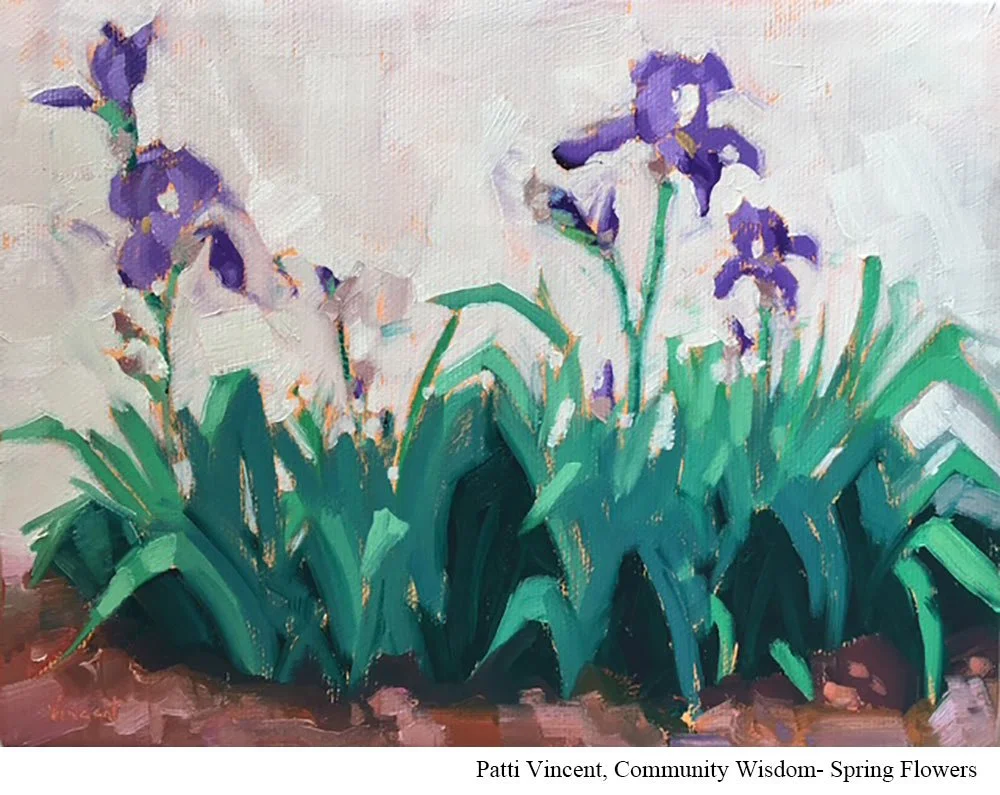
Third, you truly learn what that brush can do.
You discover how to use the corner for a thin line. How to turn it sideways for a broader stroke. How much pressure creates which effect.
You will get into trouble. But you will also learn how to solve that trouble without reaching for a different tool.
That kind of problem solving is how you build real skills.
Fourth, using one brush creates natural cohesion.
Every mark comes from the same size and shape. While brushwork does not unify a painting as strongly as a limited palette, it still matters. Repeated shapes create rhythm. Rhythm creates harmony.
If you have never tried working with one brush, consider committing to it for a week or two.
It may feel limiting at first.
But limits often sharpen your decisions.
And sharper decisions make stronger paintings.

Put it to Practice:
Choose one brush.
This sounds easy on paper, but you’ll feel pushback.
Remember, it doesn’t need to be your PERFECT brush. Not the one you think you SHOULD use. Not the one that will magically solve all the problems you will ever face in a painting.
That is too much to ask of one material.
Instead, choose one that feels good in your hands and that you already own.
Now, commit to using only that brush for your next five painting sessions. (Or as part of a 20-day challenge.)
Do not switch. Do not “just grab a small one for this tiny detail.” Stay with it.
As you work, pay attention to what works and what doesn’t work:
How can you use all the different sides of the brush for different kinds of marks?
How does pressure change the stroke?
Where does it struggle?
How can you solve that struggle without changing tools?
At the end of the week, ask yourself:
Did this simplify your setup?
Did it reduce decision fatigue?
Did your marks feel more cohesive?
You may go back to multiple brushes. That’s fine.
But even one week with a single tool will teach you more than constantly reaching for another option.